Can a Testicular Implant Produce Testosterone or Sperm?
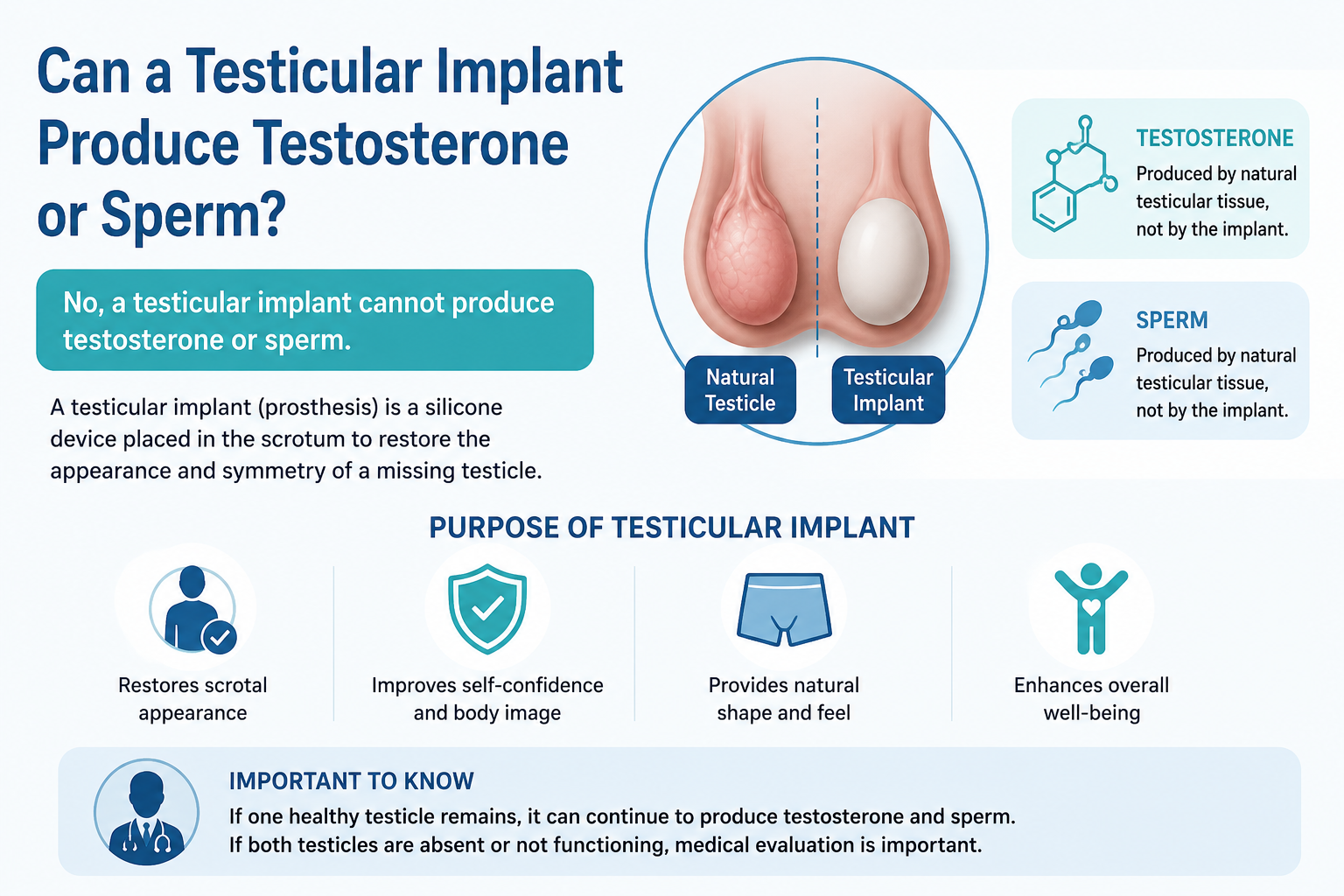
A testicular implant does not produce testosterone or sperm. A testicular implant, also called a testicular prosthesis, is a medical device placed inside the scrotum to restore the appearance, shape, and symmetry of a missing testicle. It is designed for cosmetic and psychological restoration, not to replace the biological functions of a natural testicle.
Understanding this difference is important for anyone considering testicular implant surgery after testicular removal, injury, an undescended testicle, infection, or another condition.
What Is a Testicular Implant?
A testicular implant is a prosthetic device designed to resemble the size, shape, and feel of a natural testicle. It is placed inside the scrotum during a surgical procedure.
The implant does not contain functioning testicular tissue. Therefore, it cannot perform the functions of a natural testicle, including:
- Producing testosterone
- Producing sperm
- Supporting natural fertility
- Producing other testicular hormones
The primary purpose of the implant is to restore the appearance and fullness of the scrotum after a testicle is absent.
Can a Testicular Implant Produce Testosterone?
No, a testicular implant cannot produce testosterone.
Testosterone is produced primarily by specialized cells called Leydig cells within functional testicular tissue. A prosthetic testicle does not contain these cells, so it cannot produce testosterone.
However, losing one testicle does not necessarily mean that testosterone levels will become low. If the remaining testicle is healthy and functioning normally, it can often produce enough testosterone for the body's needs.
Therefore, a person who has had one testicle removed may still have:
- Normal testosterone levels
- Normal sexual function
- Normal libido
- Normal erections
- Normal male development and characteristics
If both testicles have been removed or neither testicle functions properly, testosterone production can be significantly affected. In such situations, a doctor may evaluate hormone levels and discuss testosterone replacement therapy when appropriate.
Can a Testicular Implant Produce Sperm?
No, a testicular implant cannot produce sperm.
Sperm production requires functioning testicular tissue, including the specialized cells and structures responsible for spermatogenesis. A testicular prosthesis does not contain these biological tissues.
However, having a testicular implant does not automatically mean that a person is infertile.
If one healthy natural testicle remains, it may continue producing sperm. Many men with one functioning testicle can maintain fertility.
On the other hand, fertility can be affected if:
- Both testicles have been removed
- The remaining testicle does not function properly
- There is damage to the reproductive system
- Certain medical treatments, such as some cancer treatments, affect sperm production
- Other underlying fertility problems are present
Therefore, fertility depends on the condition and function of the remaining natural testicular tissue, not on the presence of the implant.
Does a Testicular Implant Affect Sexual Function?
A testicular implant itself does not produce hormones or sperm, but it also does not normally serve as a replacement for sexual function.
If a man has one healthy functioning testicle, testosterone production and sexual function can often remain normal. The implant is primarily intended to restore the physical appearance of the scrotum.
If both testicles have been removed, however, the situation is different. Testosterone levels may fall significantly, which can affect libido, energy, muscle mass, mood, and sexual function. A doctor can perform hormone testing and discuss appropriate treatment options.
Can You Have Children After Getting a Testicular Implant?
In many cases, yes, if a healthy natural testicle remains and is producing sperm normally.
The implant itself does not improve fertility or produce sperm. Instead, fertility depends on the function of the remaining reproductive system.
If future fertility is important, it is advisable to discuss this with your doctor before surgery, particularly if testicular cancer treatment, chemotherapy, radiation, or removal of both testicles is involved.
A doctor may recommend fertility evaluation or sperm banking before certain treatments that could affect sperm production.
Why Get a Testicular Implant If It Does Not Produce Hormones or Sperm?
The purpose of a testicular implant is primarily cosmetic and psychological restoration.
A missing testicle can create concerns about:
- Scrotal appearance
- Asymmetry
- Body image
- Confidence
- Intimacy
- Emotional well-being
The implant can restore volume to the empty side of the scrotum and create a more balanced appearance. It is designed to resemble a natural testicle in shape and feel as closely as possible.
Therefore, a testicular implant should be viewed as a prosthetic replacement for appearance, not a biological replacement for testicular function.
What Happens During Testicular Implant Surgery?
Testicular implant surgery is generally performed by placing the prosthesis inside the scrotum. The surgeon selects an implant size that is appropriate for the patient's anatomy and the size of the opposite natural testicle.
The procedure may be performed separately or at the time of testicle removal, depending on the individual's circumstances.
After surgery, some swelling, bruising, and discomfort may occur. Your surgeon will provide specific instructions regarding wound care, activity, sexual activity, and follow-up.
Doctor’s Suggestion
According to Dr. Ashutosh Shah of Elegance Clinic, a testicular implant can restore the appearance of a missing testicle, but it cannot replace the natural testicle's ability to produce testosterone or sperm. If one healthy testicle remains, it may continue to provide these functions. However, if both testicles are absent or the remaining testicle is not functioning normally, hormone and fertility evaluation may be necessary.
With over 22 years of experience in cosmetic and plastic surgery, Dr. Ashutosh Shah at Elegance Clinic recommends discussing your hormone levels, fertility goals, medical history, and expected cosmetic outcome with a qualified specialist before testicular implant surgery. Understanding these factors can help you choose the most appropriate treatment and have realistic expectations about what a testicular implant can and cannot do.