Bleeding After Circumcision: How Much Is Normal and When to Come Back the Same Night
A few drops of blood or a small stain on the dressing in the first 48 hours after circumcision is normal. Bleeding that soaks through the dressing, drips, or restarts after 10 minutes of firm pressure needs the surgeon the same day, especially in babies, men on blood thinners, and anyone with a bleeding disorder.
Seeing blood after surgery can be worrying, but bleeding after circumcision does not always mean something has gone wrong. A small spot or mild ooze can occur during early healing. The important question is whether the bleeding is small and settling or continuing despite firm pressure.
At Elegance Clinic, Dr. Ashutosh Shah, a Plastic, Reconstructive & Cosmetic Surgeon with 22+ years of surgical experience, manages circumcision patients with attention to both the procedure and postoperative care. Patients and parents should understand what minor bleeding can look like, how to respond at home, and which warning signs require contacting the surgical team rather than waiting for the routine review.
How Much Bleeding Is Normal After Circumcision?
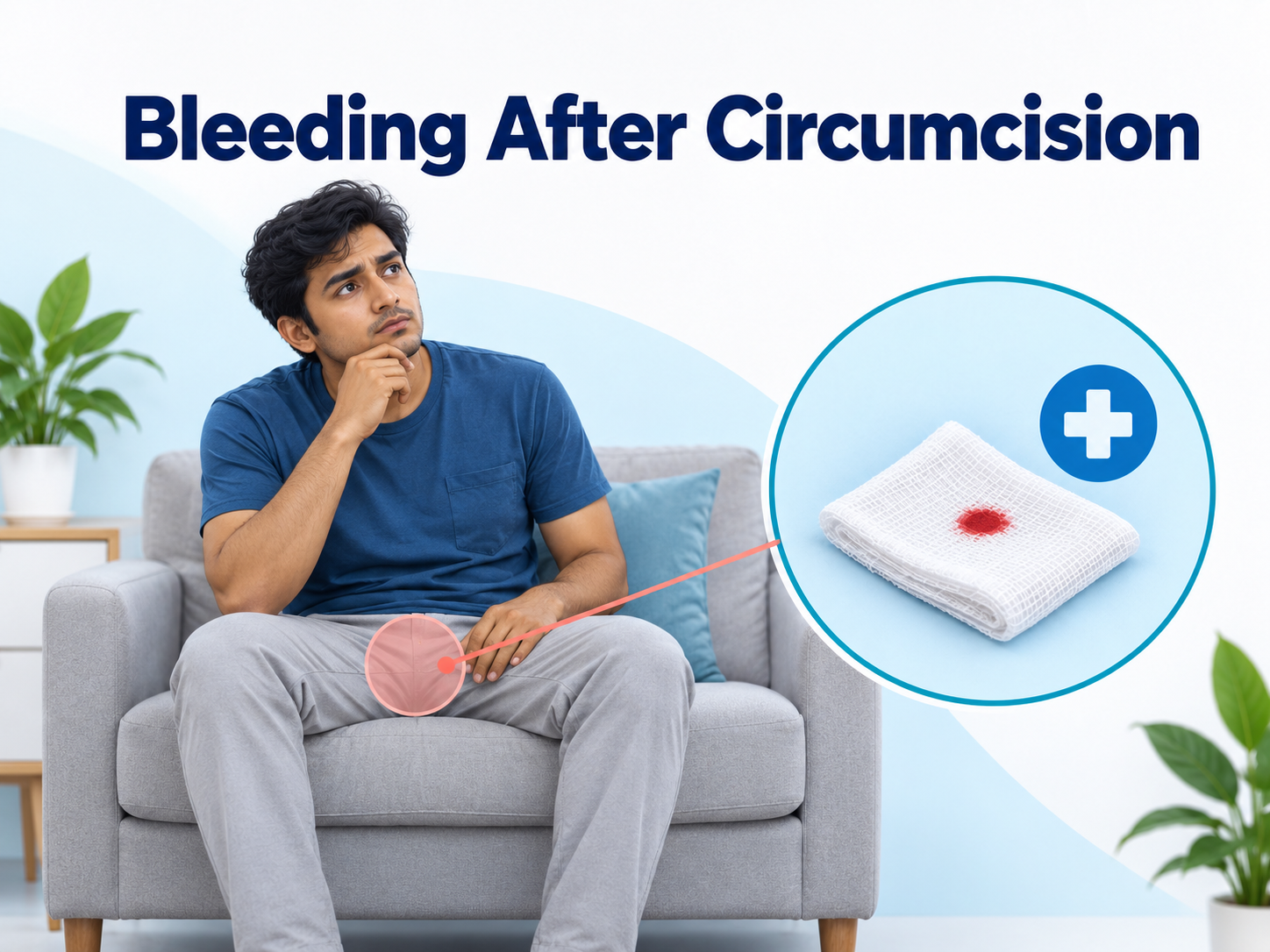
A few drops of blood or a small stain on the dressing during the first 48 hours can occur after circumcision.
Minor spotting may come from the healing wound or around a stitch. What matters is whether the bleeding stops and remains limited.
More concerning signs include:
- Blood soaking through the dressing
- Blood actively dripping from the wound
- Bleeding that repeatedly restarts
- Bleeding that does not settle after firm pressure
- Rapidly increasing swelling that may represent blood collecting underneath
- A baby becoming unusually pale or drowsy
If you are repeatedly changing a dressing because it becomes soaked with fresh blood, this should not be treated as routine spotting.
How Do You Apply Pressure Correctly at Home?
For minor bleeding, the supplied clinic guidance uses a 10-minute pressure test.
Place clean gauze over the bleeding area and apply continuous, firm but controlled pressure for 10 minutes. Avoid repeatedly lifting the gauze every minute to check the wound, because disturbing it can interfere with clot formation.
After 10 minutes, check whether the bleeding has stopped.
If it settles and only a small stain remains, continue observing the area according to your postoperative instructions.
If fresh blood continues dripping, soaks the dressing, or restarts after the pressure is released, contact the surgical team the same day.
Do not repeatedly manipulate the wound in an attempt to find the exact bleeding point.
Bleeding After Circumcision: A Traffic-Light Checklist
This simple checklist can help distinguish minor spotting from bleeding that requires prompt medical attention.
| Level | What you may see | What to do |
| Green | A few spots or a small stain under about 2 cm | Observe and follow routine dressing instructions |
| Amber | Mild ooze that stops after 10 minutes of continuous pressure | Continue observation and contact the clinic if it restarts or concerns you |
| Red | Dressing soaking with blood, active dripping, rapidly increasing blood-filled swelling, or a baby becoming pale/drowsy | Contact the surgical team promptly and seek urgent medical assessment |
This traffic-light guide is not a substitute for individual postoperative instructions. If the amount of bleeding is difficult to judge or the patient appears unwell, seek medical help.
Why Can Night-Time Erections Cause Bleeding in Adults?
Adults may experience spontaneous erections during sleep, including during early circumcision recovery.
An erection stretches healing tissue. In the early postoperative period, this tension can cause discomfort and occasionally fresh spotting around the healing wound or stitches.
A tiny spot that settles is different from persistent bleeding during erection after circumcision.
Do not intentionally test the wound by creating an erection. Sexual activity should also wait until the surgeon's recommended recovery period.
For more information about resuming sexual activity, read When sex is safe after stapler circumcision.
Who Is at Higher Risk of Bleeding?
Some patients require additional attention before and after surgery because their bleeding risk may be higher.
This can include people who:
- Take anticoagulant or antiplatelet medicines
- Have a known bleeding disorder
- Have a history of excessive bleeding after previous procedures
- Have certain medical conditions affecting clotting
- Experience wound trauma during early recovery
Parents should also pay particular attention to bleeding in babies because a small child cannot explain symptoms such as weakness or dizziness.
Before surgery, tell the surgeon about all prescription medicines, over-the-counter medicines, and relevant medical conditions.
Depending on the patient and planned procedure, investigations may be required. See the clinic's information about Blood tests before surgery.
Circumcision Follow-Up: When Should You Come Back Immediately?
Do not wait for the planned review if bleeding is clearly more than minor spotting.
Contact the surgical team promptly if:
- The dressing is becoming soaked with fresh blood
- Blood is actively dripping
- Bleeding continues after 10 minutes of firm pressure
- Bleeding stops but repeatedly restarts
- Swelling is rapidly increasing
- Severe or increasing pain accompanies swelling
- You feel faint, weak or unusually unwell
- A baby becomes pale, unusually sleepy or difficult to settle
If there is substantial ongoing bleeding or the patient appears seriously unwell, seek urgent medical care rather than waiting for a routine appointment.
You can contact the clinic if postoperative symptoms need assessment.
What About Bleeding in Babies and Children?
A small blood spot can occur after circumcision in a baby, but parents should monitor the nappy and the child's general condition carefully.
Repeated fresh bleeding, increasing blood staining, persistent oozing, or a baby becoming pale or unusually drowsy should not be ignored.
Parents should follow the dressing and nappy-care instructions given by the treating team and avoid repeatedly rubbing or disturbing the healing area.
For additional information about paediatric procedures, read Traditional circumcision safety in children.
Should Blood Thinners Be Stopped Before Circumcision?
Do not stop aspirin, anticoagulants or other prescribed blood-thinning medicines on your own simply because circumcision is planned.
Stopping these medicines can itself carry medical risks. The appropriate plan depends on why the medicine was prescribed, the type of drug, the patient's medical history, and the procedure.
The prescribing doctor and surgical team should decide how the medication should be managed around surgery.
Make sure the surgeon knows about all medicines and supplements you take before the procedure.
Can Ice Stop Bleeding?
Ice and direct pressure do different jobs.
The supplied postoperative rule specifically uses 10 minutes of firm gauze pressure to assess minor bleeding. Ice should not replace pressure when a wound is actively bleeding.
If your surgical team has advised cold application for swelling, follow its instructions about how and where to use it. Do not place ice directly against delicate postoperative skin unless specifically instructed.
Persistent active bleeding requires assessment rather than repeatedly trying home remedies.
Do Not Judge Bleeding by Pain Alone
A patient may assume that bleeding is harmless because there is little pain, particularly while local anaesthetic is still working. Pain intensity, however, is not a reliable way to measure blood loss.
Look at what is actually happening:
A few drops or a small, stable stain can usually be observed according to postoperative instructions.
Mild oozing that stops with 10 minutes of pressure requires continued observation.
Soaking, dripping, rapidly increasing swelling, or bleeding that continues despite pressure needs prompt medical assessment.
The same principle applies whether bleeding occurs shortly after surgery, around stitches, during an erection, or during a baby's recovery.
Final Takeaway
Some bleeding after circumcision can occur during normal early healing. A few drops or a small dressing stain during the first 48 hours is very different from steady bleeding.
For minor bleeding, use clean gauze and apply uninterrupted firm pressure for 10 minutes. Do not keep removing the gauze to check every few seconds.
If bleeding soaks through the dressing, actively drips, restarts after pressure, or is associated with rapidly increasing swelling, weakness, or a pale or drowsy baby, contact the surgical team promptly. Patients taking blood-thinning medicines should never change them independently without medical advice.