Can Laser Circumcision Help With Tight Foreskin?
Laser circumcision for a tight foreskin can be considered when the foreskin is difficult or impossible to retract because of a condition such as phimosis. Tight foreskin may cause discomfort during erections, difficulty maintaining hygiene, pain during urination, or repeated infections.
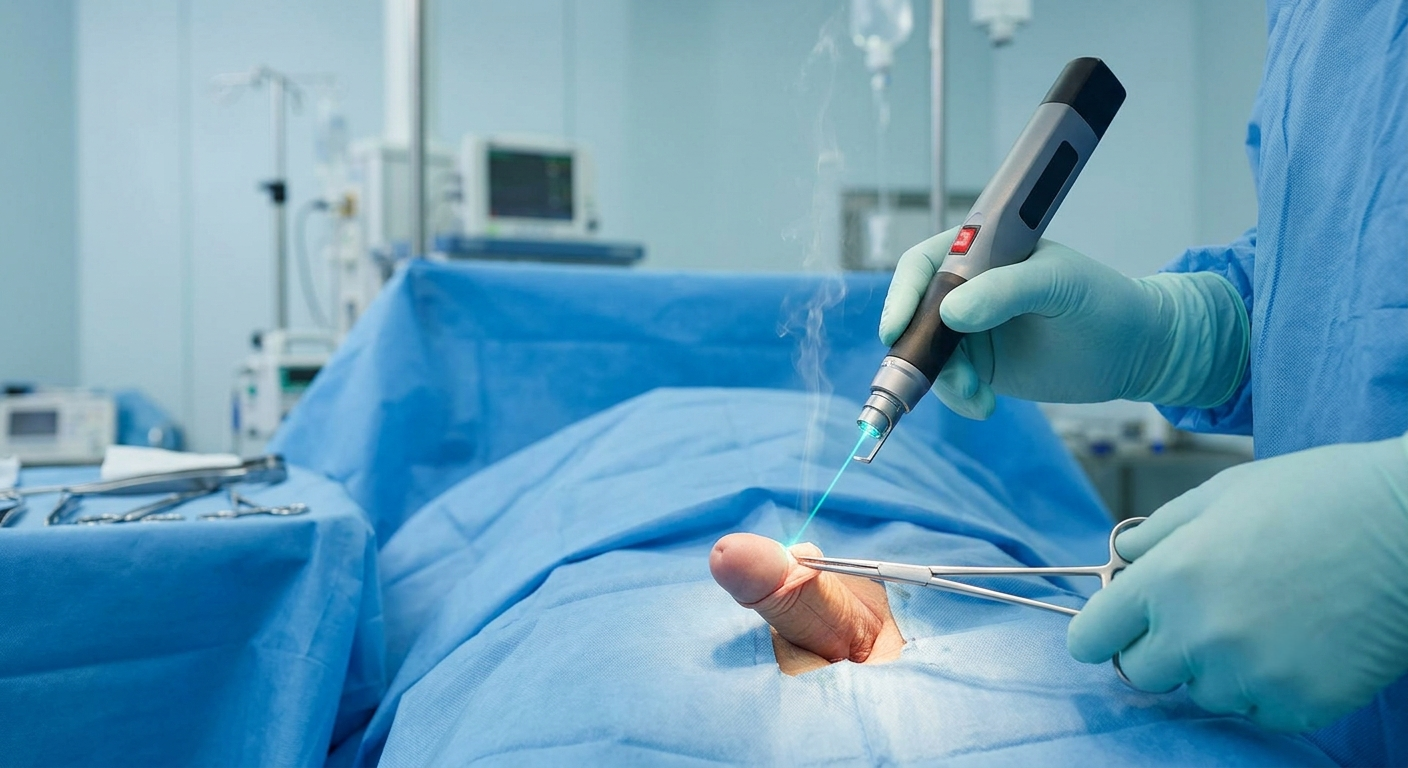
Laser circumcision is a surgical procedure that removes the foreskin using a laser technique. It can provide a precise way to remove the tight or problematic foreskin and may be recommended when conservative treatments do not provide sufficient improvement.
What Is Tight Foreskin?
Tight foreskin, medically known as phimosis, occurs when the foreskin cannot be pulled back comfortably over the head of the penis.
Some children naturally have a foreskin that does not fully retract, and this can improve as they grow. However, persistent tightness in older children or adults, particularly when it causes symptoms, may require medical evaluation.
Tight foreskin can sometimes develop because of repeated inflammation, infection, scarring, or certain skin conditions.
Can Laser Circumcision Help Tight Foreskin?
Yes, laser circumcision can help treat tight foreskin when circumcision is medically appropriate.
During the procedure, the surgeon removes the foreskin that is causing the tightness. This exposes the glans and eliminates the restricted foreskin opening.
However, circumcision is not automatically required for every person with a tight foreskin. A doctor should first determine the underlying cause and assess the severity of the condition.
Depending on the situation, treatment may include observation, topical medication, gentle stretching under medical guidance, or surgery.
How Does Laser Circumcision Work?
Laser circumcision uses a medical laser to make controlled cuts and remove the foreskin.
The procedure generally involves:
- Examination of the foreskin and penis
- Administration of appropriate anesthesia
- Careful marking and preparation of the surgical area
- Precise removal of the foreskin
- Control of bleeding
- Closure of the surgical area when required
- Postoperative dressing and instructions
The exact technique can vary according to the patient's age, anatomy, medical condition, and surgeon's approach.
What Are the Benefits of Laser Circumcision?
Laser techniques can offer several potential benefits when used appropriately.
Precise Tissue Removal
The laser allows the surgeon to make controlled cuts around the foreskin, which can help with precise tissue removal.
Reduced Bleeding
Laser energy can help control small blood vessels during the procedure. This may reduce bleeding during surgery.
Treatment of Persistent Tightness
By removing the restrictive foreskin, circumcision can resolve the physical tightness associated with phimosis.
Easier Hygiene
After circumcision, the glans becomes easier to clean because the foreskin no longer covers it.
Potentially Comfortable Recovery
Recovery varies between individuals, but many patients can return gradually to normal daily activities as healing progresses.
When Might Circumcision Be Recommended for Tight Foreskin?
Circumcision may be considered when tight foreskin causes problems such as:
- Repeated infections
- Painful erections
- Difficulty urinating
- Significant difficulty retracting the foreskin
- Scarring of the foreskin
- Recurrent inflammation
- Persistent phimosis that does not improve with appropriate treatment
A medical evaluation is important before deciding on surgery.
Is Laser Circumcision Suitable for Adults?
Yes, laser circumcision can be performed in adults when medically appropriate.
Adults with persistent phimosis may experience pain during sexual activity, difficulty retracting the foreskin, recurrent infections, or problems with hygiene.
A surgeon can assess the condition and discuss whether circumcision or another treatment would be more suitable.
What Is Recovery Like After Laser Circumcision?
Recovery depends on the individual and the surgical technique used.
Mild swelling, sensitivity, bruising, or discomfort can occur during the early recovery period. Patients are generally advised to keep the area clean, follow wound-care instructions, and avoid activities that could interfere with healing.
Sexual activity and strenuous exercise are usually avoided until the surgical area has healed sufficiently. The surgeon should provide specific instructions based on the procedure.
Can Tight Foreskin Be Treated Without Circumcision?
In some cases, yes.
Treatment depends on the cause and severity of the tight foreskin. A doctor may recommend topical medication or gentle stretching in selected patients.
However, if the foreskin has significant scarring or symptoms continue despite conservative treatment, circumcision may be considered.
Therefore, it is better to have the condition evaluated rather than attempting forceful foreskin retraction at home.
What Happens If Tight Foreskin Is Left Untreated?
Mild tight foreskin may not always cause complications. However, symptomatic or severe phimosis can sometimes lead to repeated infections, painful erections, difficulty urinating, or other problems.
A particularly important emergency is paraphimosis, where a retracted foreskin becomes trapped behind the glans and cannot be returned to its normal position. This requires urgent medical attention.
Laser Circumcision at Elegance Clinic
The choice between conservative treatment and circumcision depends on the cause and severity of the tight foreskin. At Elegance Clinic in Surat, Dr. Ashutosh Shah brings over 22 years of surgical experience to the evaluation and treatment of patients requiring circumcision.
Final Thoughts
Laser circumcision for tight foreskin can be an effective surgical option when persistent phimosis causes pain, infections, hygiene difficulties, or other symptoms.
However, not everyone with a tight foreskin needs circumcision. The right treatment depends on the underlying cause and severity of the condition.
If a tight foreskin is causing recurring problems or making urination or sexual activity uncomfortable, a qualified surgeon can evaluate the condition and recommend the most appropriate treatment.