
Child and Baby Circumcision Near Rander: What Parents Ask and How the Visit Is Planned
A child circumcision visit from the Rander area is usually timed around feeds or school hours, takes about two to three hours in total for a newborn, and includes a pre-procedure check, the procedure itself, and aftercare counselling before discharge.
For parents searching for baby circumcision in Rander, planning the visit can make the day easier. The child's age, feeding routine, health, proposed circumcision method, and anaesthesia plan can all affect how the appointment is organised. Newborns and older children also have different preparation requirements, so parents should follow the instructions given specifically for their child rather than relying on general advice.
Families travelling from Rander can consult Dr. Ashutosh Shah at Elegance Clinic, Surat, for assessment and planning. The priority is to check the child, discuss the reason for circumcision, and explain the procedure, aftercare, and follow-up before treatment.
Which Questions Do Parents in This Area Ask Most Often at the First Visit?
Parents visiting a child circumcision clinic near Rander commonly want to know how long the procedure takes, whether their child will need anaesthesia, when feeding is allowed, and how quickly they can return home.
Other common questions include:
- Which circumcision method is suitable for my baby?
- Will my child feel pain during the procedure?
- How should feeding be planned?
- Can both parents remain at the clinic?
- How long will we need to stay?
- What will the circumcision area look like while healing?
- How are nappies changed after the procedure?
- When does a circumcision ring separate?
- When should we return for follow-up?
- Which symptoms require an earlier review?
Parents should have an opportunity to discuss these questions before agreeing to treatment.
When choosing a surgeon, families can also read Choosing a baby circumcision doctor.
How Are Appointments Timed Around Feeds, School Hours and Family Availability?
Appointment planning depends partly on the child's age.
For Newborns and Young Babies
Feeding is often one of the main concerns for parents.
The clinic should provide specific instructions based on the planned procedure and anaesthesia. Parents should not independently decide to keep a baby fasting for an unnecessarily long period.
If fasting is required, follow the exact instructions provided by the surgical or anaesthesia team.
Parents can also plan the appointment around the baby's normal routine where clinically appropriate. Carrying feeding supplies, nappies and spare clothes can make the visit more comfortable.
For Older Children
A paediatric circumcision appointment Rander families book for an older child may need to fit around:
- School hours
- Examination schedules
- Parents' working hours
- Travel time
- Post-procedure rest
Parents may prefer a date that gives the child some quiet recovery time before returning to school.
The exact appointment day and available slots should always be confirmed directly with the clinic because schedules may change.
What Does the Pre-Procedure Check Cover for a Newborn and for an Older Child?
Circumcision should not begin simply because the family has arrived for a booked procedure.
A pre-procedure assessment helps confirm that the child is suitable to proceed.
Newborn Assessment
For a newborn, the clinician may review:
- General health
- Feeding
- Relevant birth history
- Current illness or fever
- Local anatomy
- Condition of the foreskin
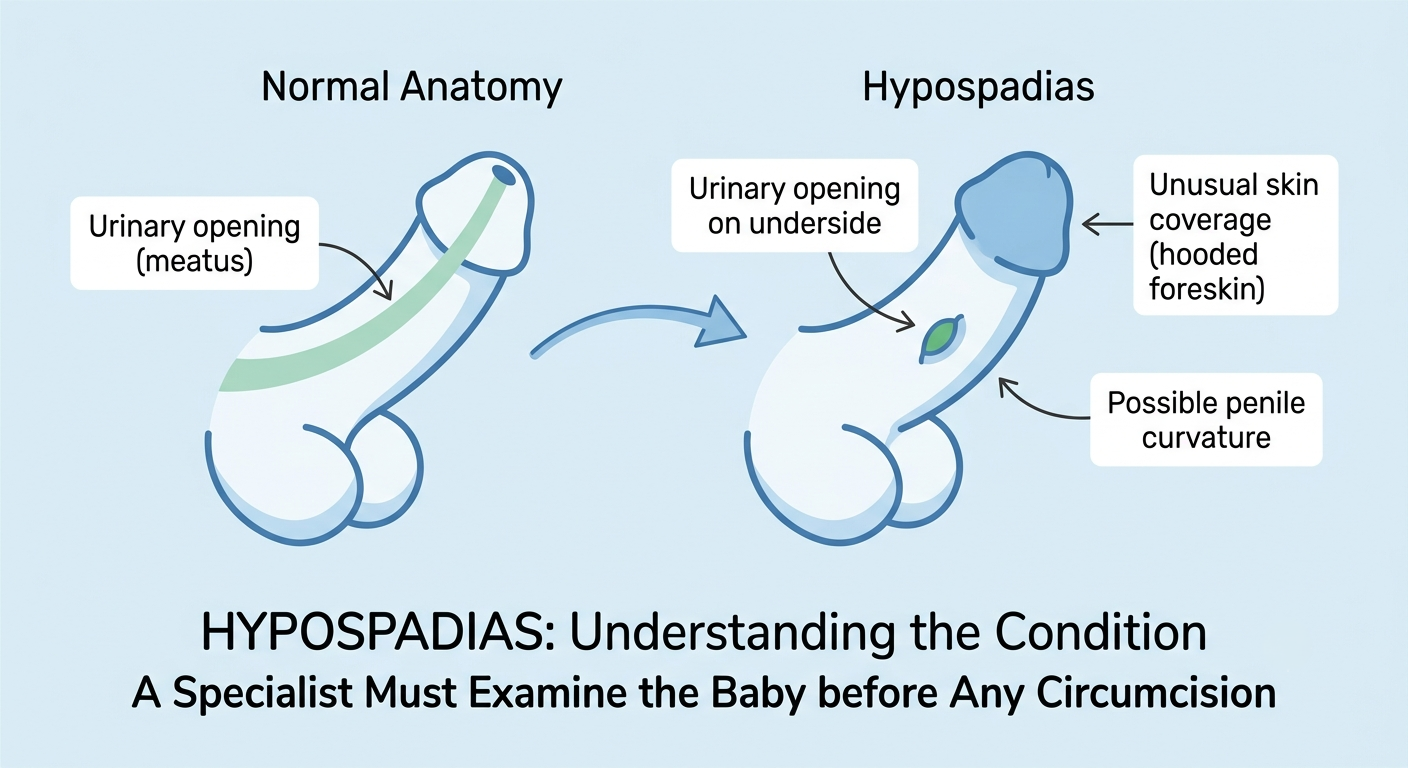
- Any congenital genital abnormality
- Medicines or known allergies
- Reason for circumcision
- Suitability of the proposed technique
If the anatomy is unusual, routine circumcision may not be appropriate until further assessment is completed.
Older Child Assessment
An older child's assessment may additionally consider:
- Phimosis or foreskin tightness
- Repeated infections
- Pain or urinary symptoms
- Previous treatment
- Previous foreskin injury
- General medical history
- Anaesthesia requirements
- Anxiety and ability to cooperate
The treatment plan can then be discussed with the parents.
How Is the Circumcision Method Selected?
Parents may hear terms such as ring circumcision or Plastibell before attending the clinic.
The method should not be selected simply because another child had the same procedure.
Age, size, anatomy, medical indication, and surgeon assessment all matter.
Parents researching device-based techniques can read about the Ring method circumcision.
For younger babies, information about Plastibell circumcision for newborns can help parents understand how this method works and why individual assessment is still necessary.
The aim is to choose a technique appropriate for the child rather than describe one method as universally best.
What Happens on the Day of a Baby Circumcision?
A planned visit generally involves several stages.
Arrival and Registration
Parents arrive at the instructed reporting time and complete the required registration.
Relevant medical records and reports should be available if requested.
Pre-Procedure Review
The doctor or medical team confirms the child's health and planned procedure.
Any required feeding or fasting instructions are checked.
Procedure
The circumcision is performed using the technique and anaesthesia plan selected for the child.
Observation
After the procedure, the child is monitored before discharge.
The team may check:
- General condition
- Comfort
- Bleeding
- Dressing or device
- Recovery from anaesthesia where relevant
- Feeding or other age-appropriate discharge considerations
Aftercare Counselling
Parents should understand what to do at home before leaving.
This includes nappy or dressing care, medicines if prescribed, activity guidance, expected healing and warning signs.
For suitable newborn cases, the complete visit may take approximately two to three hours, but parents should allow flexibility because actual discharge time depends on the procedure and the child's recovery.
Parent Visit Checklist
| What to Plan | What Parents Should Know |
|---|---|
| Appointment timing | Confirm the reporting time and plan around feeds, school, and travel |
| Feeding and fasting | Follow only the instructions provided for your child's procedure and anaesthesia. |
| Documents | Bring requested medical records, prescriptions and investigation reports |
| Baby supplies | Carry nappies, wipes or other advised hygiene supplies, feeding supplies and spare clothing.g |
| Comfortable clothing | Dress the child in loose, practical clothing suitable for the journey home |
| Follow-up date | Confirm when the dressing, wound or ring needs review |
| Home care | Understand cleaning, nappy care, medicines and activity instructions |
| Warning signs | Know which symptoms require a call or earlier medical review |
How Many Family Members Can Be Present and Where Do They Wait?
Parents often want both parents or another close family member to attend.
How many people can accompany the child depends on the clinic's current policy, available space, and procedure-area rules.
Both parents may be able to attend parts of the visit, but access to the procedure room itself can be restricted for safety and sterility.
One parent or attendant may be asked to wait in a designated area during the procedure.
If both parents want to remain at the clinic throughout the visit, ask about the current arrangement while booking rather than assuming it will be possible.
Can Aftercare Be Explained in Gujarati?
Parents need to understand aftercare clearly.
If Gujarati is the family's preferred language, they can ask when booking whether counselling can be provided in Gujarati for that appointment. Families can similarly discuss other language requirements in advance.
The important point is that parents should leave knowing:
- How to handle the dressing or device
- How to change nappies
- Whether anything should be applied locally
- How medicines should be used if prescribed
- What normal healing can look like
- Which warning signs require medical review
- When the next appointment is due
Written instructions can also help families remember the advice once they return home.
Which Follow-Up Visit Checks the Ring or Dressing?
Follow-up depends on the circumcision technique.
For a conventional procedure, the clinician may want to review the dressing and wound healing.
With a ring-based method, follow-up may focus on:
- Ring position
- Swelling
- Bleeding
- Urination
- Healing
- Whether the device is separating as expected
Parents should not attempt to pull, cut, or forcibly remove a circumcision ring themselves.
The clinic should explain what is expected to happen with the device and when a review is required.
If something looks unusual before the planned review, contact the treating team rather than waiting automatically for the scheduled appointment.
What Should Be Done at Home Before Travelling Back for the Review?
Between discharge and follow-up, parents should follow the specific aftercare plan provided by the treating team.
Keep the Area Clean
For babies in nappies, regular nappy changes help reduce prolonged exposure to urine and stool.
Follow the clinician's instructions about cleaning and any barrier or ointment that has been specifically recommended.
Do Not Manipulate the Ring
If a ring device has been used, allow it to follow the expected separation process.
Do not pull it off because it appears loose.
Give Medicines as Directed
If pain relief or another medicine has been prescribed, use it according to the child's individual instructions.
Do not give additional medication without checking whether it is appropriate for the child's age and weight.
Watch Urination
Parents should monitor whether the baby or child is passing urine.
Difficulty urinating needs medical attention.
Watch for Concerning Changes
Seek medical advice if there is persistent or significant bleeding, worsening swelling, spreading redness, concerning discharge, difficulty passing urine, fever, or if the child appears unwell.
The treating team may also provide method-specific warning signs.
Planning the Return Trip From Rander
Before leaving the clinic, parents should know exactly when the next review is required.
Write down:
- Follow-up date
- Follow-up time
- Dressing instructions
- Device instructions if applicable
- Medicine schedule
- Clinic contact details
- Reasons to seek an earlier review
This prevents parents from having to interpret healing changes without guidance once they are back home.
For further information about available paediatric treatment, families can visit the Paediatric circumcision service page.
Planning Baby Circumcision in Rander
For families searching for baby circumcision in Rander, a well-planned visit should cover much more than the procedure itself. Appointment timing can be coordinated around feeding, school, and family availability, while the pre-procedure assessment determines whether the child is suitable for the planned method. Parents should also understand the feeding or fasting instructions, expected time at the clinic, dressing or ring care, warning signs, and exact follow-up date before going home. Families travelling from Rander can consult Dr. Ashutosh Shah at Elegance Clinic, Surat, where the child's age, health, anatomy, and reason for circumcision can be assessed before an appropriate treatment and aftercare plan is discussed.