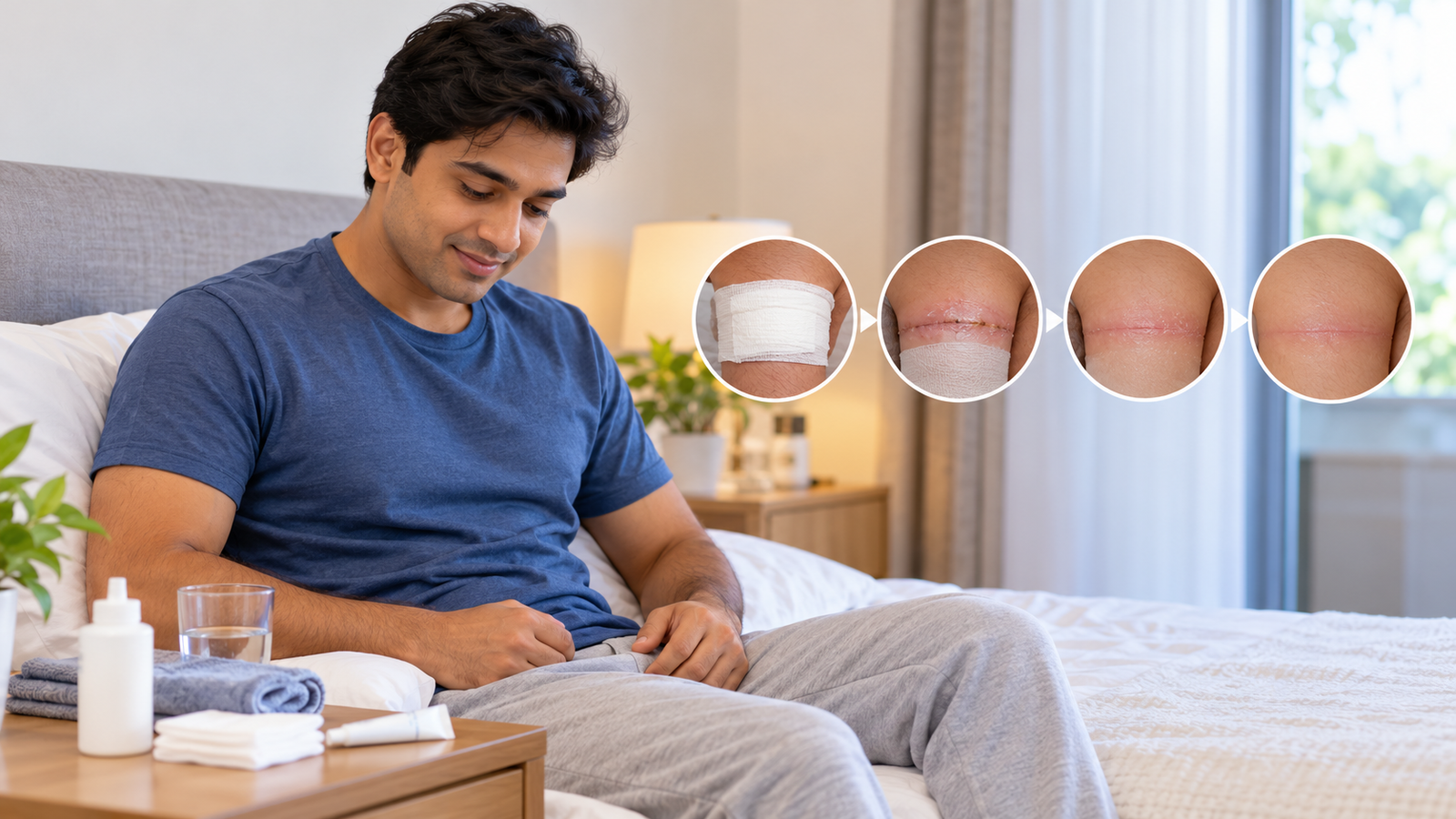

Does Circumcision Cure ED or Early Ejaculation?
Circumcision does not reliably cure erectile dysfunction (ED) or premature ejaculation (PE). It can relieve sexual discomfort caused by a tight foreskin, painful erections, or repeated foreskin infections, but it does not directly treat the usual causes of erection or ejaculation problems. Men experiencing these symptoms should seek a medical evaluation before considering surgery.
Many men believe circumcision improves sexual performance, increases ejaculation time, or strengthens erections. However, these claims often confuse the medical benefits of circumcision with treatments for sexual dysfunction.
Research on circumcision and premature ejaculation shows mixed findings, and major clinical guidelines do not recommend circumcision as a routine treatment for premature ejaculation or erectile dysfunction.
Understanding the difference between these conditions can help men choose appropriate treatment rather than undergoing an unnecessary procedure.
What Is the Difference Between Erectile Dysfunction and Premature Ejaculation?
Erectile dysfunction and premature ejaculation are different sexual health conditions. Although they sometimes occur together, each requires a separate assessment.
Erectile dysfunction (ED) means a man repeatedly struggles to achieve or maintain an erection firm enough for satisfactory sexual activity.
Premature ejaculation (PE) means ejaculation happens sooner than desired, with limited control and associated distress. Doctors consider the timing, whether the problem has existed since the first sexual experiences, and whether it developed later.
| Factor | Erectile Dysfunction | Premature Ejaculation |
|---|---|---|
| Main problem | Difficulty achieving or maintaining an erection | Ejaculation occurs sooner than desired |
| Common contributing factors | Diabetes, vascular disease, medications, stress, hormonal problems | Ejaculatory control, anxiety, relationship factors, sometimes ED |
| Effect on sexual activity | Erection may weaken or disappear | Ejaculation may occur before the desired time |
| Common treatments | Lifestyle changes, counselling, medicines and treatment of underlying conditions | Behavioural approaches, topical treatments, selected medicines and counselling |
| Role of circumcision | Not a standard treatment | Not a standard treatment |
Some men develop premature ejaculation because they worry about losing their erection. Treating erectile dysfunction may improve ejaculation control in these cases.
A doctor should identify which condition causes the main problem before recommending treatment.
Does Circumcision Cure Premature Ejaculation?
No strong evidence establishes circumcision as a reliable cure for premature ejaculation.
Some men assume removing the foreskin reduces sensitivity and automatically delays ejaculation.
However, sexual response involves nerve signalling, arousal, psychological factors, and ejaculatory control. Removing the foreskin does not consistently or predictably change these processes.
What Does Research Say About Circumcision and Premature Ejaculation?
Studies examining circumcision and premature ejaculation have reported different findings.
Some studies suggest changes in ejaculation timing after circumcision. Others find little difference between circumcised and uncircumcised men.
Differences in study design, patient characteristics, and how researchers measure ejaculation make the results difficult to compare.
Overall, current evidence does not support circumcision as a routine treatment for PE.
Can Circumcision Increase Ejaculation Time?
Some individuals report changes in ejaculation timing after circumcision, but others notice no improvement.
Doctors cannot reliably predict whether circumcision will increase, decrease, or leave ejaculation time unchanged for a particular patient.
Men should not choose circumcision solely because they expect it to delay ejaculation.
What Actually Helps Premature Ejaculation?
Doctors may recommend several evidence-based approaches depending on the patient's symptoms.
Behavioural techniques: Some men benefit from techniques that help them recognise arousal and improve ejaculatory control.
Topical anaesthetic treatments: Appropriate creams or sprays may reduce sensitivity and help delay ejaculation.
Prescription medicines: Doctors sometimes prescribe selected medicines, including certain serotonin reuptake inhibitors, when clinically appropriate.
Psychosexual counselling: Counselling may help when anxiety, relationship concerns or performance pressure contribute to symptoms.
Treatment of associated ED: When erection problems contribute to early ejaculation, addressing ED may improve the overall situation.
Patients should discuss treatment options with a qualified clinician rather than starting prescription medicines without medical advice.
Can Circumcision Improve Erectile Dysfunction?
Circumcision does not directly treat the common medical causes of erectile dysfunction.
An erection depends on blood circulation, nerve function, hormones, and psychological arousal.
Conditions such as diabetes, high blood pressure, vascular disease, and certain medication effects can interfere with these processes.
Circumcision does not correct blocked blood vessels, hormonal deficiencies, or nerve damage.
When Might Circumcision Improve Sexual Comfort?
Some men experience painful erections because their foreskin cannot retract comfortably.
A tight foreskin, also called phimosis, may cause pulling, cracking, or discomfort during sexual activity.
In these cases, treating the foreskin problem may make sexual activity more comfortable.
However, improved comfort does not necessarily mean circumcision has treated erectile dysfunction.
A man who previously avoided sexual activity because of pain may feel more confident after successful treatment, but this differs from correcting a medical erection disorder.
Does Circumcision Cause Erectile Dysfunction?
Research has not established that circumcision routinely causes erectile dysfunction.
Many circumcised men maintain normal erections and satisfactory sexual function.
However, every surgical procedure carries risks, including pain, infection, scarring, and changes in sensation.
Men should discuss these risks with their surgeon before choosing circumcision.
Does Circumcision Change Penile Sensitivity?
The foreskin contains sensory nerve endings, so circumcision changes penile anatomy and may alter sensation.
However, sensitivity and sexual satisfaction are not identical.
A person may notice a difference in touch sensation without experiencing a meaningful change in erection quality, ejaculation control, or sexual pleasure.
Does Reduced Sensitivity Mean Better Ejaculation Control?
Not necessarily.
Premature ejaculation involves more than penile sensitivity.
The nervous system, arousal response, psychological factors, and learned sexual responses all contribute to ejaculation timing.
Even when someone notices reduced sensitivity after circumcision, that change does not guarantee improved ejaculation control.
Can Circumcision Reduce Sexual Pleasure?
Research findings vary, and individual experiences differ.
Some men report no significant change in sexual satisfaction, while others describe positive or negative changes.
Surgeons should explain that sexual outcomes cannot be guaranteed.
Men considering circumcision primarily to change sensitivity should understand this uncertainty before making a decision.
What Are the Actual Medical Benefits of Circumcision?
Circumcision can offer medical benefits in selected situations.
Doctors may recommend it when a foreskin condition causes recurring symptoms or does not respond adequately to conservative treatment.
1. Treatment of Pathological Phimosis
Pathological phimosis occurs when scarring or disease causes persistent foreskin tightness.
It may lead to painful erections, difficulty cleaning beneath the foreskin, or recurrent inflammation.
Doctors may first consider appropriate non-surgical treatment, such as prescribed topical corticosteroids, depending on the cause.
Circumcision becomes an option when the condition is severe, recurrent, or unsuitable for conservative management.
2. Recurrent Balanitis or Balanoposthitis
Some men experience repeated inflammation affecting the glans or foreskin.
When appropriate hygiene, medical treatment and management of contributing conditions fail to prevent recurrence, circumcision may help selected patients.
3. Certain Foreskin Scarring Conditions
Conditions such as lichen sclerosus can cause foreskin scarring and narrowing.
Circumcision may form part of treatment when the disease significantly affects the foreskin.
4. Selected Preventive Benefits
Medical research associates circumcision with lower risks of certain infections in specific populations and circumstances.
However, the size and relevance of these benefits depend on age, health, sexual practices and local disease patterns.
Circumcision does not replace condoms, vaccination, screening, or other recommended preventive care.
The medical benefits of circumcision should not be confused with guaranteed improvements in sexual performance.
Circumcision and Erectile Dysfunction: When Should Men See a Doctor?
Men should seek medical advice when erection problems occur repeatedly or interfere with sexual activity.
Occasional difficulty achieving an erection can happen because of fatigue, stress, or alcohol consumption.
Persistent symptoms deserve further evaluation.
A doctor may assess blood pressure, blood glucose, cardiovascular risk, medications, hormonal symptoms, and psychological factors.
Common Causes of Erectile Dysfunction
| Possible Cause | How It May Affect Erections | Medical Approach |
|---|---|---|
| Diabetes | Can affect nerves and blood vessels | Improve diabetes management and assess ED treatment |
| Vascular disease | Reduces blood flow needed for erections | Assess cardiovascular health |
| Stress or anxiety | Interferes with arousal and confidence | Counselling and appropriate treatment |
| Medication effects | Certain medicines can affect sexual function | Review medication with the prescribing doctor |
| Hormonal problems | May affect libido or erection quality | Test when symptoms suggest a hormonal cause |
| Painful foreskin tightness | Can make erections uncomfortable | Assess and treat the foreskin condition |
Persistent erectile dysfunction may sometimes signal an underlying cardiovascular problem.
Early evaluation can therefore benefit overall health as well as sexual function.
Myths vs Facts About Circumcision and Sexual Performance
| Myth | Fact |
|---|---|
| Circumcision permanently cures premature ejaculation. | Research does not establish circumcision as a reliable PE treatment. |
| Circumcision makes erections stronger. | It does not directly improve blood flow or correct typical ED causes. |
| Removing the foreskin always delays ejaculation. | Changes in ejaculation timing vary between individuals. |
| Circumcision removes all penile sensitivity. | Sensation may change, but circumcision does not eliminate penile sensation. |
| Every man with early ejaculation needs circumcision. | Most men should first undergo evaluation and consider established PE treatments. |
| Circumcision guarantees better sexual satisfaction. | Individual outcomes differ, and no surgeon can guarantee improved sexual performance. |
| A tight foreskin always requires circumcision. | Some foreskin conditions respond to appropriate non-surgical treatment. |
When Should Circumcision Be Considered?
Circumcision may be appropriate when a man has a confirmed medical problem involving the foreskin.
For example, recurrent inflammation, significant scarring, or painful pathological phimosis may justify surgical treatment.
However, men whose main concern involves ejaculation timing or erection quality should receive an assessment for sexual dysfunction.
Dr. Ashutosh Shah, a Plastic, Reconstructive & Cosmetic Surgeon with over 22 years of surgical experience, provides surgical consultations at Elegance Clinic. Men considering circumcision should discuss their symptoms, medical history, and expectations so that the consultation can distinguish foreskin-related discomfort from erectile dysfunction or premature ejaculation.
The decision should focus on the underlying condition rather than claims that circumcision automatically improves sexual performance.
What Treatments Work Better for ED and Premature Ejaculation?
Doctors usually recommend treatment based on the specific diagnosis.
Treatment Options for Erectile Dysfunction
Lifestyle changes may help men with cardiovascular or metabolic risk factors.
Regular physical activity, smoking cessation, limiting alcohol, and managing diabetes or blood pressure can support erectile health.
Doctors may prescribe phosphodiesterase type 5 inhibitors, such as sildenafil or tadalafil, when appropriate.
These medicines are not suitable for everyone, particularly patients taking nitrate medications.
Other treatments may include counselling, vacuum erection devices, injections or specialist procedures for selected patients.
Treatment Options for Premature Ejaculation
Doctors may recommend behavioural techniques, topical anaesthetic products or prescription medicines.
Some patients benefit from combining medical treatment with psychosexual counselling.
When premature ejaculation develops alongside erectile dysfunction, treating the erection problem may also help improve ejaculation control.
A personalised treatment plan offers a more appropriate approach than circumcision solely for sexual performance concerns.
Conclusion
Circumcision and premature ejaculation are frequently discussed together, but circumcision does not provide a proven cure for early ejaculation.
Likewise, circumcision does not directly treat the common vascular, neurological, hormonal, or psychological causes of erectile dysfunction.
The procedure may improve comfort when a tight or diseased foreskin causes pain, but this benefit differs from treating sexual dysfunction.
Men should seek a proper diagnosis before considering surgery.
An appropriate treatment plan addresses the actual cause of the problem and avoids unnecessary procedures based on sexual performance myths.