
Does Circumcision Affect Sensation or Fertility?
Circumcision does not directly affect sperm production or fertility because it removes the foreskin, not the reproductive organs. Most research has not found consistent harmful effects on erectile function or overall sexual satisfaction. However, sensitivity may change after surgery, and individual experiences vary. Temporary tenderness during recovery should not be confused with permanent changes.
Men considering circumcision often have questions about sexual health. Will the penis become less sensitive? Can erections become weaker? Will the procedure affect fertility or sexual performance?
These concerns are understandable because circumcision changes the anatomy of the foreskin.
However, several common claims about circumcision and sensitivity are based on misconceptions or oversimplified interpretations of research.
Understanding what the procedure changes, what scientific studies suggest, and which complications are possible can help patients make informed decisions.
Circumcision and Sensitivity: What Actually Changes?
Circumcision removes the foreskin, the fold of skin covering the glans or head of the penis.
The foreskin contains sensory nerve endings and contributes to skin movement during sexual activity.
Removing it changes the amount of tissue present and how the glans interacts with clothing, touch, and friction.
However, this does not mean every circumcised man experiences reduced sexual pleasure.
Does the Glans Become More Sensitive After Surgery?
During early recovery, some patients experience increased sensitivity because the glans is newly exposed.
Clothing contact may feel uncomfortable for several days or weeks.
As healing progresses, this sensitivity often becomes less noticeable.
Does Circumcision Reduce Sensitivity Permanently?
Research has not established that circumcision consistently reduces overall sexual satisfaction or pleasure.
Some studies report little difference in sexual function between circumcised and uncircumcised men, while others describe changes in particular types of sensation.
Study methods, participant characteristics, and reasons for circumcision can influence findings.
Therefore, circumcision and sensitivity should be discussed without promising that sensation will remain identical or necessarily improve.
Why Do Individual Experiences Differ?
Several factors may influence a person's experience:
-
Natural variation in nerve sensitivity
-
Foreskin anatomy
-
Surgical technique
-
Amount of skin removed
-
Healing and scar formation
-
Previous pain or phimosis
-
Psychological expectations
-
Existing sexual health concerns
A patient who previously experienced painful erections because of tight foreskin may notice improved comfort after appropriate treatment.
However, this does not guarantee increased sexual pleasure.
Does Circumcision Affect Erections?
Circumcision does not directly involve the erectile tissues responsible for producing an erection.
The procedure removes foreskin tissue rather than the structures that normally control penile blood flow.
For this reason, uncomplicated circumcision is not generally expected to cause erectile dysfunction.
Can Erections Be Painful After Circumcision?
Yes.
During the first few weeks, erections may stretch the healing incision and cause temporary discomfort.
Nighttime erections are common and cannot always be prevented.
This discomfort usually improves as the wound heals.
Can Tight Skin Affect Erections?
In some cases, excessive skin removal or problematic scarring can create uncomfortable tension during erection.
Such complications are uncommon but require medical assessment.
Patients should discuss skin tension and cosmetic expectations before surgery.
For information about surgical planning, see cosmetic circumcision surgery.
What If Erectile Problems Continue After Healing?
Persistent erectile difficulties should not automatically be attributed to circumcision.
Erectile dysfunction can also be associated with diabetes, cardiovascular disease, medication effects, stress, and other medical conditions.
A clinician can assess the underlying cause and recommend appropriate treatment.
Does Circumcision Affect Sexual Performance?
Sexual performance involves several different functions, including erection quality, ejaculation, comfort, and satisfaction.
Circumcision does not have the same effect on every aspect of sexual health.
Does Circumcision Improve Sexual Stamina?
There is no reliable evidence that circumcision consistently improves sexual stamina.
Some men report differences in sexual experience after surgery, but these reports do not establish a predictable benefit.
Can Circumcision Prevent Premature Ejaculation?
Circumcision is not an established treatment for premature ejaculation.
Studies examining ejaculation timing after circumcision have produced mixed results.
Men experiencing premature ejaculation should receive an appropriate assessment rather than undergoing circumcision solely to delay ejaculation.
Does Circumcision Improve Sexual Pleasure?
Circumcision may relieve pain when conditions such as phimosis interfere with sexual activity.
However, removing the foreskin does not guarantee better sexual pleasure.
The relationship between circumcision and sensitivity is complex, and individual outcomes vary.
Circumcision and Fertility: Can It Affect Sperm Count?
One of the most common myths is that circumcision can reduce sperm count or cause infertility.
Circumcision and fertility are not directly linked through the surgical procedure because circumcision does not involve the testes, sperm-producing structures, or reproductive ducts.
Sperm production takes place in the testes.
Circumcision removes the foreskin, which is external skin tissue.
Does Circumcision Reduce Sperm Production?
No direct reduction in sperm production is expected from an uncomplicated circumcision.
The operation does not remove or alter the organs responsible for making sperm.
Does Circumcision Affect Testosterone?
Circumcision does not directly alter the testes or the hormonal system responsible for testosterone production.
Routine circumcision is not expected to reduce testosterone levels.
Can Circumcision Affect the Ability to Have Children?
Uncomplicated circumcision does not directly interfere with sperm production or the ability to father a child.
However, fertility depends on many factors, including sperm quality, reproductive health, and the health of both partners.
If a couple is experiencing difficulty conceiving, a fertility evaluation may be appropriate.
Should Circumcision Be Done to Improve Fertility?
No.
Circumcision is not a treatment for low sperm count or male infertility.
Patients should not undergo the procedure expecting it to improve sperm production.
Circumcision Side Effects: Temporary vs Long-Term
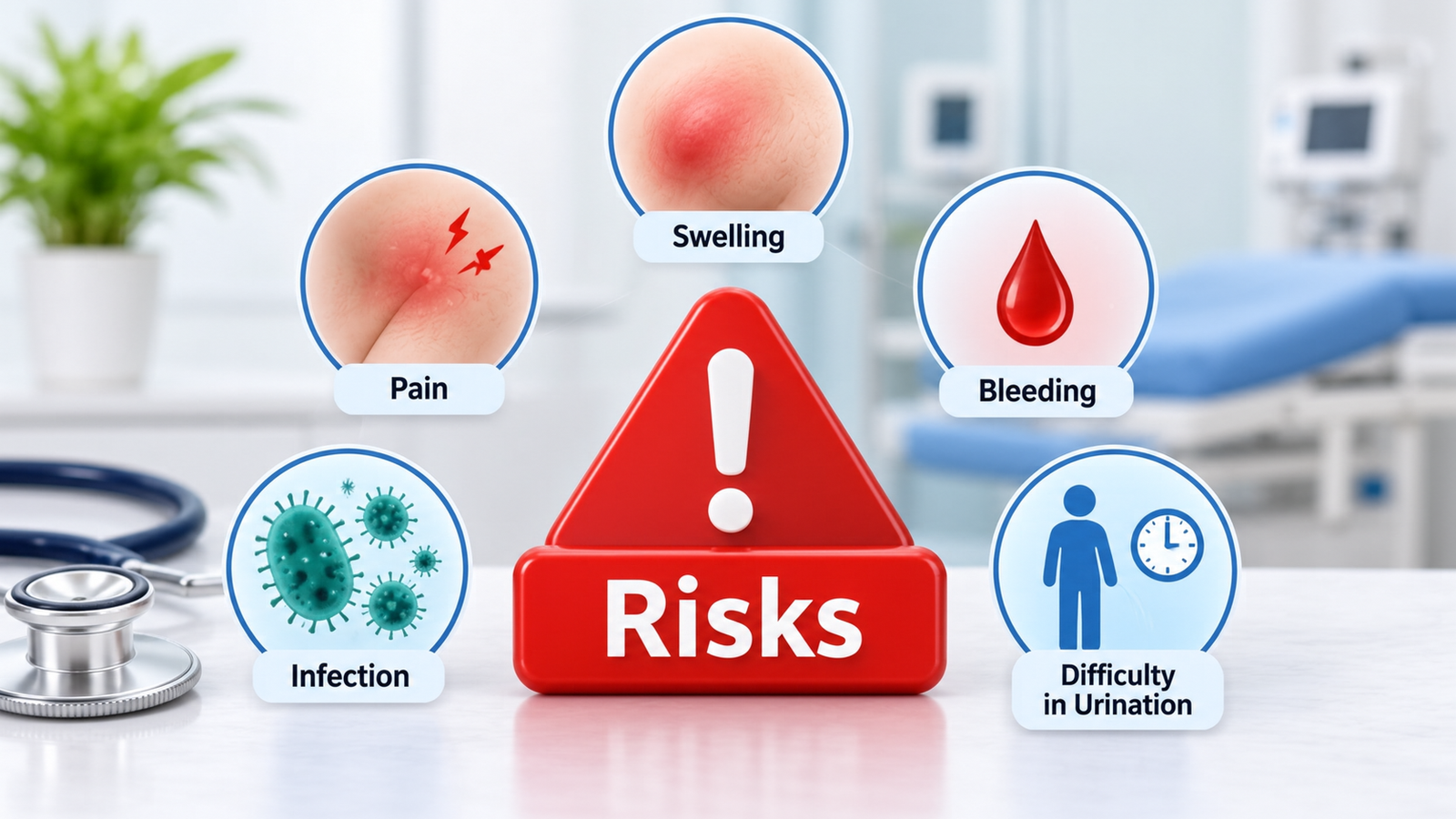
Like any surgical procedure, circumcision has potential risks.
Most patients recover without major complications, but it is important to understand possible circumcision side effects before surgery.
Common Temporary Effects
These may include:
-
Mild pain
-
Swelling
-
Bruising
-
Temporary glans sensitivity
-
Minor bleeding or spotting
-
Discomfort during erections
-
Temporary changes in skin sensation
These symptoms usually improve during recovery.
Possible Complications
Less common problems include:
-
Significant bleeding
-
Wound infection
-
Delayed healing
-
Wound separation
-
Excessive or uncomfortable scarring
-
Too much or too little skin removal
-
Persistent discomfort
-
Cosmetic dissatisfaction
Rare complications can affect urinary function or other aspects of penile health.
Can Sensitivity Changes Last Longer?
Yes.
Some individuals may notice lasting differences in sensation.
It is not possible to guarantee that every patient's sensation will be unchanged.
A surgeon should explain the potential benefits and limitations of treatment before obtaining informed consent.
Myth vs Fact: Circumcision and Sexual Health
| Common Myth | Medical Fact |
|---|---|
| Circumcision always reduces sexual pleasure. | Research does not establish a consistent reduction in overall sexual satisfaction; individual experiences vary. |
| Circumcision causes erectile dysfunction. | Uncomplicated circumcision is not generally associated with erectile dysfunction, although complications may affect comfort. |
| Circumcision lowers sperm count. | The operation does not involve sperm-producing organs. |
| Circumcision guarantees better sexual performance. | No guaranteed improvement in stamina, erection quality, or pleasure has been established. |
| Sensitivity immediately after surgery is permanent. | Early sensitivity often changes as healing progresses. |
| Circumcision has no risks. | Bleeding, infection, scarring, and other complications are possible. |
| Circumcision improves male fertility. | Circumcision is not an infertility treatment. |
How Long Does Sensitivity Take to Settle After Circumcision?
Recovery varies between patients.
The wound often requires approximately four to six weeks to heal, while sensitivity and scar appearance may continue changing afterward.
First Week
The glans may feel unusually sensitive.
Mild swelling and discomfort are common.
Avoid unnecessary rubbing and follow wound-care instructions.
Weeks Two to Three
Swelling and tenderness often improve.
However, the incision may still be healing.
Do not assume that reduced pain means the wound is ready for sexual activity.
Weeks Four to Six
Many adults approach complete wound healing.
Sexual activity may resume when the surgeon confirms that the wound has healed adequately.
Following Months
Scar firmness and sensitivity may continue changing.
Persistent pain, uncomfortable tightness, or troublesome numbness should be assessed.
When Can Sexual Activity Resume?
Most adults are advised to avoid sexual intercourse and masturbation for at least four weeks after circumcision.
Some patients need four to six weeks or longer.
Starting too early can cause:
-
Pain
-
Bleeding
-
Wound irritation
-
Increased swelling
-
Wound separation
Sexual activity should resume only when the incision has completely healed, and the surgeon has confirmed that it is safe.
Patients can review the clinic's key points before circumcision for preparation and recovery guidance.
When Should You Contact a Surgeon?
Temporary sensitivity is expected during recovery, but persistent or worsening symptoms may require assessment.
Seek medical advice if you experience:
-
Increasing pain
-
Significant bleeding
-
Spreading redness
-
Pus or unpleasant discharge
-
Fever
-
Wound separation
-
Persistent painful erections
-
Troublesome tightness after healing
-
Continuing sexual discomfort
Seek urgent medical care for heavy bleeding, inability to pass urine, or rapidly worsening symptoms.
Why Is an Individual Consultation Important?
The reasons for considering circumcision differ from patient to patient.
Some men have phimosis, recurrent inflammation, or painful foreskin retraction. Others are considering elective circumcision.
At Elegance Clinic, Dr. Ashutosh Shah, MBBS, MS, MCh, and DNB, is a Plastic and Reconstructive Surgeon with over 22 years of surgical experience. During consultation, patients can discuss foreskin problems, surgical options, expected healing, possible sensitivity changes, and individual risks before deciding whether circumcision is appropriate.
For more information about the procedure, visit adult circumcision.
Conclusion
Understanding circumcision and sensitivity requires separating temporary healing changes from possible long-term outcomes.
Circumcision does not directly affect sperm production or fertility, and uncomplicated surgery is not generally expected to cause erectile dysfunction.
However, the foreskin contributes to sensation and skin movement, so individual experiences after surgery may differ.
Patients should consider the medical reason for circumcision, potential benefits, possible complications, and realistic expectations before choosing treatment.
For personalised advice about foreskin problems and adult circumcision, book a consultation with Elegance Clinic.