Is paraphimosis treatment safe?
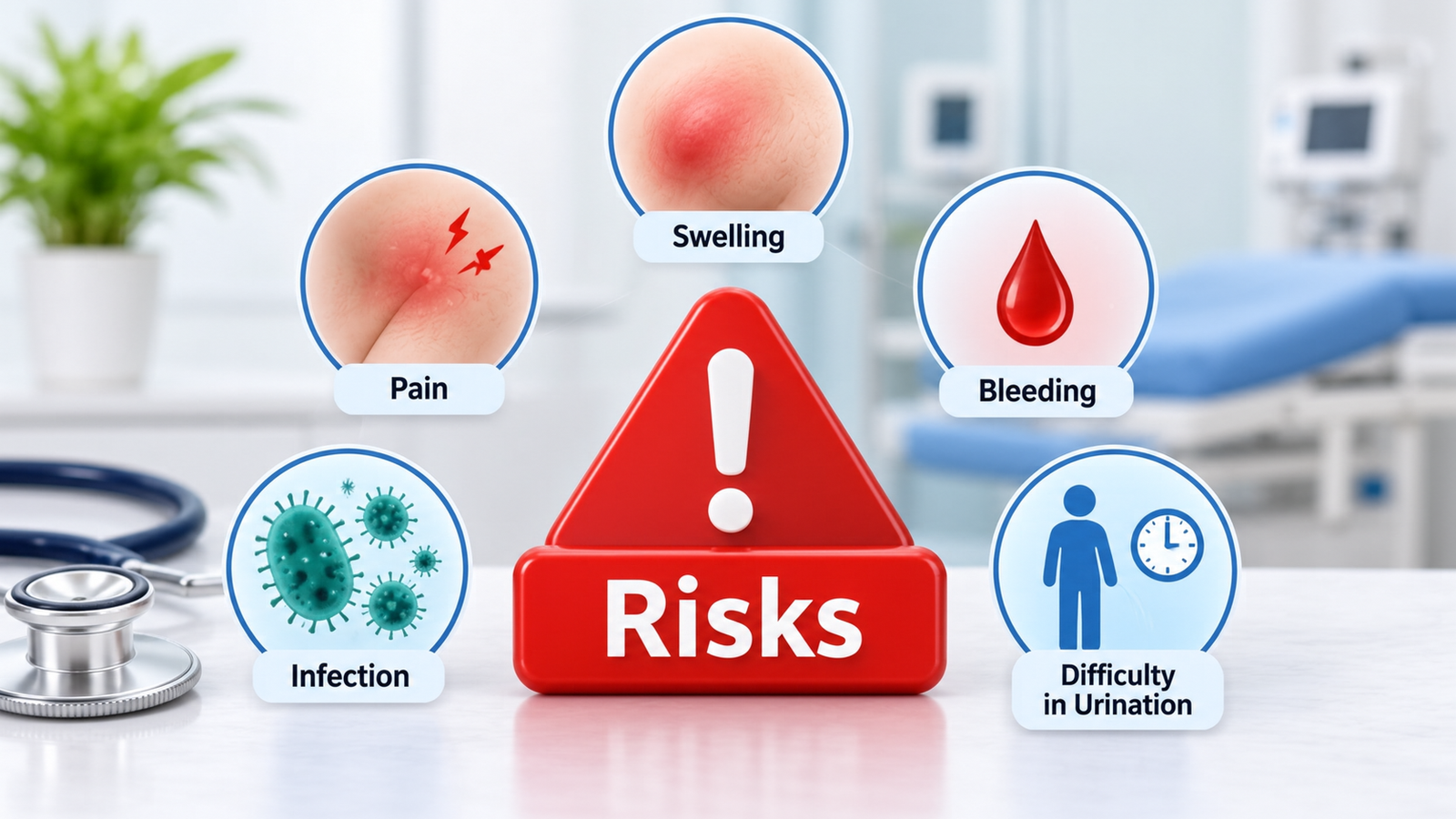
Paraphimosis treatment is generally safe when performed promptly by a qualified medical professional. Common paraphimosis treatment risks include temporary swelling, tenderness and discomfort. However, untreated paraphimosis can restrict blood circulation and cause permanent tissue damage. Timely medical intervention, appropriate treatment and proper aftercare help reduce the risk of serious complications.
Paraphimosis is a medical emergency that requires immediate medical attention.
Key Takeaways
-
Paraphimosis occurs when the retracted foreskin becomes trapped behind the head of the penis.
-
Immediate treatment is necessary to prevent restricted blood circulation and tissue damage.
-
Manual reduction may resolve the condition without surgery.
-
Surgery may be necessary if manual reduction is unsuccessful.
-
Temporary swelling, bruising and discomfort may occur after treatment.
-
Increasing pain, severe swelling and unusual skin colour changes require urgent assessment.
-
Dr. Ashutosh Shah at Elegance Clinic can assess underlying foreskin problems and discuss preventive treatment options.
Which Side Effects of Paraphimosis Treatment Are Common and Temporary?
The side effects of paraphimosis treatment depend on the severity of the condition, the duration of restricted circulation and the treatment method used.
Some symptoms may result from paraphimosis itself rather than its treatment.
Temporary Swelling
Swelling may remain after the foreskin has been returned to its normal position. It should generally improve as circulation and tissue condition recover.
Increasing swelling requires medical assessment.
Mild Pain and Tenderness
Discomfort may occur following manual reduction or surgery.
Patients should take prescribed pain-relief medicines as directed and avoid unnecessary pressure on the affected area.
Bruising
Bruising may develop because of tissue compression, manipulation or surgical treatment.
It should gradually improve rather than become more extensive.
Minor Bleeding
Minor spotting may occur if surgery is performed or the skin has small injuries. Persistent or heavy bleeding requires urgent medical attention.
Paraphimosis Treatment Risks and Side Effects Table
| Side Effect | How Common | How Long | What to Do |
|---|---|---|---|
| Mild swelling | Common presenting symptom; may persist after treatment | Gradually improves | Monitor for worsening swelling |
| Tenderness | May occur | Usually short-term | Take prescribed pain relief |
| Bruising | Possible | Several days or longer | Monitor for improvement |
| Minor bleeding | Possible after surgery | Usually short-term | Seek advice if persistent |
| Infection | Possible complication | Variable | Obtain medical assessment |
| Recurrent paraphimosis | Possible after reduction | Variable | Discuss preventive treatment |
| Restricted circulation | Serious concern | Requires immediate attention | Seek emergency care |
The frequency and duration of symptoms vary according to the patient's condition and treatment method.
Which Complications Are Rare but Important?
Prompt treatment reduces the likelihood of serious tissue damage. However, patients should understand the potential complications associated with paraphimosis and its treatment.
Restricted Blood Circulation
A trapped foreskin can act like a tight band, interfering with normal blood circulation.
Without immediate treatment, prolonged restriction may damage the affected tissues.
Tissue Damage
Severe or prolonged paraphimosis can result in tissue injury or necrosis. This is primarily a complication of the condition itself, particularly when treatment is delayed.
Infection
Infection may develop if the skin is injured or a surgical wound becomes infected.
Warning signs include fever, increasing redness, pus and worsening pain.
Recurrence
Manual reduction can resolve the immediate emergency, but underlying foreskin tightness may remain.
Patients with recurrent episodes may require further treatment, including circumcision.
Surgical Complications
When surgery is required, possible complications include bleeding, infection, scarring and delayed wound healing.
Individual anatomy can influence surgical planning. For related information, read buried penis and circumcision risk.
Understanding paraphimosis treatment risks helps patients distinguish expected recovery symptoms from complications that require urgent care.
How Are Risks Reduced Before and During Treatment?
The primary goal of emergency treatment is to relieve the trapped foreskin and restore adequate circulation.
Routine investigations should not delay necessary emergency intervention.
Immediate Medical Assessment
The doctor examines the affected area to assess swelling, skin colour, circulation and tissue condition.
Patients should provide information about previous foreskin problems, recent procedures, medicines and underlying medical conditions.
Pain Management
Appropriate pain relief or local anaesthesia may be used to make treatment more comfortable.
The approach depends on the patient's condition and the treatment required.
Manual Reduction
A trained medical professional may attempt to reduce swelling and return the foreskin to its normal position.
Patients should not repeatedly attempt forceful reduction at home, as this can cause additional injury and delay treatment.
Surgical Treatment When Necessary
If manual reduction is unsuccessful, an emergency surgical procedure may be required to relieve the constriction.
Circumcision may also be considered to prevent recurrence, depending on the underlying cause and tissue condition.
Different circumcision techniques have individual considerations. Read is low cut circumcision safe for adults for related information.
Post-Treatment Care
Following treatment, patients should:
-
Take prescribed medicines as directed.
-
Maintain hygiene according to medical instructions.
-
Avoid forceful foreskin retraction.
-
Avoid activities that cause pain or friction.
-
Attend recommended follow-up appointments.
Appropriate emergency care and postoperative monitoring can help minimise paraphimosis treatment risks.
Paraphimosis Treatment in Varachha Surat: How Do You Check a Doctor's Qualifications?
Choosing an appropriately qualified medical professional is important when managing foreskin conditions.
However, an active episode of paraphimosis requires immediate emergency care rather than waiting for a preferred specialist appointment.
Check Medical Registration
Verify that the treating doctor is registered with the appropriate medical regulatory authority.
Review Relevant Qualifications
Look for qualifications and experience in managing genital conditions, emergency foreskin problems and circumcision procedures.
Consider Treatment Facilities
The facility should have appropriate equipment, pain-management options, infection-control measures and access to emergency surgical care when required.
Ask About Treatment Experience
For planned follow-up treatment, ask about the doctor's experience with recurrent phimosis, paraphimosis and preventive circumcision.
Treatment considerations also differ between children and adults. Parents can read baby circumcision safe method in surat for related information about pediatric circumcision.
Consultation With Dr. Ashutosh Shah
Dr. Ashutosh Shah (M.S., M.Ch., D.N.B.) is a Plastic, Reconstructive and Cosmetic Surgeon at Elegance Clinic.
Patients can discuss underlying foreskin tightness, previous episodes of paraphimosis, recurrence prevention and suitable surgical options during a planned consultation.
For non-emergency appointment information, contact us.
Which Signs After Treatment Need Urgent Attention?
Although temporary discomfort may occur, certain symptoms should never be ignored.
Recognising warning signs is an important part of managing paraphimosis treatment risks.
Suddenly Increasing Swelling
Rapidly increasing swelling may indicate recurrent constriction or another complication.
Severe or Worsening Pain
Pain that becomes progressively worse requires immediate medical assessment.
Unusual Skin Colour
Blue, purple, black or unusually pale skin may indicate compromised circulation or tissue injury.
Seek emergency medical care immediately.
Difficulty Passing Urine
Difficulty urinating requires prompt assessment. Complete inability to pass urine requires immediate medical attention.
Fever or Pus
Fever, pus, spreading redness or foul-smelling discharge may indicate infection.
Recurrent Trapped Foreskin
If the foreskin becomes trapped behind the head of the penis again, seek emergency treatment immediately.
Do not wait for symptoms to resolve independently or attempt repeated forceful manipulation.
Conclusion
Understanding paraphimosis treatment risks helps patients recognise temporary side effects and potentially serious complications.
Prompt treatment is essential because untreated paraphimosis can compromise blood circulation and damage tissues.
Dr. Ashutosh Shah at Elegance Clinic can assess underlying foreskin conditions and discuss treatment options to reduce recurrence.