Buried and Concealed Penis: Why Standard Circumcision Can Make It Worse
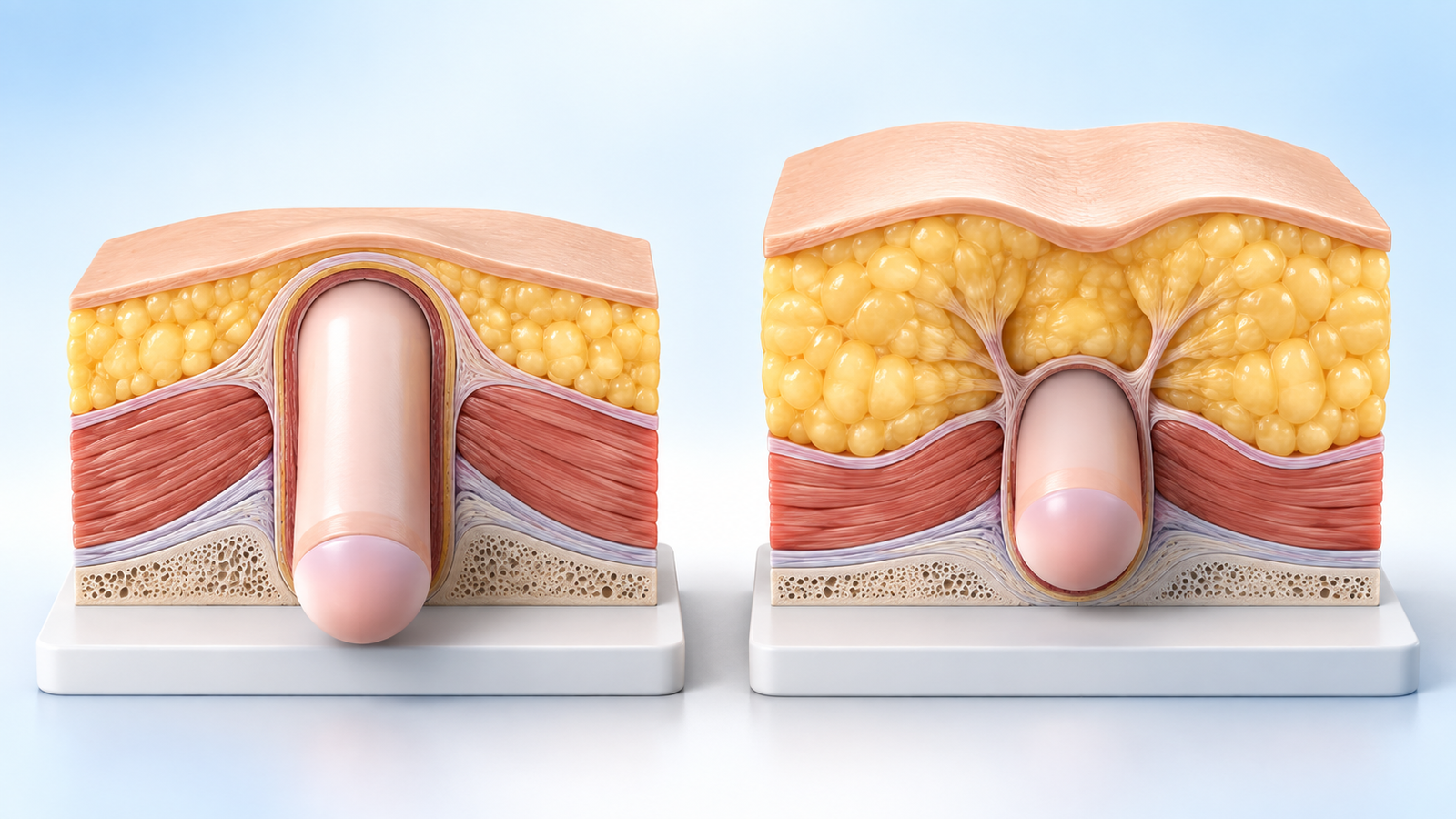
In a buried or concealed penis, the shaft is hidden by suprapubic fat or a tethered skin envelope, so removing the foreskin in the usual way can leave too little skin cover and trap the shaft further, which is why the anatomy is assessed before any cut is planned.
A buried penis does not necessarily mean that the penis itself is abnormally small. In many patients, the shaft has a normal underlying length but is partly hidden within surrounding tissue. This distinction matters when circumcision is being considered because simply removing more skin may not correct the cause of concealment and, in selected cases, may make the appearance or skin shortage worse.
At Elegance Clinic, Surat, Dr. Ashutosh Shah, a plastic and reconstructive surgeon with 22+ years of experience, assesses the skin envelope, suprapubic tissue, scar position, and previous surgery before deciding whether circumcision is appropriate or whether a reconstructive procedure is required.
What Causes a Penis to Look Buried or Concealed?
A concealed or buried appearance can develop for different reasons. The visible portion of the shaft may be reduced even though the underlying penile length itself has not changed.
Suprapubic Fat
Excess tissue in the area above the base of the penis can surround the shaft and make it appear shorter or hidden.
This may become more noticeable with weight gain, but body weight is not the only possible cause of concealment.
The relationship between suprapubic fat and penile appearance needs to be assessed while standing and lying down and with gentle pressure around the base where clinically appropriate.
Abnormal Skin Attachment
The shaft may be pulled inward when skin and deeper tissues are tethered abnormally.
In these cases, the problem is not simply excess foreskin. Removing foreskin alone does not release the deeper attachment responsible for concealment.
Scar Tissue
Scarring can pull or trap the shaft.
This may develop following inflammation, previous surgery, or wound-healing problems.
Previous Circumcision
A patient can sometimes develop a trapped penis after circumcision, particularly when scarring or inadequate mobile skin restricts projection of the shaft.
Further routine removal of skin in this situation can potentially make the shortage more difficult to reconstruct.
Patients who notice that surrounding skin makes the penis appear less visible can also read When loose skin hides the shaft.
Is a Buried Penis the Same as a Small Penis?
No. These terms describe different problems.
With a buried penis, part of a normally developed shaft may be concealed by surrounding skin, fat, or abnormal attachments.
The visible length can therefore underestimate the actual underlying length.
This is why assessment should not be based only on how much of the penis can be seen while the patient is standing.
The clinician needs to determine whether the shaft can be exposed by compressing surrounding tissue and whether the skin moves normally around it.
That distinction affects treatment.
A procedure designed to expose a concealed shaft is different from treatment intended to change penile length.
Why Can a Standard Circumcision Worsen the Problem?
Understanding buried penis and circumcision risk begins with the skin envelope.
Circumcision normally removes a planned amount of foreskin. In straightforward anatomy, enough mobile skin remains to cover the shaft comfortably.
A buried penis can be different.
If much of the shaft is sitting within surrounding tissue, what initially looks like excess foreskin may actually be skin required to cover the shaft once it is released.
Removing that skin without recognising the underlying concealment can create a shortage.
Potential problems can include:
- Increased shaft trapping
- Tight skin cover
- Scar contraction
- Difficulty exposing the shaft
- Uncomfortable pulling
- Poor cosmetic appearance
- Greater difficulty with later reconstruction
This does not mean circumcision must always be avoided in every patient with a concealed penis.
It means that routine circumcision should not be planned without first understanding the anatomy.
In some patients, circumcision may form part of a larger reconstructive operation. In others, preserving available skin can be particularly important.
Assessment Table: Why the Cause Changes the Treatment
| Cause of Concealment | Examination Finding | Is Standard Circumcision Safe? | Possible Alternative | Recovery |
|---|---|---|---|---|
| Prominent suprapubic fat | Shaft partly hidden by surrounding tissue | Requires individual assessment | Weight management and/or reconstructive correction depending on severity | Depends on treatment |
| Skin tethering | Shaft cannot project normally because tissue holds it inward | Routine skin removal may worsen shortage | Release and reconstruction | Depends on extent |
| Scar-related trapping | Tight scar pulls or holds the shaft inward | Routine circumcision alone may be inappropriate | Scar release and reconstructive revision | Individualised |
| Previous excessive skin removal | Limited mobile skin available for shaft coverage | Further skin removal may worsen the problem | Skin redistribution or reconstruction; grafting in selected cases | Depends on complexity |
| Combined concealment | Fat, tethering and scarring coexist | Requires careful planning | Individualised buried-penis reconstruction | Individualised |
The examination determines which category best explains the problem.
How Is the Anatomy Assessed Before Surgery?
A proper assessment should establish what is actually hiding the shaft.
The surgeon may examine several features.
How Much Shaft Can Be Exposed?
Gentle pressure around the surrounding tissues can help show whether a normally developed shaft is concealed beneath them.
Is There Enough Mobile Skin?
Skin availability is particularly important if circumcision has already been performed.
The surgeon needs to know whether there is enough healthy tissue to cover the shaft after it is released.
Where Is the Scar?
A circumferential scar may act as a constricting ring.
Other scars can tether skin in one direction and create asymmetry.
Is Suprapubic Tissue a Major Contributor?
When surrounding fat is a significant part of the concealment, simply altering the foreskin may not address the primary problem.
Has There Been Previous Surgery?
Previous circumcision, revision, or another genital operation changes the reconstructive options because some local tissue may already have been removed.
Is There Active Skin Disease or Infection?
Inflammation and infection may need to be treated before definitive reconstruction is considered.
Which Repairs Are Used and How Do They Differ From Circumcision?
Circumcision removes foreskin. Buried penis reconstruction aims to expose and stabilise the shaft while maintaining adequate skin coverage.
That difference is fundamental.
Depending on the cause, buried penis repair options may involve one or more reconstructive steps.
Releasing Tethered Tissue
Abnormal attachments can be released so the shaft is no longer pulled inward.
Scar Release
When a tight scar is trapping the shaft, the scar may need to be released or revised.
The resulting tissue defect then has to be covered appropriately.
Repositioning Available Skin
Usable local skin may sometimes be redistributed to improve shaft coverage.
This is one reason surgeons try to avoid unnecessarily removing potentially useful tissue before the reconstructive problem is understood.
Addressing Suprapubic Tissue
In selected adults where suprapubic tissue contributes substantially to concealment, treatment may need to address this component rather than focusing only on foreskin.
The exact approach depends on anatomy and severity.
Skin Grafting
A skin graft is not necessary for every buried penis repair.
However, grafting may be considered when there is insufficient healthy local skin to provide adequate shaft coverage after release.
This can be particularly relevant after substantial skin loss, severe scarring, or previous operations.
What Happens If a Trapped Appearance Follows an Earlier Circumcision?
A trapped penis after circumcision needs a different assessment from an uncomplicated primary circumcision.
The first question is why the shaft appears trapped.
Possible contributors include:
- Scar contraction
- Excessive skin deficiency
- Persistent underlying concealment
- Abnormal skin attachment
- Suprapubic tissue
- A combination of these factors
The solution is therefore not necessarily another standard circumcision.
In fact, removing additional skin without identifying the cause could worsen an existing shortage.
Corrective treatment may involve scar release, redistribution of remaining skin, or reconstructive coverage.
Patients concerned about an unsatisfactory previous procedure can read Correcting a poor circumcision result and the Revision circumcision service page.
Can Weight Loss Alone Improve a Buried Appearance?
Weight loss may improve the appearance when prominent suprapubic fat is an important contributor.
Reducing surrounding tissue can expose more of the shaft and may also improve general health before surgery.
However, weight loss cannot correct every cause.
If the shaft remains tethered by abnormal attachments or trapped by scar tissue, reducing body weight may not completely release it.
Similarly, significant skin deficiency following previous surgery will not be replaced by weight loss.
The decision about surgery should therefore be based on what remains after the different causes of concealment have been identified.
Should Circumcision Be Avoided Completely?
Not necessarily.
The important distinction is between routine circumcision without anatomical assessment and a carefully planned procedure in a patient known to have a concealed penis.
In some cases, circumcision may still be appropriate.
In others, foreskin or shaft skin may be valuable for reconstruction and should not be removed unnecessarily.
If reconstruction and circumcision are both required, they may need to be planned together rather than as unrelated procedures.
The safest approach is to determine the source of concealment first and decide what tissue needs to be preserved before making any irreversible cut.
What Does Recovery After a Buried Penis Repair Involve?
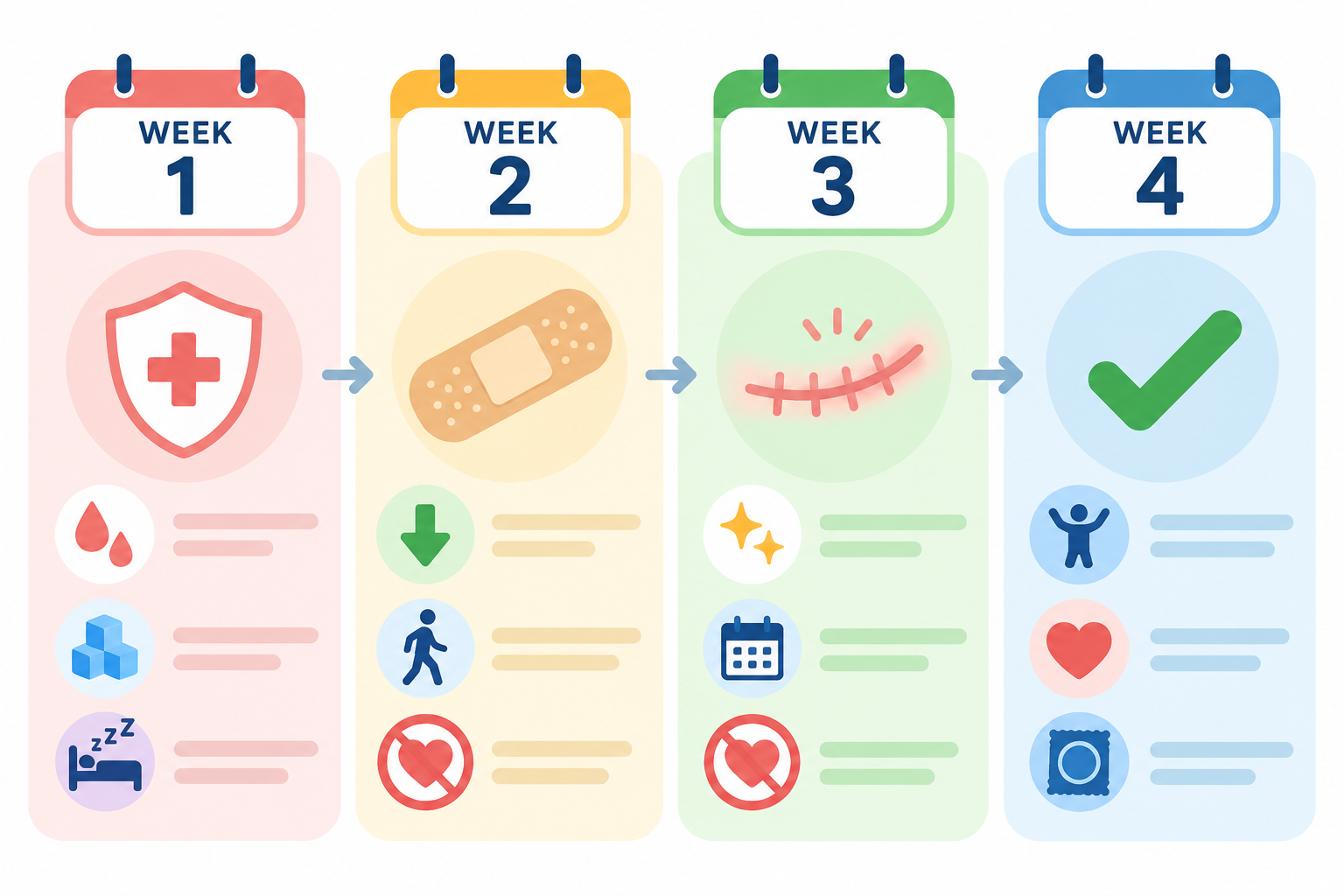
Recovery varies much more than it does after a straightforward circumcision because buried penis surgery can range from a limited scar release to a larger reconstruction.
Depending on the operation, early recovery may involve:
- Swelling
- Dressings
- Wound care
- Pain medication
- Temporary activity restrictions
- Monitoring of skin or graft healing
- Follow-up appointments
If grafting is required, postoperative care may differ from a simple local tissue repair.
Patients should also understand that early swelling can temporarily alter the appearance.
The final result should not be judged immediately after surgery.
The surgeon will advise when normal work, exercise, and sexual activity can safely resume based on the actual reconstruction performed.
Buried Penis in Babies and Children
A concealed appearance can also occur in children, but the causes and treatment decisions are not necessarily identical to those in adults.
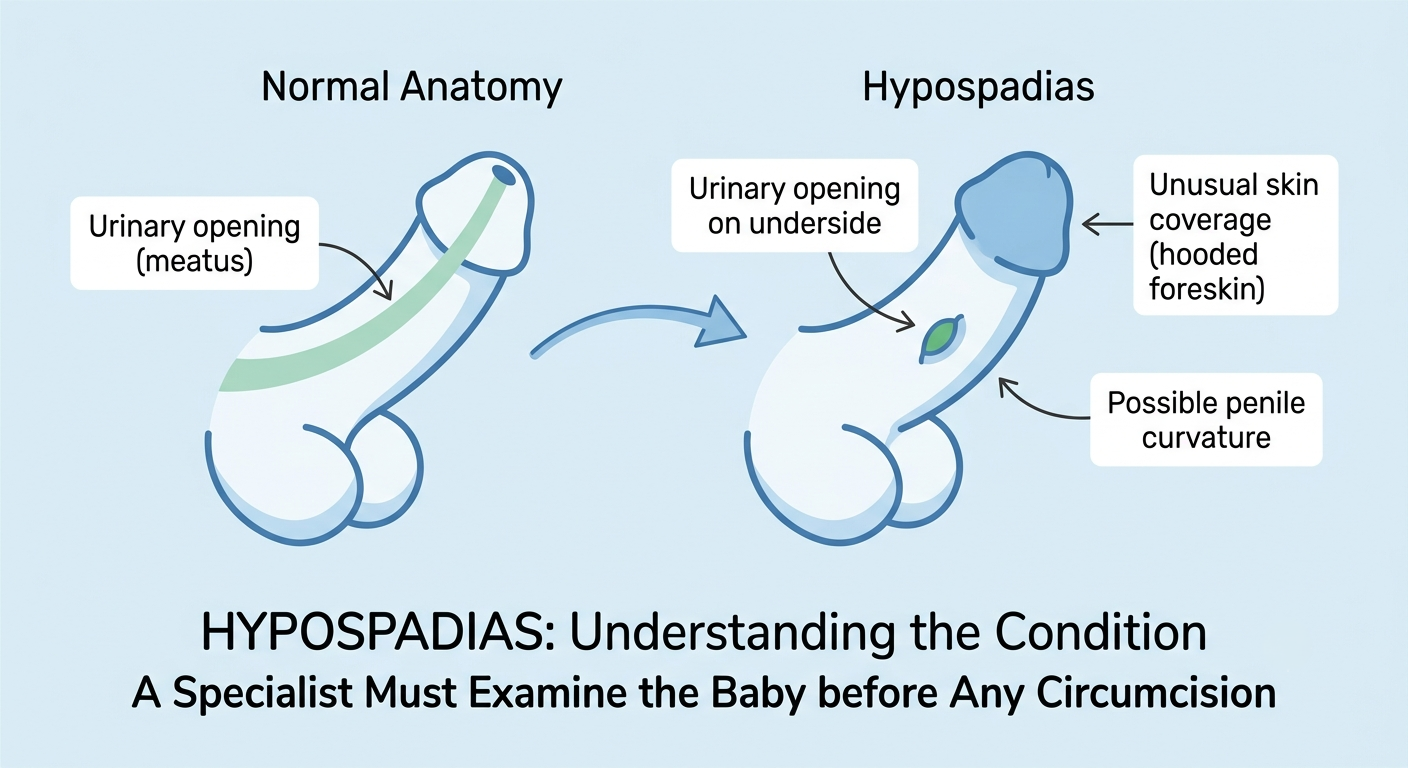
Parents should not assume that a baby needs circumcision simply because the penis appears partly hidden.
The anatomy should first be assessed.
This is especially important because removing skin that is needed for later shaft coverage can complicate reconstruction.
Parents concerned about appearance can read Concealed appearance in babies.
Why Assessment Must Come Before Circumcision
The key issue with buried penis and circumcision risk is not that circumcision is automatically wrong. The problem is performing routine foreskin removal before recognising that the apparent excess skin may be needed for shaft coverage. A concealed penis can result from suprapubic tissue, tethered skin, scarring, previous surgery, or several factors together, and each cause requires a different treatment plan. Further skin removal can be particularly problematic when a previous circumcision has already created a shortage. At Elegance Clinic, Surat, Dr. Ashutosh Shah can assess the available skin, scar pattern, and cause of concealment before deciding whether circumcision, scar release, tissue repositioning, or another reconstructive approach is appropriate.