Why Does My Baby’s Penis Look Different From Normal?
It is natural for parents to worry when their baby’s penis looks different from what they expected. In many cases, the difference is harmless. However, some physical changes can indicate a congenital condition that needs evaluation by a pediatric urologist or qualified surgeon.
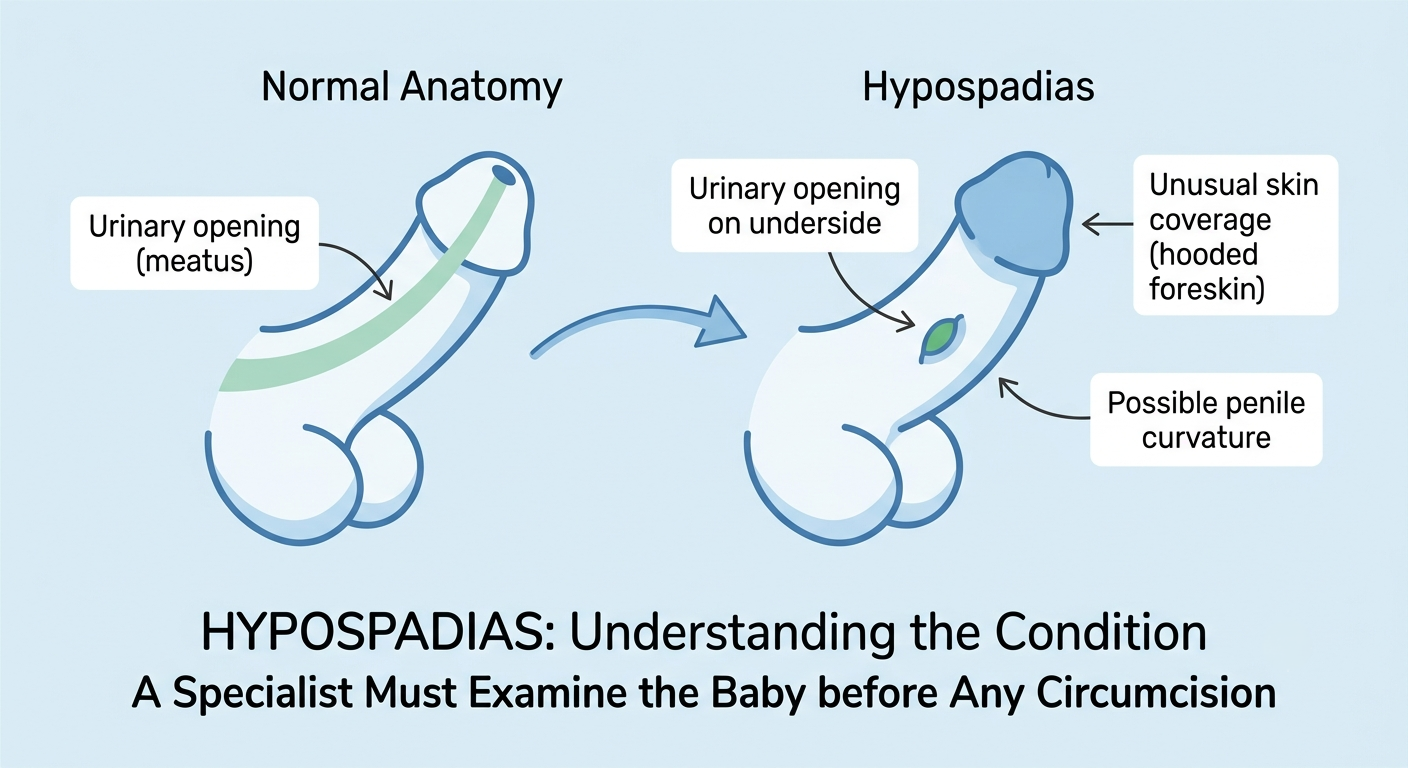
One condition parents may notice is hypospadias, where the opening through which urine passes is located somewhere along the underside of the penis rather than directly at the tip. The opening can be closer to the tip, middle, or base of the penis, depending on the severity.
What Can Make a Baby’s Penis Look Different?
Several conditions can affect the appearance of a newborn baby's penis. These may include:
- An opening that is not located at the tip
- A downward curve of the penis
- A hooded or unusually developed foreskin
- A buried or concealed penis
- Differences in penile size or development
- Swelling or changes related to birth
Not every difference requires surgery. Therefore, a proper examination is important before deciding whether treatment is necessary.
Could It Be Hypospadias?
If your baby's urine opening is not at the tip of the penis, hypospadias is one possible explanation.
Hypospadias develops before birth and occurs when the urethra does not form completely in its usual position. The foreskin may also appear incomplete on the underside, creating a hooded appearance.
Some babies have mild hypospadias with the opening only slightly below the tip. In more significant cases, the opening may be farther down the shaft, and the penis may also have noticeable curvature.
What Symptoms Should Parents Look For?
Parents may notice:
- The urine opening appears below the tip.
- The penis curves downward.
- The foreskin does not surround the head of the penis.
- Urine may spray or flow in an unusual direction.
- The penis may have an unusual appearance when compared with typical newborn anatomy.
The severity can vary considerably. A baby may have one or several of these features.
Does Hypospadias Always Require Surgery?
No. Not every case of hypospadias requires surgery. Mild cases may sometimes have little functional impact and may only require observation.
Surgery may be recommended when the urethral opening is significantly displaced, the penis has substantial curvature, urination is affected, or reconstruction would improve function.
The decision depends on the baby's anatomy, the location of the opening, penile curvature, and other individual factors.
What Is Hypospadias Correction Surgery?
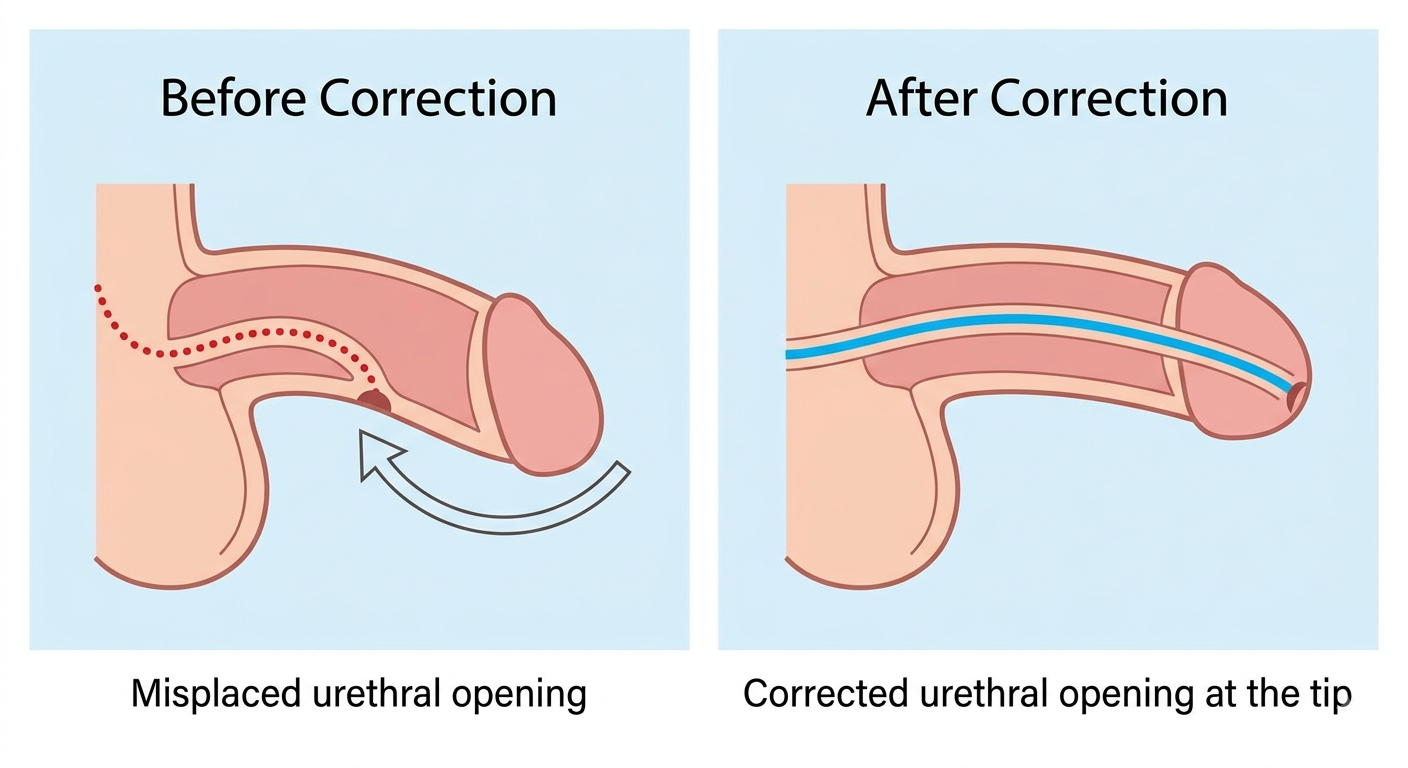
Hypospadias correction surgery aims to place the urinary opening in a more typical position and, when necessary, straighten the penis.
The exact technique depends on the severity and location of the urethral opening. During surgery, the surgeon may reconstruct the urethra using local penile tissue.
In many cases, doctors perform the repair during infancy or early childhood. However, the appropriate timing depends on the individual child and the surgeon's assessment.
Can Hypospadias Affect Urination?
It can. Depending on where the urethral opening is located, some children may experience an unusual urinary stream or difficulty directing urine.
More significant cases may also involve penile curvature. Early assessment allows the surgeon to understand whether the condition is likely to affect urination or future penile function.
Can Hypospadias Affect Future Fertility?
Mild hypospadias does not necessarily cause fertility problems. However, more severe cases can sometimes be associated with significant penile curvature or a urethral opening positioned farther from the tip.
Early evaluation can help identify these concerns and determine whether corrective treatment may benefit the child in the long term.
What Should Parents Do If Their Baby's Penis Looks Different?
If you notice that your baby's penis looks unusual, do not panic or attempt to correct the problem yourself. Arrange an examination with a qualified pediatric urologist or surgeon.
Importantly, parents should avoid circumcision before a specialist evaluation when hypospadias is suspected. The foreskin may sometimes provide tissue that the surgeon needs for reconstruction.
A specialist can examine the baby's anatomy, identify the cause of the difference, and explain whether observation or surgical correction is appropriate.
Why Choose Dr. Ashutosh Shah for Surgical Care?
When a newborn has an unusual penile appearance, parents naturally want experienced and careful surgical evaluation. Dr. Ashutosh Shah is a board-certified plastic surgeon with more than 22 years of experience in cosmetic and reconstructive surgery. At Elegance Clinic, he evaluates each child individually to understand the anatomy and determine whether treatment is necessary.
With his extensive surgical experience, Dr. Shah focuses on developing an appropriate treatment plan based on the child's specific condition rather than assuming that every unusual appearance requires surgery. He also explains the available options, expected outcomes, and recovery process to help parents make informed decisions about their child's care.