
Complications After Circumcision: What Can Go Wrong, How Often It Happens and How Each Is Handled
Circumcision is a low-risk operation, but no method is complication-free. The most common problems are bleeding, wound infection, prolonged swelling, and uneven skin removal; rarer ones include meatal narrowing in boys and glans injury. Most are minor and treatable when reported early, which is why follow-up visits matter.
Understanding complications after circumcision does not mean the operation is unsafe. It means patients should receive realistic information before making a decision. Age, medical conditions, surgical technique, wound care, and the reason for circumcision can all affect risk.
Published complication percentages also need context. A complication rate reported in newborn boys cannot automatically be applied to an adult, and results from one circumcision device cannot predict the outcome of every other technique.
Which Complications Are Common and Which Are Rare After Circumcision?
The most familiar circumcision side effects during early recovery are swelling, bruising, tenderness, and mild wound discomfort. These may be expected parts of healing rather than true complications.
Problems requiring medical attention can include persistent bleeding, wound infection, significant wound separation, or abnormal swelling. Later problems can include an uneven amount of remaining skin, adhesions or skin bridges and, particularly in boys, narrowing of the urinary opening called meatal stenosis.
The American Academy of Pediatrics (AAP) 2012 technical report stated that significant acute complications occurred in approximately 1 in 500 newborn male circumcisions. It identified bleeding, infection, and incomplete tissue removal as common acute complications. Late complications included adhesions, skin bridges, and meatal stenosis. These figures relate to newborn circumcision and should not be interpreted as adult complication rates.
Two large US hospital studies reviewed by the AAP estimated significant acute complication rates of approximately 0.19% to 0.22% for newborn circumcision. Bleeding was reported at approximately 0.08% to 0.18%, infection at 0.06%, and penile injury at 0.04%.
Complication Table
| Complication | How common? | When it shows up | What it may look like | How it is treated | Second procedure? |
|---|---|---|---|---|---|
| Bleeding | Among the most recognised early complications; AAP newborn data reported about 0.08–0.18% in two large US studies. | Usually first hours or days | Persistent fresh bleeding or repeatedly soaked dressing | Pressure, examination, haemostasis or suturing if required | Occasionally |
| Infection | AAP newborn hospital data reported about 0.06%; adult risk varies | Usually during early healing | Increasing redness, discharge, warmth, worsening pain or fever | Wound assessment, local care and antibiotics when indicated | Usually not |
| Significant swelling | Some swelling is expected; severe oedema was uncommon in the adult stapler RC.T | First days to weeks | Marked or worsening puffiness around the wound | Observation and assessment for bleeding, infection or other causes | Usually not |
| Wound separation | Varies with technique and healing | Early recovery | Incision edges separate | Small gaps may heal conservatively; larger gaps may require suturing | Sometimes |
| Too much skin removed | Uncommon; no single rate applies to all techniques | Becomes clearer as healing progresses | Excessive tightness or shortage of movable skin | Observation or reconstructive correction in significant cases | Sometimes |
| Too little or uneven skin removed | Recognised surgical outcome | Usually clearer after swelling settles | Residual foreskin or uneven appearance | Observation or revision if clinically appropriate | Sometimes |
| Adhesion or skin bridge | Recognised mainly as a later paediatric complication | Weeks, months or later | Skin remains attached between surfaces | Observation, release or surgical correction depending on severity | Sometimes |
| Meatal stenosis | Recognised late complication, particularly in boys | Months or later | Narrow, spraying or deflected urine stream | Clinical assessment and widening procedure if significant | Sometimes |
| Major glans/urethral injury | Rare | Usually during or soon after surgery | Significant tissue injury or abnormal bleeding | Urgent specialist assessment and reconstruction where necessary | May be required |
The numbers above should not be combined into one universal risk percentage because the BAUS information, AAP evidence and adult stapler research involve different populations, techniques and definitions. The BAUS leaflet A24/077 is a patient-information resource published in June 2024, while the AAP report specifically discusses newborn and paediatric evidence.
Do Stapler, Ring and Laser Methods Have Different Complication Profiles?
Yes. Different techniques can have different patterns of bleeding, swelling, wound healing and device-related problems. However, none makes complications after circumcision impossible.
A prospective randomised clinical trial published in 2015 studied 879 adult men aged 18 to 70. Of these, 441 underwent circular stapler circumcision, and 438 underwent conventional circumcision.
The researchers reported an overall complication rate of 2.7% in the stapler group compared with 7.8% in the conventional group. Severe oedema occurred in 5 of 441 stapler patients and 18 of 438 conventional patients. Postoperative bleeding occurred in five stapler patients and eight conventional patients.
That does not mean stapler circumcision had no disadvantages. 388 of the 441 stapler patients 88% needed their surgeon to remove residual staples. The authors specifically identified this as an area in which the device required improvement.
What about ring circumcision?
Ring techniques use a device that remains in position for a period rather than relying only on conventional cutting and suturing. Device displacement, delayed separation, swelling or the need for device removal can therefore become technique-specific concerns.
The patient's age, anatomy and reason for surgery should help determine whether a particular device is appropriate.
What about laser circumcision?
Patients sometimes assume “laser” means bloodless or complication-free surgery. It does not.
The instrument used to cut or control bleeding is only one part of the operation. Appropriate tissue removal, haemostasis, sterile technique, and postoperative care still matter.
When comparing circumcision risks for adults, patients should ask what procedure will actually be performed rather than choosing solely because of a technology-related label.
Which Warning Signs Mean You Should Call the Surgeon the Same Day?
Mild swelling, sensitivity, and discomfort can occur during normal healing. The important question is whether symptoms are improving as expected or becoming worse.
Contact the treating surgeon promptly if you notice:
-
persistent fresh bleeding despite following the advised pressure instructions;
-
a dressing repeatedly becoming soaked with blood;
-
rapidly increasing or unusually severe swelling;
-
worsening redness or warmth around the wound;
-
pus or unpleasant-smelling discharge;
-
fever or feeling significantly unwell;
-
pain that is becoming more severe rather than settling;
-
significant separation of the wound edges;
-
difficulty or inability to pass urine;
-
abnormal darkening or loss of healthy colour in tissue; or
-
an unexpected problem with a circumcision device.
Uncontrolled bleeding, inability to urinate, severe illness or concern about tissue blood supply should be treated as urgent medical problems rather than waiting for the next routine appointment.
This is also why describing circumcision as having “no complications” can be unhelpful. Patients need to know what normal recovery looks like and which changes require medical attention.
Circumcision Problem Treatment Adajan Surat: How Is Each Complication Treated If It Happens?
Treatment depends on the type and severity of the problem. Having a complication does not automatically mean a second operation will be necessary.
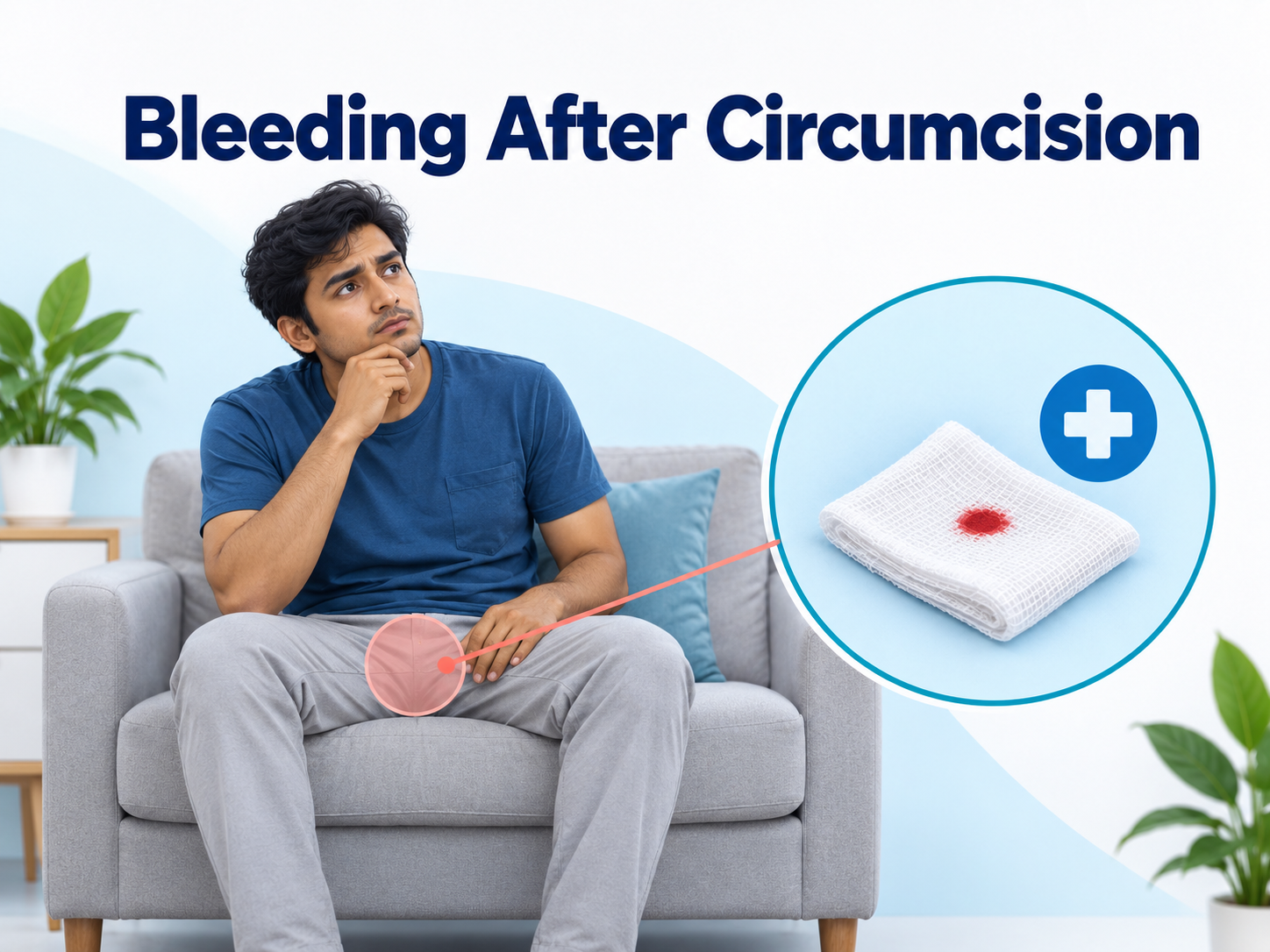
Bleeding
Minor spotting may stop with appropriate local pressure. Persistent bleeding needs examination to identify its source.
Treatment can range from pressure and local haemostasis to placement of an additional stitch. Significant uncontrolled bleeding may occasionally require another procedure.
In the 2015 adult trial, five patients in the stapler group and eight in the conventional group developed postoperative bleeding.
Infection
Increasing redness, discharge, fever, and worsening pain should be assessed clinically.
Treatment depends on severity and may include wound care and antibiotics when bacterial infection is suspected. A collection of pus may require drainage. A rapidly spreading or severe infection needs urgent treatment.
Prolonged swelling
Some swelling is normal after adult circumcision and does not automatically indicate a complication.
In the adult stapler trial, mild oedema usually disappeared within approximately two weeks, while severe oedema could persist for one to three months. Severe oedema was reported in both treatment groups, although it occurred less often in the stapler group.
Increasing or markedly asymmetric swelling should still be examined to exclude bleeding, infection or another problem.
Wound separation
Small superficial wound gaps may sometimes heal with conservative care.
In the adult trial, wound separation of less than 5 mm was managed conservatively. Larger separation associated with bleeding was treated with absorbable sutures.
Patients should avoid trying to close or treat a separated surgical wound themselves.
Too much skin removed
Removing excessive skin can create tightness or tissue deficiency. The significance depends on the amount removed and whether it causes functional symptoms.
Minor concerns may be observed while swelling settles and the scar matures. Significant skin deficiency may require reconstructive correction.
For further information, see Can a circumcision gone wrong be fixed?.
Too little or uneven skin removed.
The appearance should not be judged too early because swelling can temporarily make the wound look asymmetric.
Persistent residual foreskin, an uneven scar, or another significant problem can be assessed after healing. A revision may be appropriate in selected cases.
Read Signs you may need a revision or learn about Revision circumcision surgery.
Meatal stenosis
Meatal stenosis means narrowing of the urinary opening. It is principally discussed as a later paediatric complication in the evidence used for this article. Symptoms can include a narrow or deflected urinary stream.
Clinically significant narrowing needs medical assessment and may require a procedure to enlarge the opening.
Injury to the glans or urethra
Major injury is rare but potentially serious. It requires prompt specialist assessment. Treatment depends on the structures affected and may involve reconstructive surgery.
What Does a Surgeon Do Before Surgery to Lower Your Risk?
Risk reduction begins before the procedure.
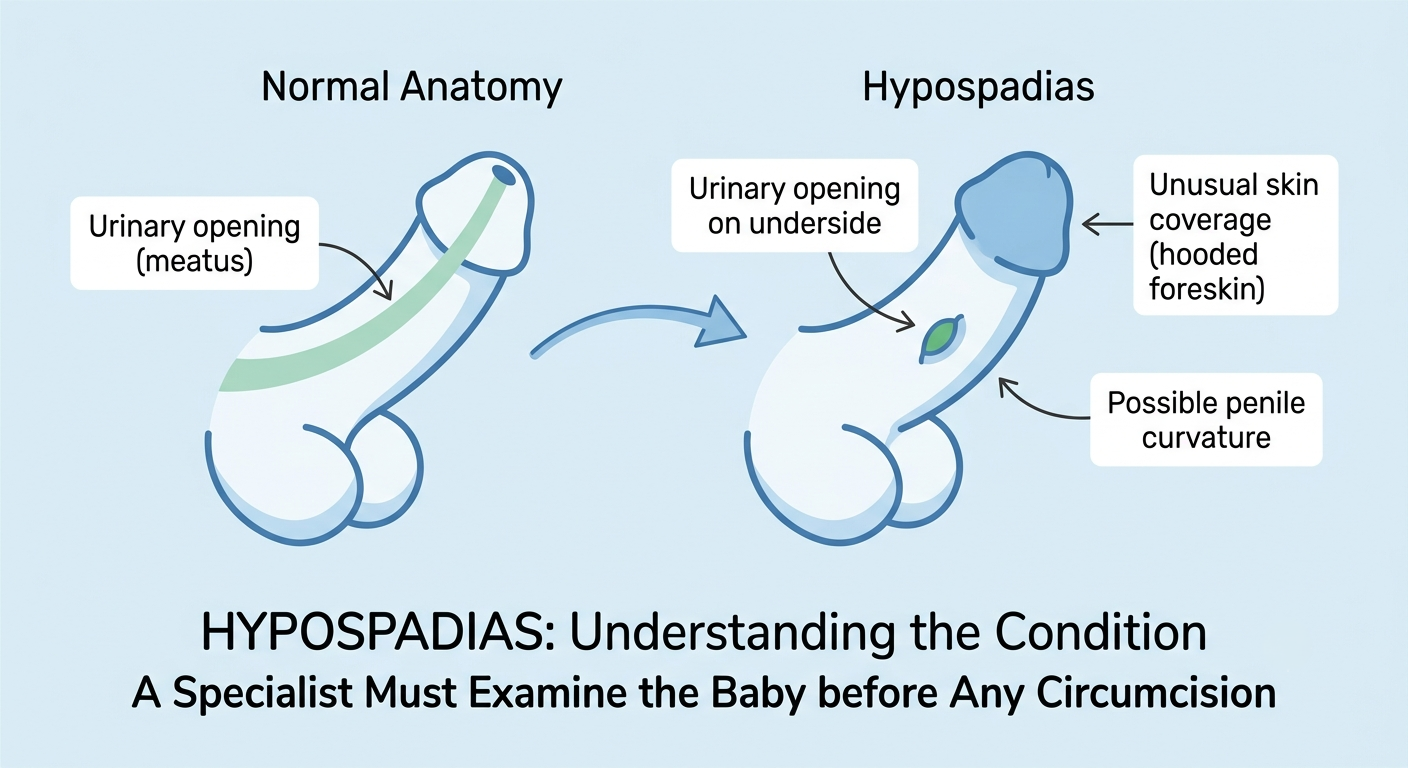
First, the surgeon should confirm the indication for circumcision and examine the anatomy. Significant inflammation, infection, or an anatomical abnormality may affect the timing or choice of procedure.
Medical history matters too. The patient should tell the surgeon about medications, allergies, previous operations, bleeding problems, and medical conditions that could influence surgery or wound healing.
The AAP report states that newborn circumcision should be performed by trained, competent practitioners using sterile techniques and effective pain management. It also lists conditions such as blood disorders and certain congenital penile abnormalities among contraindications to routine newborn circumcision.
Adults need individual preoperative assessment rather than simply applying newborn recommendations to them.
Relevant investigations depend on the patient's health, anaesthesia plan and clinical circumstances. See the information on Tests done before circumcision.
During surgery, careful control of bleeding, sterile technique and appropriate skin removal help reduce avoidable problems. Afterwards, written wound-care instructions and clear warning signs help patients identify complications early.
Doctor statement pending confirmation before publication:
“In our practice, every patient gets a written list of warning signs and a direct number for the first 72 hours.” - Dr. Ashutosh Shah
Is Circumcision Safe or Not?
Circumcision is generally considered a low-risk procedure when it is appropriately performed, but “low risk” does not mean “zero risk.”
The AAP technical report found that significant acute complications were uncommon in medically performed newborn circumcision, while also recognising bleeding, infection, imperfect tissue removal, and later complications.
Adult evidence should be considered separately. In the cited 879-patient adult trial, overall complications differed between stapler and conventional techniques, and the stapler technique also had the practical issue of frequent residual staple removal.
A useful consultation therefore does not hide possible complications after circumcision. It explains the likely recovery, uncommon but important risks, technique-specific issues, warning signs, and what treatment is available if something does go wrong.
Conclusion
The important message about complications after circumcision is not that patients should expect something to go wrong. It is that every surgical procedure has potential risks and patients should understand them before treatment.
Bleeding, infection, swelling, and wound-healing difficulties are among the main early concerns. Uneven skin removal and some later problems may occasionally require corrective treatment. Severe tissue injury is rare but requires prompt specialist care.
The complication rate also depends on the population and technique being studied. Newborn AAP statistics should not be presented as adult risk estimates, while one adult stapler trial cannot establish the risk of every modern circumcision method.
Good surgical care therefore includes appropriate patient selection, careful technique, realistic informed consent, clear aftercare instructions, and timely follow-up when warning signs appear.