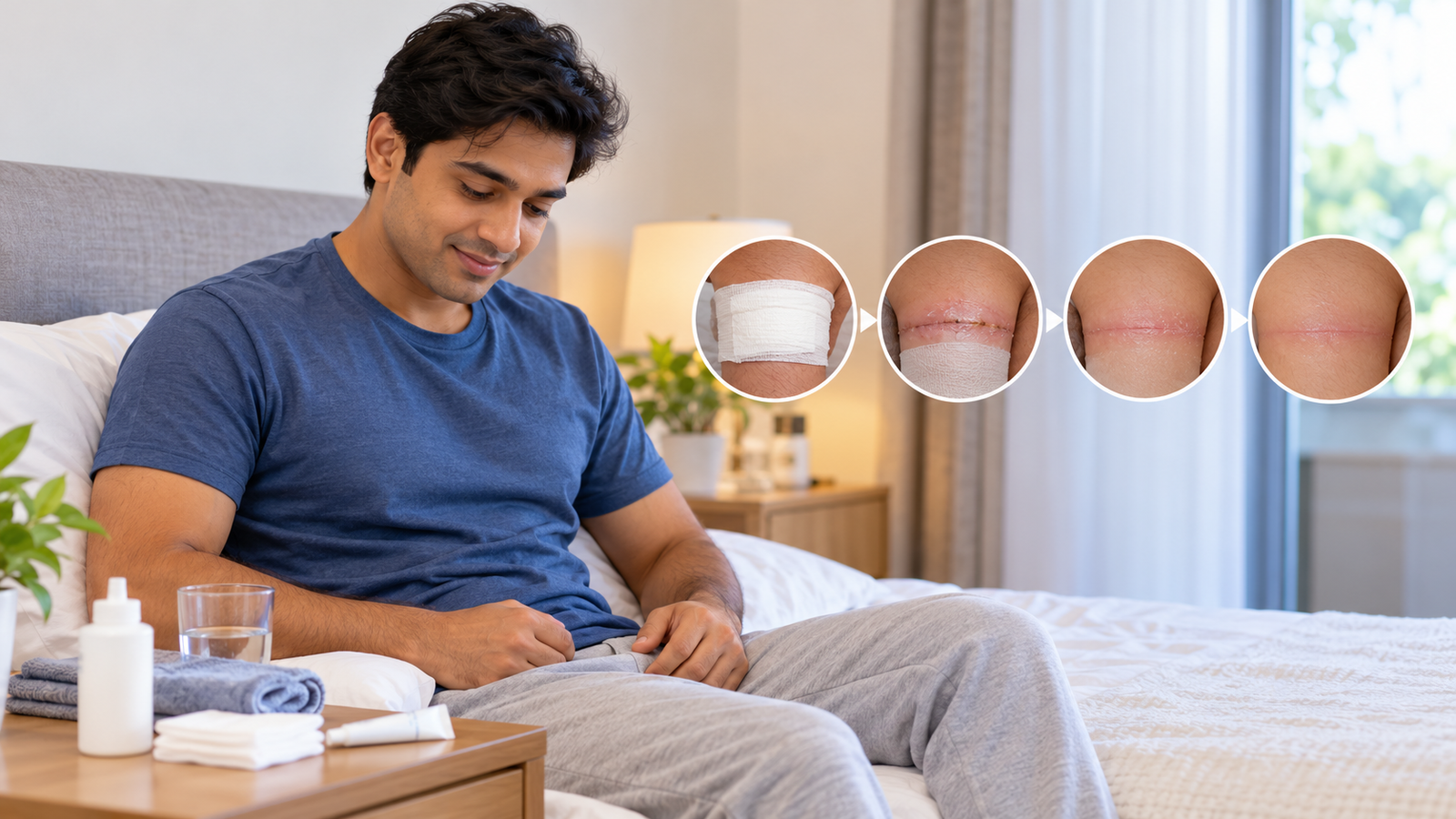

Genital Warts on the Foreskin: Removal, Recurrence and When Circumcision Is Considered
Genital warts on the foreskin are caused by human papillomavirus (HPV) and can be treated with prescription creams, freezing, electrocautery, or laser removal. Warts may return after treatment because HPV can persist in surrounding skin. Circumcision is considered in selected cases involving extensive or recurrent foreskin warts, particularly when phimosis is also present.
Discovering a wart or unusual growth on the foreskin can be worrying. Some men fear that the growth may be cancer, while others are concerned about sexually transmitted infections, treatment pain, or recurrence.
Patients searching for warts on private part treatment often want to know whether the wart can be removed permanently and whether circumcision is necessary.
The answer depends on the type of growth, its location, the number of lesions, and whether the foreskin is otherwise healthy.
Not every bump on the penis is a genital wart, so an accurate diagnosis should come before treatment.
This guide explains genital wart removal methods, why warts may return, when circumcision is considered, and what patients should know about HPV transmission.
What Causes Genital Warts on the Foreskin?
Genital warts are caused by certain types of human papillomavirus, commonly called HPV.
HPV is a widespread virus that can spread through intimate skin-to-skin sexual contact.
Most visible genital warts are associated with HPV types 6 and 11, which are generally classified as low-risk types.
What Do Genital Warts Look Like?
Genital warts may appear as:
-
Small, raised skin-coloured bumps
-
Flat or slightly elevated lesions
-
Soft growths with an uneven surface
-
Multiple clustered bumps
-
Cauliflower-like growths
-
Lesions on the foreskin, glans, or surrounding genital skin
Some warts cause itching, irritation, or discomfort.
Others produce no symptoms.
Can Genital Warts Appear Without Recent Sexual Contact?
Yes.
HPV can remain undetected for months or years before visible warts develop.
The appearance of genital warts does not establish when the infection occurred.
It also does not prove that a partner has recently been unfaithful.
Are All Foreskin Bumps Genital Warts?
No.
Other conditions can resemble genital warts, including pearly penile papules, skin tags, molluscum contagiosum, and inflammatory skin changes.
Patients experiencing irritation may also find information about foreskin irritation treatment useful.
Avoid applying wart-removal chemicals before a clinician confirms the diagnosis.
How Are Genital Warts Diagnosed?
Doctors usually diagnose external genital warts through a clinical examination.
The clinician assesses the appearance, location, and number of lesions.
They may also ask about symptoms, previous treatment, and relevant sexual health history.
Is an HPV Blood Test Needed?
No routine blood test is used to diagnose external genital warts.
HPV testing is generally not recommended for diagnosing visible genital warts because it does not reliably guide treatment.
When Is a Biopsy Required?
A biopsy may be recommended if a lesion:
-
Has unusual pigmentation
-
Bleeds without an obvious cause
-
Appears ulcerated or unusually firm
-
Has an uncertain diagnosis
-
Does not respond to appropriate treatment
-
Continues growing despite treatment
A biopsy helps exclude other skin conditions, including precancerous or malignant changes.
Which Genital Wart Removal Treatments Are Available?
Treatment depends on the number, size, and location of the warts, as well as patient preference and clinical findings.
Some warts may disappear without treatment, while others persist or increase in number.
Treatment aims to remove visible lesions and relieve symptoms.
It does not reliably eliminate HPV from the body.
1. Prescription Creams
Doctors may prescribe topical treatments such as imiquimod or podophyllotoxin for suitable external genital warts.
These medicines work differently.
Imiquimod stimulates a local immune response, while podophyllotoxin damages wart tissue.
Treatment generally requires repeated applications over several weeks.
Possible side effects include redness, burning, irritation, and tenderness.
These medications are not suitable for every lesion or anatomical site.
Patients should use them only as prescribed.
2. Cryotherapy
Cryotherapy uses controlled freezing, commonly with liquid nitrogen, to destroy wart tissue.
The clinician applies the treatment directly to the lesion.
Patients may experience stinging, blistering, or temporary soreness.
Several sessions may be necessary.
3. Electrocautery
Electrocautery uses electrical energy to destroy or remove wart tissue.
The procedure is performed with appropriate anaesthesia.
It may be suitable for selected larger or multiple lesions.
Temporary discomfort, swelling, and wound healing are expected.
4. Laser Wart Removal
Laser wart removal uses focused laser energy to destroy or remove wart tissue.
It may be considered for selected extensive, difficult-to-treat, or recurrent lesions.
The procedure requires appropriate safety precautions and anaesthesia.
Laser treatment can remove visible warts, but it does not guarantee permanent elimination of HPV.
5. Surgical Removal
Selected warts can be removed surgically.
This may be useful when a lesion is large, diagnosis is uncertain, or tissue examination is needed.
The surgeon explains the risks of bleeding, scarring, and recurrence.
Genital Wart Treatment Comparison
| Treatment | Typical Treatment Course | Discomfort | Recurrence | Who May Benefit |
|---|---|---|---|---|
| Imiquimod cream | Repeated applications over several weeks | Redness and irritation | Possible | Selected external warts |
| Podophyllotoxin | Repeated treatment cycles | Burning or tenderness | Possible | Selected external warts |
| Cryotherapy | Often multiple sessions | Stinging or blistering | Possible | Small or multiple warts |
| Electrocautery | Sometimes one procedure | Anaesthesia and wound soreness | Possible | Selected visible lesions |
| Laser removal | One or more procedures | Anaesthesia and healing discomfort | Possible | Selected extensive or recurrent warts |
| Circumcision | Usually one operation | Surgical recovery | Warts can still recur | Selected foreskin involvement, especially with phimosis |
No treatment is guaranteed to prevent future genital warts.
The clinician should discuss benefits, risks, cost, and expected follow-up before treatment.
Genital Warts Doctor Near Udhna Surat: When Should You Seek Treatment?
A medical consultation is recommended when a new growth appears on the foreskin, particularly if it is increasing in size, spreading, or causing irritation.
Patients should also seek assessment if a lesion bleeds, changes colour, or does not resemble a typical wart.
At Elegance Clinic, patients consulting Dr. Ashutosh Shah, a Plastic, Reconstructive & Cosmetic Surgeon with over 22 years of surgical experience, can discuss foreskin conditions, treatment options and whether circumcision may be appropriate. An accurate diagnosis is essential before deciding on wart removal or surgery.
Patients should ask about available treatments, expected recovery, recurrence, and how their medical information is handled.
Why Do Genital Warts Come Back After Removal?
Recurrence after wart removal is common, particularly during the first few months after treatment.
This happens because treatment removes visible warts but does not necessarily eliminate HPV from surrounding tissue.
Does Recurrence Mean Treatment Failed?
Not always.
The original wart may have been removed successfully, while another wart develops later.
Recurrence can occur even after appropriate treatment.
Is There a Permanent Solution for Genital Warts?
No treatment guarantees permanent elimination of HPV.
Many HPV infections eventually become undetectable as the immune system controls them.
However, the timing varies between individuals.
Patients should be cautious about advertisements promising a guaranteed permanent solution for genital warts.
Can Warts Return After Laser Treatment?
Yes.
Laser treatment can remove visible lesions, but HPV may remain in nearby skin.
Follow-up may be necessary if new warts develop.
When Is Circumcision Considered for Genital Warts?
Circumcision is not routinely necessary for every patient with genital warts.
Most patients can be assessed for local wart treatments first.
However, circumcision may be considered in selected circumstances.
1. Extensive Warts on the Foreskin
If numerous lesions involve a substantial area of foreskin, the surgeon may discuss whether removal of the affected foreskin is appropriate.
2. Repeated Foreskin Wart Recurrence
Patients with repeated lesions confined to the foreskin may be assessed for circumcision.
However, recurrence alone does not automatically make circumcision necessary.
3. Genital Warts With Phimosis
Phimosis occurs when the foreskin cannot be retracted normally.
If significant phimosis coexists with foreskin warts, circumcision may help address the tight foreskin and remove affected tissue.
4. Difficulty Assessing the Foreskin
A very tight foreskin can make examination and local treatment more difficult.
The surgeon may need to evaluate whether circumcision is appropriate.
Does Circumcision Cure HPV?
No.
Circumcision removes the foreskin but does not reliably eliminate HPV from other genital skin.
Warts may still develop or recur elsewhere.
Patients considering surgery can review information about laser circumcision.
The decision should follow examination rather than an assumption that circumcision permanently cures genital warts.
Does Your Partner Need to Be Checked?
HPV can spread between sexual partners through intimate skin-to-skin contact.
Current partners should be informed about a genital wart diagnosis.
A partner may benefit from a clinical examination and assessment for other sexually transmitted infections when appropriate.
Should Partners Have HPV Testing?
Routine HPV testing of partners solely because someone has genital warts is generally not recommended.
Testing recommendations depend on the person's anatomy, age, and applicable screening guidelines.
For example, eligible individuals should continue recommended cervical cancer screening.
Do Condoms Prevent HPV Completely?
Condoms reduce the risk of HPV transmission but do not eliminate it.
HPV can affect skin that condoms do not cover.
Should Couples Avoid Sex During Treatment?
Patients should avoid sexual contact involving treated areas until the skin has healed.
Visible warts may also increase concern about transmission.
The clinician can provide individual advice about resuming sexual activity and reducing risk.
Is HPV Vaccination Useful After Genital Warts?
HPV vaccination helps protect against certain HPV types.
It is preventive, not a treatment for existing warts.
Vaccination may still offer protection against HPV types a person has not previously acquired.
Eligibility depends on age, vaccination history, and individual circumstances.
Patients should discuss vaccination with a qualified healthcare professional.
Having had genital warts does not automatically mean vaccination has no benefit.
How Long Does Recovery Take After Genital Wart Removal?
Recovery depends on the treatment method, number of lesions, and size of the treated area.
After Prescription Creams
Local irritation can occur during treatment.
Patients should follow the prescribed schedule and avoid applying excessive medication.
After Cryotherapy
Temporary soreness, blistering, or crusting may develop.
The clinician may recommend additional sessions.
After Electrocautery or Laser
The treated area may feel tender while the skin heals.
Patients should follow instructions regarding cleaning, medication, and activity.
After Circumcision
Circumcision involves a larger surgical wound.
Many adults require approximately four to six weeks for substantial healing.
Sexual activity should not resume until the surgeon confirms adequate recovery.
When Should You Contact the Doctor?
Seek medical advice for:
-
Increasing redness or swelling
-
Severe or worsening pain
-
Fever
-
Persistent bleeding
-
Pus or concerning discharge
-
Difficulty passing urine
-
A wound that is not healing as expected
Patients should avoid self-treatment with household chemicals or over-the-counter wart removers intended for hands and feet.
These products can cause significant injury to genital skin.
Can Genital Warts Be Confused With Other Foreskin Problems?
Yes.
Some penile skin conditions may cause irritation, cracking, or unusual growths without being caused by HPV.
Inflammatory conditions, fungal infections, and benign skin changes can sometimes resemble other genital problems.
For related symptoms, see penis skin crack problem treatment.
An examination helps determine whether wart treatment, treatment for inflammation, or another approach is needed.
Conclusion: What Is the Best Treatment for Genital Warts on the Foreskin?
The best warts on private part treatment depends on the diagnosis, number of lesions, their location, and the patient's medical circumstances.
Prescription creams, cryotherapy, electrocautery, and laser removal are established options for selected genital warts.
However, no treatment guarantees permanent elimination of HPV.
Circumcision may be considered when extensive or recurrent warts affect the foreskin, particularly when significant phimosis is also present.
It is not a routine requirement for every patient and does not guarantee that warts will never return.
The most important step is obtaining an accurate diagnosis and choosing treatment based on clinical findings rather than promises of permanent wart removal.
Patients concerned about foreskin growths can contact Elegance Clinic for a consultation.