Ring Circumcision: How It Works, Who It Suits and What Recovery Involves
Ring circumcision uses a device that clamps the foreskin so it can be removed or separates without conventional suturing, depending on the device. Some rings are designed to separate naturally, while others are removed according to a planned device-specific schedule. Healing then continues after the ring has detached or been removed.
The term ring circumcision does not describe one single technique. Plastibell, Alisklamp and ShangRing are different devices designed for different patient groups and use different fitting, removal and aftercare protocols. For this reason, it is important not to assume that every ring falls off naturally within five to ten days.
At Elegance Clinic, Surat, Dr. Ashutosh Shah, a plastic surgeon with 22+ years of experience, assesses the patient's age, foreskin condition, anatomy, and reason for circumcision before deciding whether a ring method or another circumcision technique is appropriate.
How Is a Ring Device Fitted and What Does It Do?
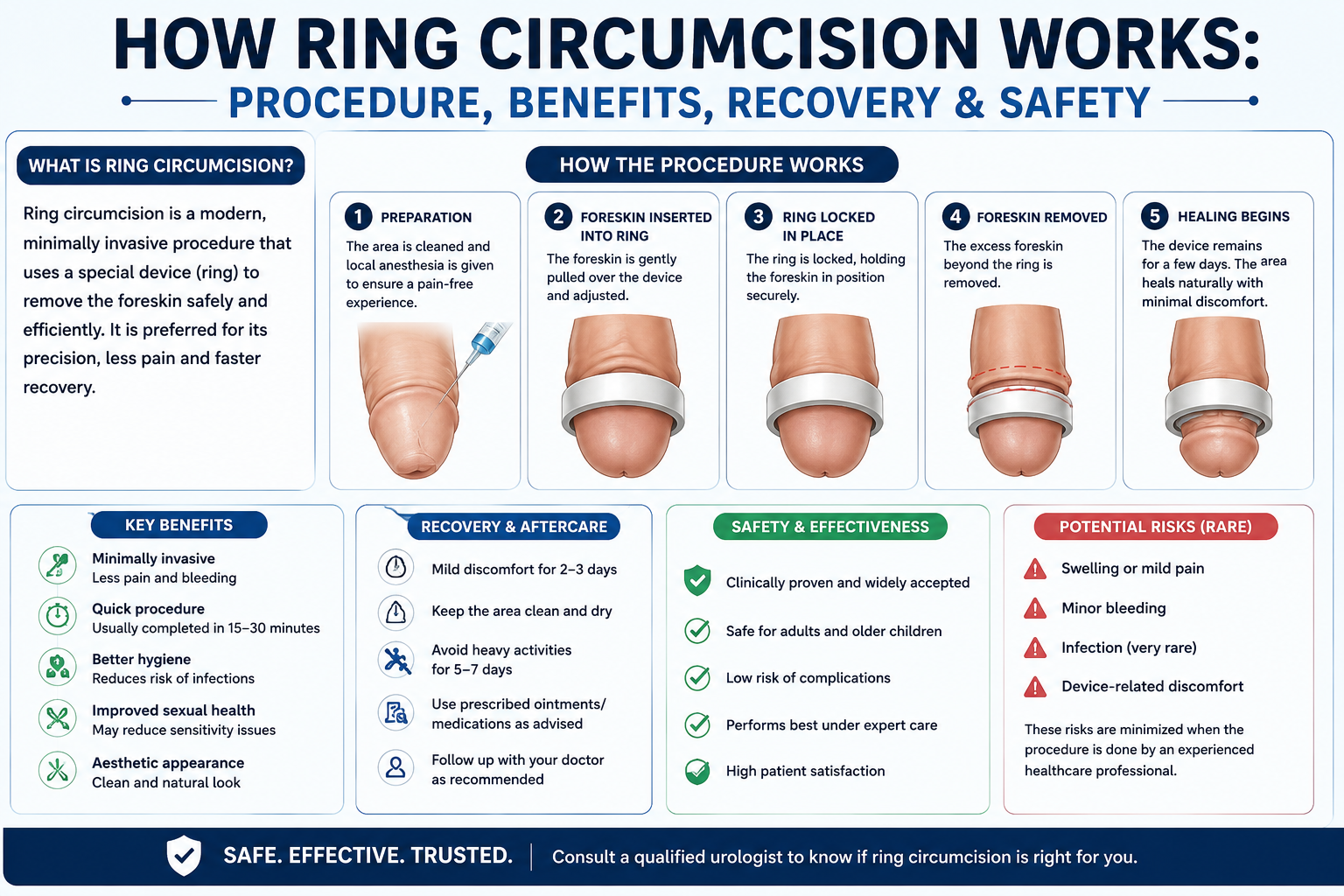
Ring devices are designed to control the foreskin in a predetermined position. Depending on the system, pressure from the device helps control bleeding and defines the tissue that will be removed.
The exact procedure varies significantly between devices.
A typical process may include:
- Examination of the foreskin and surrounding anatomy
- Selection of the correct device and size
- Appropriate anaesthesia
- Preparation and cleaning of the operative area
- Positioning of the device
- Confirmation that the device is correctly placed
- Removal or controlled separation of foreskin according to the device technique
- Aftercare instructions and follow-up planning
Some ring techniques reduce or eliminate the need for conventional sutures. However, describing all ring circumcisions as completely "stitchless" can be misleading because management differs between devices and individual surgical situations.
The device also needs to fit correctly. Ring size, anatomy, and foreskin condition therefore need to be assessed rather than choosing a device solely because a patient prefers a particular technique.
Which Ring Devices Are Used and How Do They Differ?
The most important point is that Plastibell, Alisklamp and ShangRing should not be treated as interchangeable devices.
Plastibell Ring Circumcision
Plastibell is primarily associated with circumcision in newborns and infants.
A plastic ring is positioned beneath the foreskin, and a ligature is used to compress the tissue. The compressed foreskin gradually separates, and the ring commonly falls away naturally after several days.
Parents considering this technique can read more about Plastibell circumcision for newborns.
Alisklamp Circumcision
The Alisklamp device circumcision technique uses a clamp-based system. Appropriate sizing is important, and the procedure and subsequent device management follow the specific technique selected by the surgeon.
For more information, see the Alisklamp circumcision service page.
ShangRing Circumcision
ShangRing uses inner and outer ring components that compress the foreskin.
Unlike a Plastibell in an infant, patients should not simply assume that a ShangRing is supposed to fall off by itself. Removal and follow-up are performed according to the protocol used by the treating team.
A more detailed comparison is available in ShangRing versus traditional method.
Ring Circumcision Device Comparison
| Ring Device | Age Group Suited | How It Is Fitted | Separation or Removal | Aftercare | When It May Not Be Offered |
|---|---|---|---|---|---|
| Plastibell | Mainly newborns and infants | Plastic ring positioned beneath foreskin with a ligature | Commonly separates naturally after several days | Nappy hygiene, observation and monitoring ring position | Unsuitable anatomy, inappropriate device size or other clinical concerns |
| Alisklamp | Selected older children or adults depending on device sizing and clinical assessment | Clamp-based device compresses the planned foreskin | Device management follows the specific system and surgeon's protocol | Cleaning, observation and planned follow-up | Significant scarring, adhesions or anatomy unsuitable for the device |
| ShangRing | Selected adolescents and adults | Inner and outer rings compress the foreskin | Removal follows the planned device protocol | Cleaning and scheduled review | Significant scarring, abnormal anatomy, or another contraindication |
These are general differences. Exact timing and aftercare depend on the device, patient, and surgeon's protocol.
Which Age Groups and Anatomies Suit This Method?
Suitability depends on much more than age.
Newborns and Infants
Plastibell is a ring-based technique used in appropriately selected newborns and infants.
Device sizing is important because an incorrectly selected or positioned device can create problems.
Parents can also review the broader Ring method for children.
Older Children
A ring or clamp method may be possible for selected older children, depending on the device, foreskin condition, and available sizes.
The treating surgeon should determine whether the anatomy is suitable rather than assuming that a technique used in newborns can simply be scaled up for an older child.
Adults
Ring circumcision for adults is possible with devices specifically intended for appropriate adult anatomy.
However, an adult should first be examined for:
- Foreskin scarring
- Adhesions
- Active infection or inflammation
- Previous circumcision
- Abnormal skin distribution
- Concealed or buried anatomy
- Other structural concerns
A device method should not be selected purely because it appears faster or avoids conventional suturing.
When Does the Ring Separate and What If It Does Not?
One of the most common questions is: when does the ring fall off?
The answer depends on which ring is being discussed.
With Plastibell
A Plastibell ring commonly separates naturally after several days, often around the first week. Individual timing can vary.
Parents should never pull, twist, cut, or forcibly remove the ring at home.
If it remains attached beyond the timeframe given by the treating clinician, contact the clinic for advice rather than trying to remove it.
With Adult Ring Devices
Adult devices may have a planned removal schedule.
Therefore, instructions written for a newborn Plastibell should not automatically be applied to an adult ring or clamp system.
The patient should leave the clinic knowing:
- Whether the device should fall away itself
- Whether it requires planned removal
- When the next review is due
- What normal changes are expected
- Which changes require an earlier assessment
What Does Aftercare Look Like While the Ring Is Still in Place?
Aftercare depends on age and device, but the main principles are keeping the area appropriately clean, avoiding unnecessary manipulation, and watching for unexpected changes.
For Babies
Parents may be advised about:
- Frequent nappy changes
- Cleaning instructions
- Whether any barrier or ointment should be used
- Expected swelling and healing changes
- Ring position
- Urination
- Follow-up timing
Only use creams, ointments or dressings specifically recommended by the treating clinician.
For Adults
Instructions may cover:
- Cleaning
- Keeping the device appropriately dry or clean according to its protocol
- Clothing
- Activity
- Pain relief
- Work
- Device review or removal
- Sexual activity
- Follow-up
Do not rotate, loosen, reposition, or attempt to remove a ring unless specifically instructed.
Is Ring Circumcision Painful Once Fitted?
Anaesthesia is used during the fitting or procedure according to the patient's age and clinical situation.
After the anaesthetic effect reduces, some discomfort, tenderness or tightness can occur.
No circumcision method should be advertised as completely painless.
Pain experience varies between individuals and also depends on the device, tissue response and stage of recovery.
Pain that is severe, rapidly worsening, or significantly different from the expected recovery should be reported to the treating team.
Does Ring Circumcision Leave Stitches?
Some ring methods are designed to avoid conventional suturing as part of their standard technique.
That does not mean every patient undergoing a device-based procedure can be guaranteed to have no stitches under every circumstance.
If additional surgical correction is required or the planned procedure changes, management may differ.
Patients should therefore ask specifically what their selected device involves rather than relying on the general phrase "stitchless circumcision."
Does the Method Leave a Visible Line?
A healing line will remain where the foreskin tissue was removed or separated.
Its appearance changes as healing progresses.
The eventual scar can be influenced by:
- Device positioning
- Amount of skin removed
- Individual healing
- Inflammation
- Infection
- Skin pigmentation
- Scar tendency
- Postoperative care
An early circumcision line can look more prominent because of swelling and tissue changes. Final scar appearance should not be judged during the first days of recovery.
When Is a Ring Method Not Suitable?
A ring device is not automatically suitable for every patient.
This is an important limitation because some discussions of ring circumcision focus only on convenience or operating time.
Significant Foreskin Scarring
A severely scarred or non-elastic foreskin may make normal device placement difficult.
The surgeon may recommend another technique that allows more controlled removal and reconstruction.
Dense Adhesions
If the foreskin is strongly adherent or the tissue planes cannot be safely prepared for the device, a ring technique may not be appropriate.
Unusual Anatomy
Anatomical differences need assessment before a fixed-size device is selected.
Concealed or Buried Anatomy
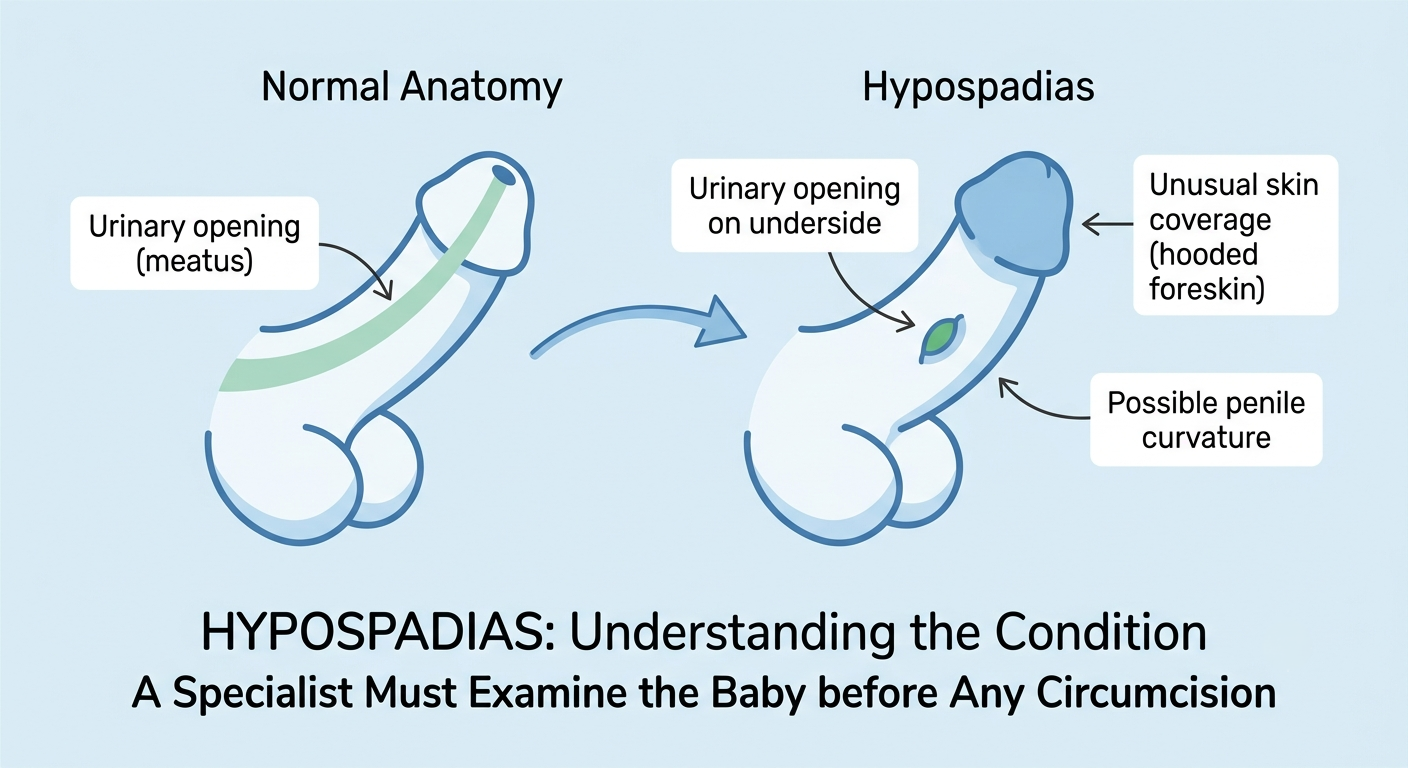
When the shaft is concealed by surrounding tissue or abnormal skin attachment, simply removing foreskin can potentially worsen skin deficiency. The underlying anatomy should be assessed before circumcision.
Previous Surgery
Previous circumcision or another operation can change the amount and distribution of available skin.
A revision procedure often requires individual surgical planning rather than a standard device.
Active Infection or Significant Inflammation
Active inflammation may affect the timing or choice of procedure. The underlying problem may need treatment before circumcision is performed.
Is Ring Circumcision Better Than Conventional Circumcision?
Neither method is universally better.
Ring devices can simplify particular procedural steps in appropriately selected patients. Conventional surgery, however, gives the surgeon direct control over skin removal and reconstruction and may be preferable when anatomy is irregular or scarred.
The appropriate method depends on factors such as:
- Age
- Anatomy
- Foreskin condition
- Previous surgery
- Medical indication
- Device availability and sizing
- Surgeon assessment
A consultation should therefore focus on suitability rather than simply asking which method is newest.
What Does Recovery Involve?
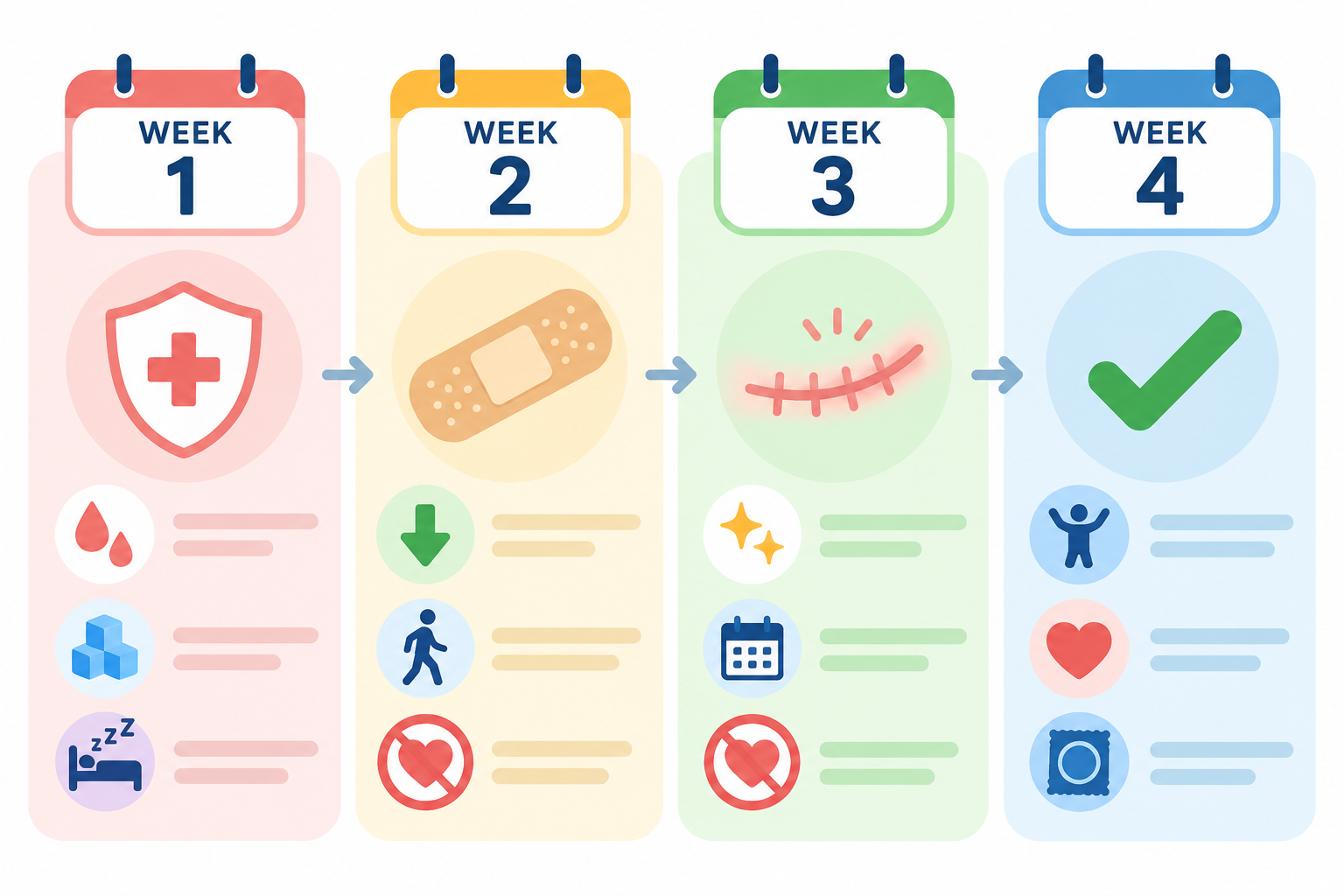
Recovery should be viewed in stages.
While the Device Is Present
The patient or parent monitors the device, swelling, urination, discomfort, and surrounding skin according to the instructions provided.
After Separation or Removal
The area continues healing after the device has detached or been removed. Mild sensitivity and swelling may still be present.
Later Healing
The circumcision line gradually matures and becomes less prominent.
The exact time required for complete healing varies. It should not be assumed that removal or separation of the ring means the wound has finished healing.
Normal work, exercise, and sexual activity should resume according to the treating clinician's advice and the actual progress of the wound.
When Should the Clinic Be Contacted?
Seek medical advice if there is:
- Persistent or significant bleeding
- Increasing rather than improving pain
- Rapidly worsening swelling
- Difficulty passing urine
- Concerning discharge
- Fever or significant illness
- Unexpected change in skin colour
- A ring that appears displaced
- A device remaining in place beyond the advised timeframe
- Any concern specifically identified in the discharge instructions
A ring should not be forcibly removed at home because it seems delayed.
Choosing a Ring Method After Proper Assessment
Ring circumcision is a category of device-based techniques rather than one identical procedure. Plastibell is commonly associated with infants and generally separates naturally, while adult systems such as Alisklamp and ShangRing have their own fitting, management and removal protocols.
The most important step is therefore choosing a technique that fits the patient's age, anatomy and foreskin condition rather than assuming a ring method is automatically faster, safer or better.
At Elegance Clinic, Surat, Dr. Ashutosh Shah can assess the foreskin, scarring, adhesions and surrounding anatomy before deciding whether a ring device or another circumcision technique is appropriate. Patients and parents should also receive device-specific aftercare instructions so they know how the ring is managed, when follow-up is required, and which symptoms need earlier medical review.