
Is Circumcision Painful? What Adults Can Expect
Adult circumcision should not cause sharp pain during surgery when anaesthesia is working properly. Patients may feel pressure or movement, and the anaesthetic injection can briefly sting. After surgery, mild to moderate discomfort, tenderness, and swelling are common. Pain usually improves gradually with prescribed medication, appropriate wound care and rest.
One of the biggest concerns men have before circumcision is pain. Many patients ask, "Is circumcision painful?" because they are worried about the surgery, anaesthetic injections and recovery.
The experience differs from person to person. Some patients report mild discomfort, while others experience more noticeable tenderness during the first few days.
The important distinction is between pain during surgery and discomfort after the anaesthesia wears off.
Modern anaesthesia helps control pain during the procedure, while appropriate postoperative care helps manage discomfort during healing.
This guide explains what adults can expect before, during, and after circumcision, including a practical recovery timeline and warning signs that require medical attention.
Is Circumcision Painful During the Procedure?
Circumcision is a surgical procedure that removes the foreskin covering the head of the penis.
Doctors may recommend it for persistent phimosis, recurrent foreskin infections, scarring, or other medical reasons.
Because the procedure involves sensitive tissue, adequate anaesthesia is essential.
Circumcision Under Local Anaesthesia
Local anaesthesia temporarily blocks pain signals from the surgical area.
The doctor administers an injection near the nerves supplying the penis or around the operative area.
Once the medication takes effect, the patient remains awake but should not feel sharp surgical pain.
However, the patient may notice:
-
Pressure during the procedure
-
Gentle pulling or movement
-
Touch without significant pain
-
Brief discomfort from the anaesthetic injection
If sharp pain occurs, the patient should immediately tell the surgeon.
The clinician can reassess the anaesthetic block and provide additional medication when appropriate.
Circumcision Under General Anaesthesia
General anaesthesia makes the patient unconscious during surgery.
The anaesthesia team monitors breathing, circulation and other vital functions throughout the procedure.
The patient does not consciously experience the operation.
However, discomfort may develop after waking as the effects of pain-control medication decrease.
Is Circumcision Completely Painless?
No surgical procedure can be guaranteed completely painless.
Anaesthesia aims to prevent pain during surgery, but postoperative discomfort is normal.
Patients should discuss their pain concerns and available anaesthesia options before the procedure.
Does the Anaesthesia Injection Hurt?
The injection used for local anaesthesia may cause a brief stinging or burning sensation.
Some patients experience temporary pressure as the medication enters the tissue.
This discomfort usually lasts a short time.
After the anaesthetic takes effect, the surgical area becomes numb.
The surgeon should check that the anaesthesia is working before starting circumcision.
What if I Am Afraid of Needles?
Tell the medical team about your concerns.
The surgeon can explain the injection process and discuss suitable pain-control options.
For selected patients, sedation or general anaesthesia may be considered after appropriate assessment.
Fear of needles alone does not automatically mean general anaesthesia is necessary.
How Painful Is Circumcision After Surgery?
Some pain after circumcision is expected because the surgical wound needs time to heal.
The discomfort often becomes noticeable when the local anaesthetic wears off.
Common symptoms include:
-
Tenderness around the surgical wound
-
Mild to moderate pain
-
Swelling
-
Increased sensitivity
-
Discomfort when clothing touches the area
-
Temporary discomfort during walking or movement
Pain severity varies according to the surgical technique, individual sensitivity, and healing progress.
Why Is the Area Sensitive After Circumcision?
Circumcision exposes the glans more directly to clothing and everyday contact.
Patients who previously had a tight foreskin may notice increased sensitivity.
This sensation often becomes less noticeable as the area adapts.
However, persistent severe pain or worsening sensitivity should be assessed by the surgeon.
Is Pain Worse at Night?
Some patients notice discomfort at night because of movement, clothing friction, or spontaneous erections.
Nighttime erections are normal and may temporarily stretch healing tissue.
Patients should avoid unnecessary manipulation and follow their surgeon's instructions for managing discomfort.
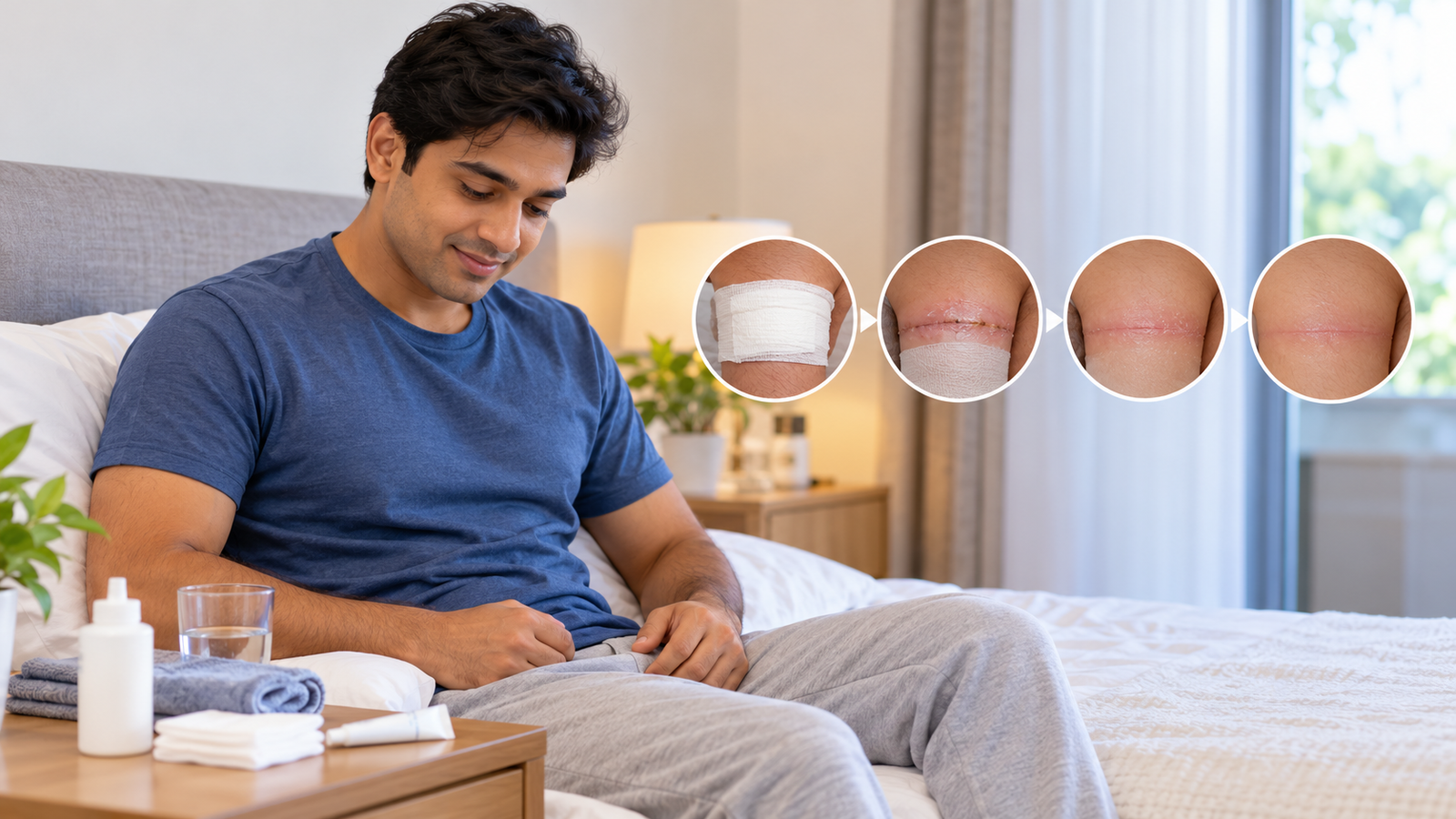
Circumcision Pain Timeline: Day by Day
Recovery differs between patients, but the following timeline explains what many adults may experience.
| Recovery Period | Expected Pain or Discomfort | What to Do |
| During surgery | No sharp pain with effective anaesthesia | Report pain immediately |
| First 24 hours | Tenderness as anaesthesia wears off | Use prescribed pain relief and rest |
| Days 2–3 | Swelling, sensitivity and discomfort | Follow wound-care instructions |
| Days 4–7 | Pain often begins improving | Avoid friction and strenuous activity |
| Weeks 2–3 | Mild residual tenderness may remain | Continue protecting the healing wound |
| Weeks 4–6 | Many patients approach substantial healing | Resume activities only as advised |
First 24 Hours
Patients may feel comfortable initially because local anaesthesia is still working.
As numbness decreases, soreness may develop.
Take pain medication according to the medical team's instructions rather than waiting until discomfort becomes severe, if this is the prescribed plan.
Days 2–3
Swelling and tenderness may be more noticeable during the first few days.
Mild bruising can also occur.
Patients should keep the wound clean and follow dressing instructions.
Days 4–7
Discomfort often begins to improve.
However, the wound remains sensitive.
Avoid activities that create pressure, friction, or pulling around the surgical area.
Weeks 2–3
Many patients experience less pain and swelling.
Some tenderness, sensitivity, or discomfort during erections may continue.
Weeks 4–6
Many adults achieve substantial wound healing within approximately four to six weeks.
However, healing time varies.
Patients should not resume sexual activity until the surgeon confirms that healing is adequate.
Important: This timeline is a general guide. Severe, persistent, or increasing pain is not something patients should simply wait out.
What Helps With Circumcision Pain Relief?
Appropriate circumcision pain relief combines medication, wound care and temporary activity restrictions.
1. Take Pain Medication as Directed
The surgeon may recommend paracetamol or another suitable pain-relief medicine.
Some patients may be advised to use an anti-inflammatory medication.
However, anti-inflammatory medicines are not suitable for everyone, particularly patients with certain kidney conditions, stomach ulcers, or bleeding risks.
Do not exceed recommended doses or combine medicines without checking their ingredients.
2. Wear Comfortable, Supportive Underwear
Soft, supportive underwear may help limit unwanted movement and friction.
Some patients prefer a different fit depending on swelling and sensitivity.
Choose clothing that does not rub against the wound.
3. Follow Dressing Instructions
The surgeon may apply a dressing after circumcision.
Follow the instructions about when to remove or change it.
Do not pull off a dressing that is stuck to the wound. Contact the treating team for advice.
4. Avoid Strenuous Activity
Heavy exercise, cycling, running, and activities involving significant friction may increase discomfort.
Return to these activities according to the surgeon's recovery plan.
5. Maintain Gentle Hygiene
Keep the area clean as instructed.
Avoid harsh soaps, antiseptics, or unprescribed creams.
Do not apply powders or home remedies to the surgical wound.
6. Ask Before Using Cold Compresses
A clinician may recommend a wrapped cold compress for swelling in selected circumstances.
Never place ice directly on sensitive skin or the surgical wound.
Follow the treating team's instructions regarding whether and how to use cooling.
Is Laser or Stapler Circumcision Less Painful?
Patients often compare conventional, laser-assisted, and stapler circumcision when considering surgery.
Each technique removes the foreskin, but the instruments and methods differ.
Conventional Circumcision
Conventional circumcision involves surgically removing the foreskin and closing the wound, commonly with absorbable sutures.
Pain during surgery is controlled with appropriate anaesthesia.
Postoperative discomfort depends on wound healing and individual factors.
Laser Circumcision
Laser circumcision uses laser energy to cut tissue.
Although laser-assisted surgery may offer advantages in selected circumstances, it still requires anaesthesia.
It should not be described as completely painless.
Stapler Circumcision
Stapler circumcision uses a specialised device to remove the foreskin and assist wound closure.
Some patients may experience differences in postoperative discomfort, but the technique does not guarantee a pain-free recovery.
Which Method Causes the Least Pain?
Research findings vary depending on the surgical technique, patient population, and pain measurements used.
No method is universally the least painful for every adult.
The surgeon should explain the expected benefits, risks, and recovery requirements of each suitable option.
Can Circumcision Pain Affect Walking, Working or Sleeping?
Temporary discomfort can affect everyday activities during early recovery.
Walking
Most patients can perform gentle walking once medically cleared.
However, prolonged walking may cause friction or discomfort during the first few days.
Returning to Work
People with desk-based jobs may return sooner than those whose work involves heavy lifting, physical labour, or prolonged movement.
The appropriate return date depends on healing and the surgeon's advice.
Sleeping
Comfortable clothing and careful positioning may reduce friction.
Avoid pressure directly over the surgical wound.
Exercise and Sports
Strenuous exercise should be postponed until the surgeon confirms it is safe.
Cycling and contact sports may require additional recovery time because of pressure or impact.
When Is Pain After Circumcision a Warning Sign?
Mild to moderate discomfort can be expected after surgery.
However, certain symptoms may indicate a complication.
Contact the treating surgeon promptly if you experience:
-
Pain that becomes progressively worse
-
Severe pain not controlled by prescribed medication
-
Increasing redness or swelling
-
Fever
-
Pus or foul-smelling discharge
-
Wound separation
-
Persistent bleeding
-
Unusual skin discoloration
-
Difficulty passing urine
Seek emergency medical care for uncontrolled bleeding, inability to pass urine, or rapidly worsening severe symptoms.
Do not assume that increasing pain is part of normal healing.
Early medical assessment can help identify complications and guide treatment.
How Can Patients Prepare for a More Comfortable Recovery?
Preparing before surgery can make postoperative care easier.
Discuss the following with your surgeon:
-
Which anaesthesia method will be used?
-
What discomfort should I expect after surgery?
-
Which pain medicines are suitable for me?
-
How should I care for the dressing?
-
When can I shower?
-
When can I return to work?
-
Which activities should I avoid?
-
What symptoms require urgent attention?
-
When is the follow-up appointment?
Patients should also inform the medical team about allergies, diabetes, bleeding disorders, and current medications.
Do not stop prescribed medicines without medical advice.
Discussing Circumcision Pain With Dr. Ashutosh Shah
At Elegance Clinic, patients consulting Dr. Ashutosh Shah, a Plastic, Reconstructive & Cosmetic Surgeon with over 22 years of surgical experience, can discuss concerns about anaesthesia, surgical techniques and recovery before undergoing circumcision. An individual assessment helps determine an appropriate procedure and postoperative pain-management plan based on the patient's medical condition and surgical needs.
Patients should explain any previous anaesthetic reactions, pain concerns, or medical conditions during consultation.
For personalised guidance, patients can book a circumcision consultation.
Conclusion: Is Circumcision Painful for Adults?
So, is circumcision painful?
With effective anaesthesia, patients should not experience sharp pain during the operation.
Some discomfort after surgery is normal, particularly during the first few days.
Swelling, tenderness and temporary sensitivity generally improve as the wound heals.
Pain-relief medication, appropriate wound care and activity restrictions can help patients recover more comfortably.
However, persistent or worsening pain should never be ignored.
The most important steps are choosing an appropriately qualified surgical team, understanding the anaesthesia plan and following postoperative instructions carefully.