Is Foreskin Removal Without Stitches Possible?
Yes. Foreskin removal without stitches may be possible with certain device-assisted circumcision techniques. However, not every patient is suitable for a stitchless technique. The appropriate method depends on the foreskin condition, anatomy, reason for circumcision, medical history, and the surgeon's clinical assessment.
People searching for foreskin removal without stitches often want a procedure with fewer sutures, straightforward wound care, and a convenient recovery. It is important to understand that “stitchless” does not mean there is no wound or healing period.
What Does Foreskin Removal Without Stitches Mean?
Traditional circumcision usually involves surgically removing the foreskin and closing the skin edges with absorbable sutures.
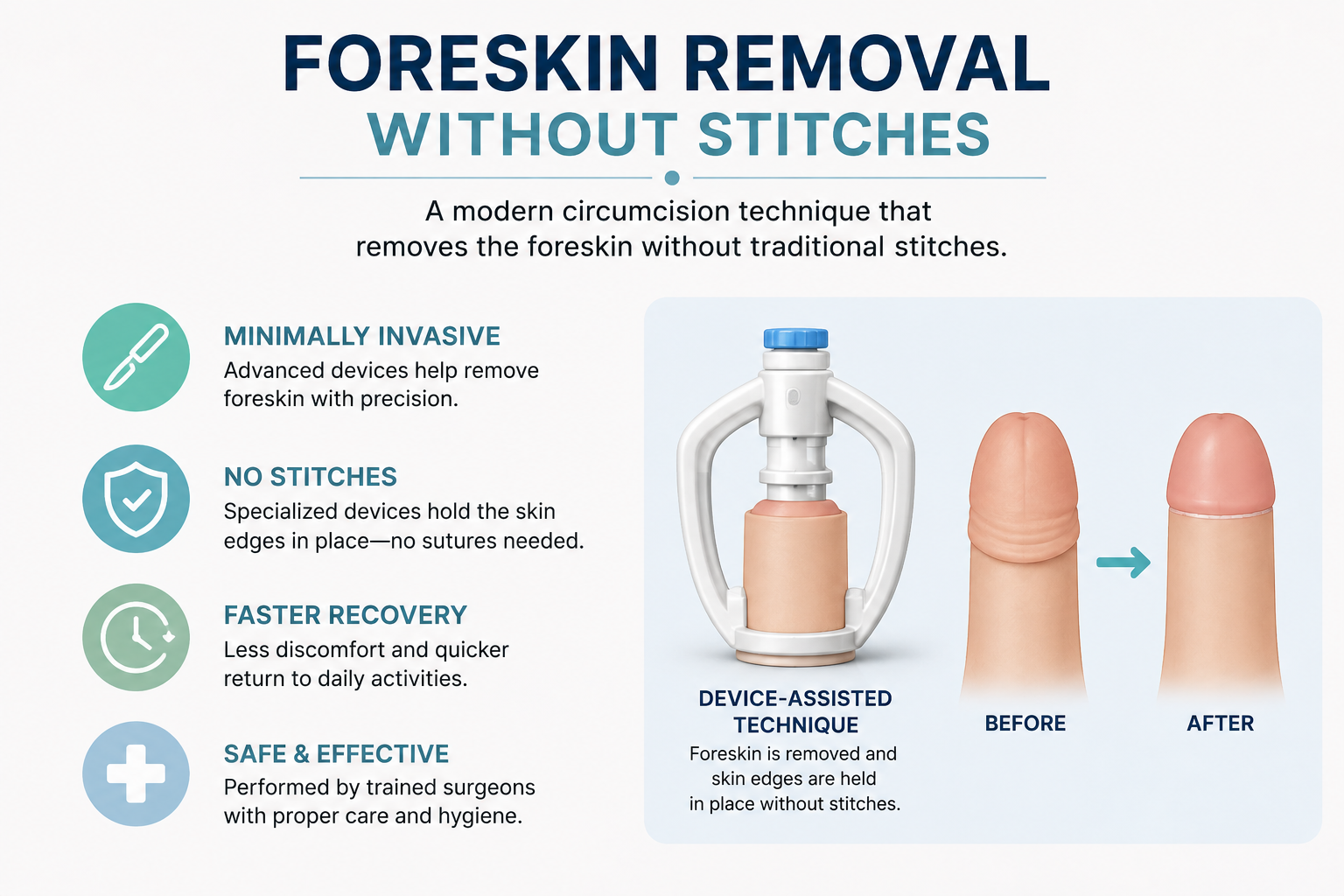
With some modern circumcision devices, the surgeon may use a specialized mechanism to remove the foreskin and control the wound edges without conventional surgical stitches. Depending on the device and technique, staples, rings, compression mechanisms, or other closure methods may be involved.
Therefore, “without stitches” describes the closure technique, not the absence of a surgical procedure.
How Is Stitchless Circumcision Performed?
The exact process varies according to the technique.
First, the surgeon examines the penis and foreskin to determine whether circumcision is appropriate. The procedure is then performed under suitable anesthesia.
In device-assisted circumcision, a specially designed circumcision device helps the surgeon remove the planned amount of foreskin while managing the wound edges. Some techniques therefore avoid conventional suturing.
The surgeon should explain exactly which device or method will be used before the procedure.
Is Laser Circumcision Stitchless?
Not automatically. The term laser circumcision generally refers to using an energy-based surgical instrument during part of the circumcision procedure. Whether stitches are required depends on the surgical technique and how the wound edges are managed.
Patients should therefore ask the surgeon specifically:
“Will my procedure require stitches, staples, a ring, or another closure method?”
This provides much clearer information than relying on terms such as “laser” or “stitchless.”
What Are the Potential Advantages?
Depending on the technique and individual patient, device-assisted <style type="text/css"> </style> Alisklamp Circumcision Surgery may offer practical advantages such as a standardized circumcision method and avoiding conventional sutures.
However, no technique should be considered universally superior. Outcomes depend on appropriate patient selection, the surgeon's experience, anatomy, wound care, and individual healing.
Is Foreskin Removal Without Stitches Pain-Free?
No circumcision method should be advertised as completely painless.
Anesthesia helps control pain during circumcision. After the procedure, patients may experience temporary tenderness, swelling, sensitivity, or discomfort as the area heals.
The surgeon may recommend appropriate pain relief and postoperative care based on the procedure performed.
Who May Need Circumcision?
Circumcision may be considered for several medical or personal reasons. Medical indications can include phimosis, recurrent balanitis or inflammation, scarring of the foreskin, or other foreskin-related problems.
Having one of these conditions does not automatically mean that a stitchless technique is appropriate.
A surgeon should examine the condition first and discuss whether circumcision is necessary and which technique is suitable.
Who May Not Be Suitable for a Stitchless Technique?
Not every foreskin condition can be managed using the same circumcision method.
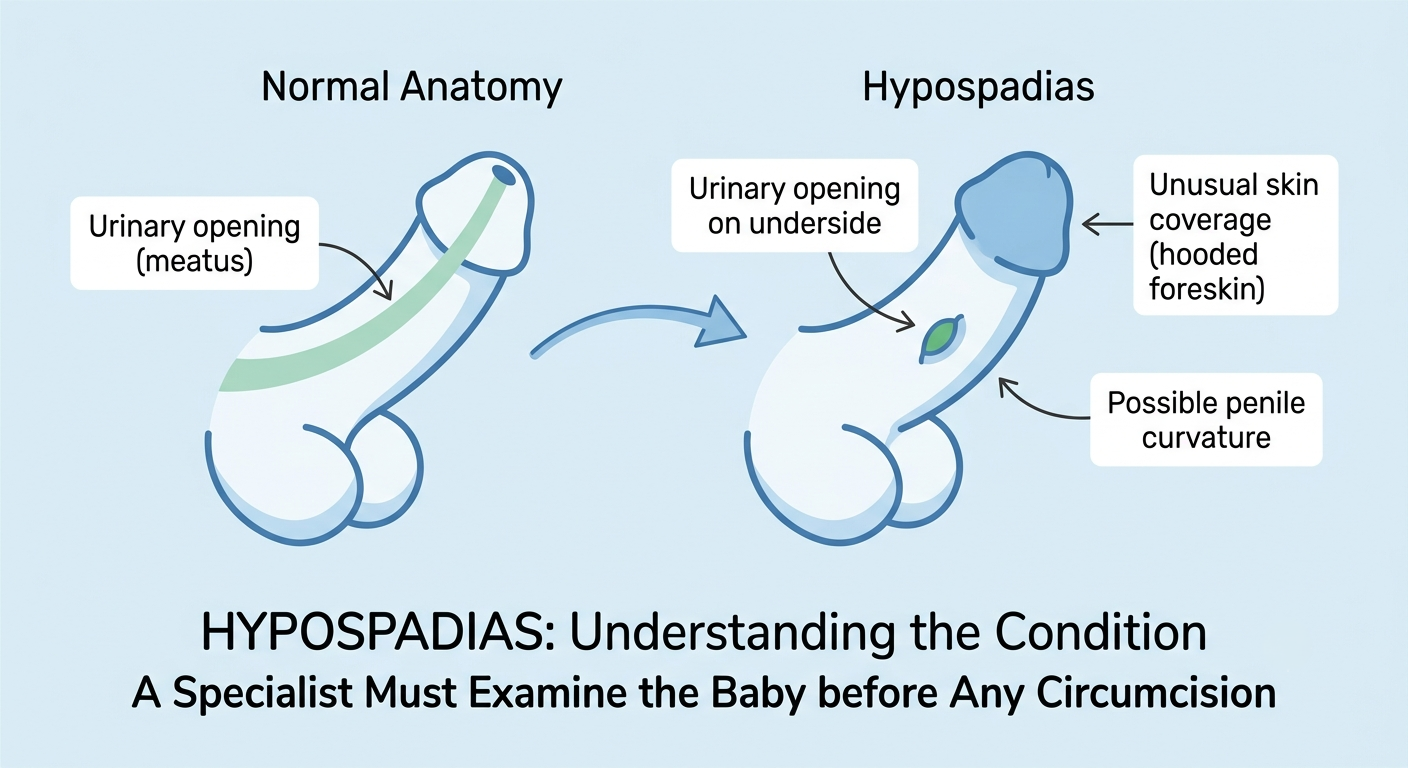
Severe scarring, unusual anatomy, active infection or inflammation, previous penile procedures, bleeding-related concerns, or other medical factors may influence the surgical approach.
In some circumstances, conventional surgical circumcision may give the surgeon greater control over tissue removal and wound closure.
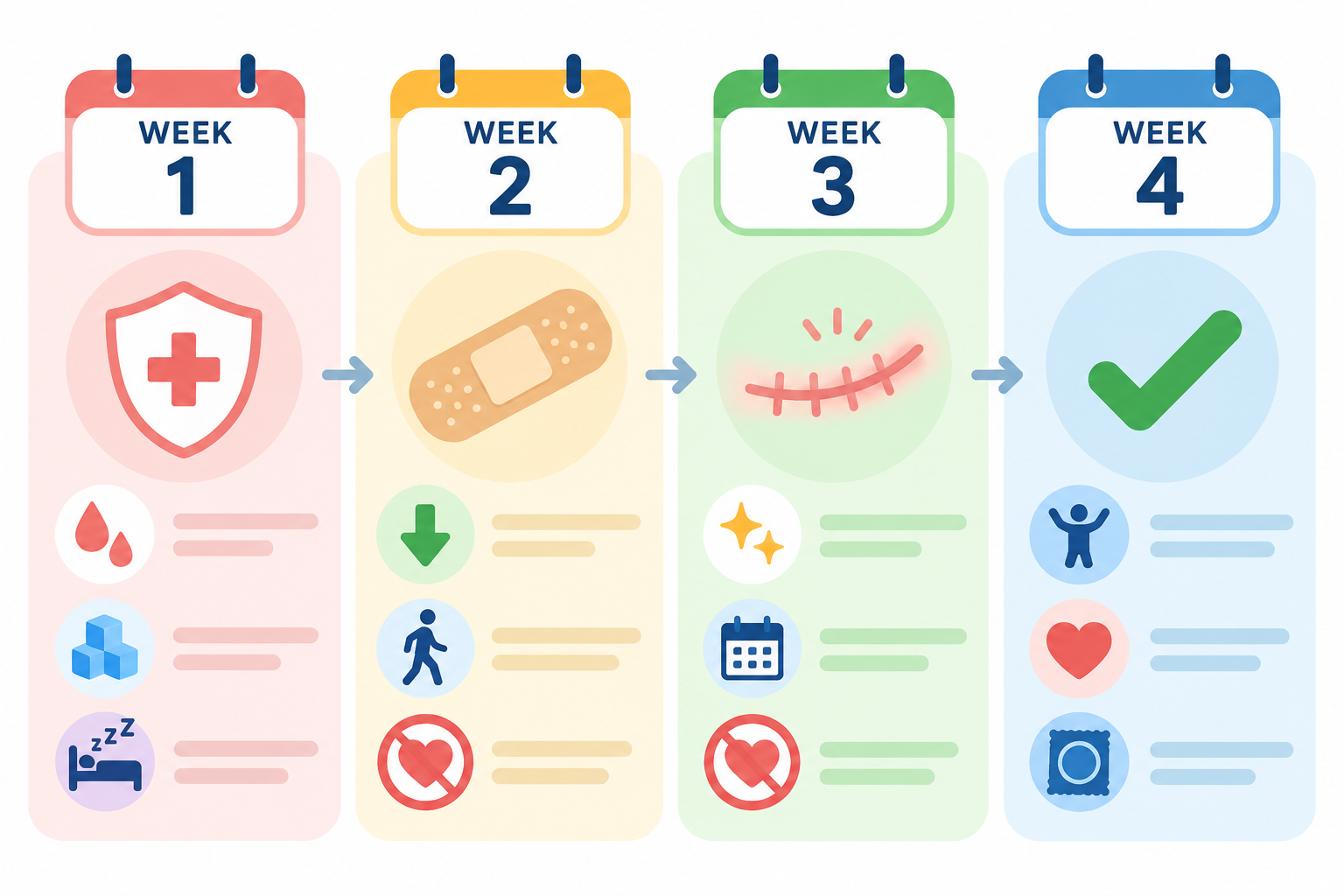
How Long Does Recovery Take?
Healing after circumcision happens gradually. Swelling, sensitivity, and mild discomfort can occur during the initial recovery period.
Patients usually receive instructions regarding hygiene, dressings, bathing, clothing, exercise, work, and sexual activity. The timeline varies according to the technique and individual healing, so the surgeon's postoperative instructions should take priority over general timelines found online.
Is Stitchless Circumcision Safe?
Circumcision is generally a commonly performed surgical procedure, but stitchless does not mean risk-free.
Potential complications can include bleeding, infection, swelling, wound-healing problems, scarring, cosmetic concerns, or the need for additional treatment.
Choosing an appropriately qualified surgeon and following postoperative instructions are therefore important regardless of the circumcision technique.
Which Is Better: Stitchless or Traditional Circumcision?
There is no single method that is best for every patient.
Traditional circumcision provides direct surgical control and remains appropriate in many situations. Device-assisted techniques may offer an alternative for appropriately selected patients.
Instead of choosing a procedure simply because it is advertised as “stitchless,” ask:
“Which circumcision technique is most appropriate for my condition, and why?”
The answer should take your anatomy, diagnosis, expectations, and medical history into account.
Consultation With Dr. Ashutosh Shah
Patients considering foreskin removal without stitches can consult Dr. Ashutosh Shah, a Board-Certified Plastic, Cosmetic & Reconstructive Surgeon and Director of Elegance Clinic, Surat. He has 22+ years of surgical experience and holds MBBS, MS, M.Ch. and DNB qualifications.
During a consultation, Dr. Ashutosh Shah can assess the foreskin condition, discuss available circumcision techniques, explain whether a stitchless approach is suitable, and provide individualized guidance about preparation and recovery.
Final Takeaway
Foreskin removal without stitches is possible with certain modern circumcision techniques, but it is not suitable for every patient. Stitchless circumcision still involves foreskin removal, wound healing, postoperative care, and potential surgical risks.
A consultation with an appropriately qualified and experienced surgeon can determine whether a stitchless technique, conventional circumcision, or another approach is most appropriate for your condition.