Is Frenuloplasty Better Than Circumcision for a Short Frenulum?
If you have a short or tight penile frenulum, you may experience pain during erections or sexual activity, difficulty retracting the foreskin, or repeated tearing and bleeding. In such cases, both frenuloplasty and circumcision may be considered. However, they are different procedures and are suitable for different situations.
So, is frenuloplasty better than circumcision for a short frenulum? In many cases where the main problem is an isolated short frenulum and the foreskin is otherwise healthy, frenuloplasty may be a more targeted option. Circumcision may be recommended when there are additional foreskin problems or when removing the foreskin is medically appropriate.
What Is a Short Frenulum?
The frenulum is a small band of tissue underneath the penis that connects the foreskin to the glans. When this tissue is unusually short or tight, it may pull on the glans during an erection or when the foreskin is retracted.
This condition is often called frenulum breve.
Common symptoms can include:
- Pain during erections
- Discomfort during sexual intercourse
- Difficulty retracting the foreskin
- Pulling or tightness underneath the glans
- Repeated frenulum tears
- Minor bleeding after tearing
- Anxiety about sexual activity because of previous injuries
Not everyone with a short frenulum needs surgery. However, persistent pain, repeated tearing, or significant restriction should be evaluated by a qualified doctor.
What Is Frenuloplasty?
Frenuloplasty is a minor surgical procedure designed to lengthen or release a tight frenulum. The surgeon carefully modifies the tight tissue so that the foreskin can move more comfortably.
One of the main advantages is that the foreskin is usually preserved.
Therefore, if the primary problem is a short frenulum and the foreskin itself is healthy, frenuloplasty can provide a more focused treatment than circumcision.
What Is Circumcision?
Circumcision involves surgically removing the foreskin that covers the head of the penis.
It is a different procedure from frenuloplasty. While circumcision can address some problems involving the foreskin and frenulum, it is generally a more extensive procedure when compared with an isolated frenuloplasty.
Circumcision may be considered when a patient also has conditions such as significant foreskin tightness, recurrent inflammation, scarring, or other foreskin-related problems.
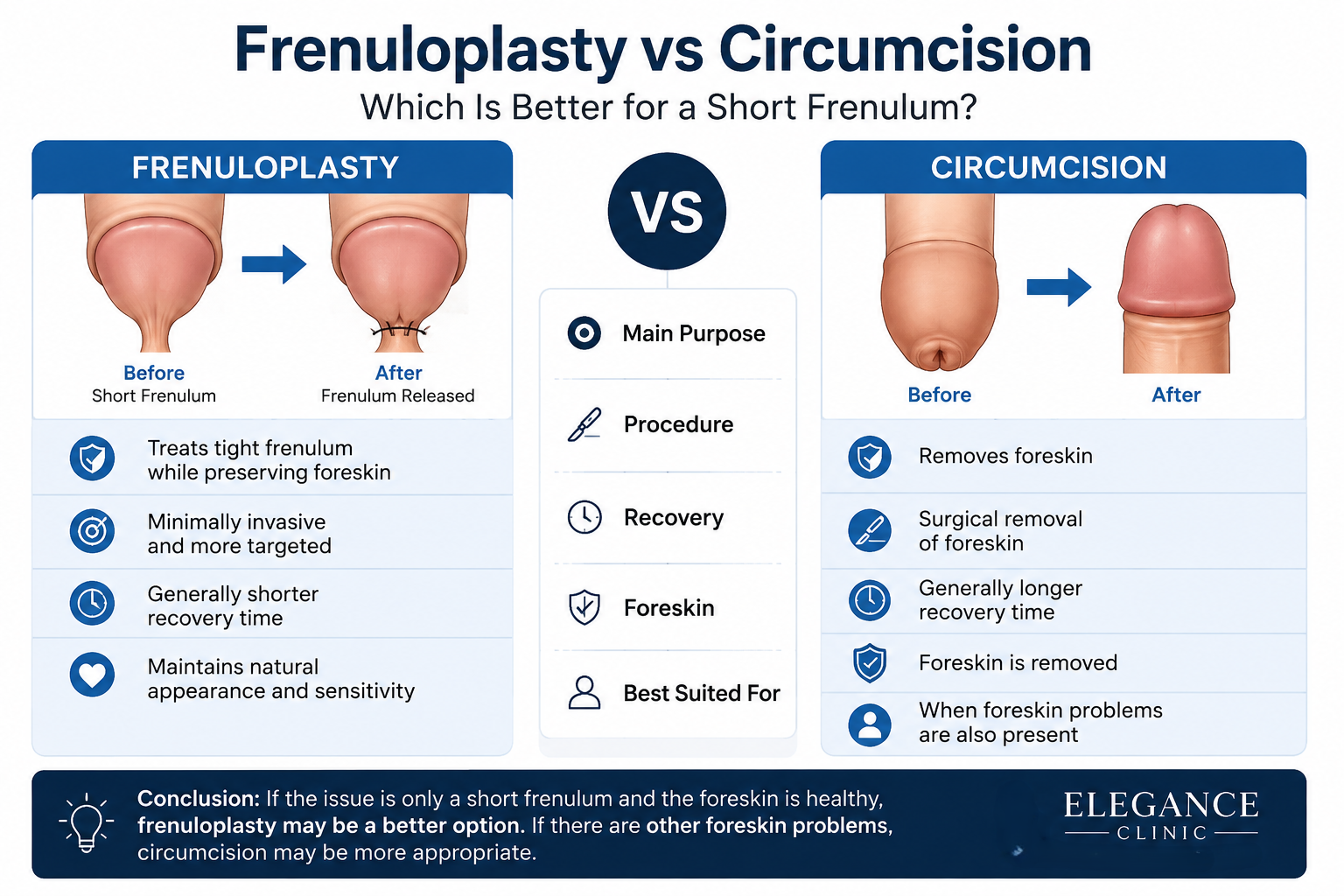
Frenuloplasty vs Circumcision
The right procedure depends on the underlying problem.
| Feature | Frenuloplasty | Circumcision |
|---|---|---|
| Main purpose | Lengthens/releases the frenulum | Removes the foreskin |
| Foreskin preserved | Usually | No |
| Best suited for | Isolated short frenulum | Certain foreskin conditions |
| Extent of surgery | More targeted | More extensive |
| Recovery | Generally shorter | Generally longer |
| Need for removal of foreskin | No | Yes |
Therefore, frenuloplasty may be preferable when the frenulum is the main source of the problem and the foreskin is otherwise healthy.
When May Frenuloplasty Be Better?
Frenuloplasty may be considered when:
- The primary issue is a short frenulum.
- The foreskin can otherwise move normally.
- You want to preserve your foreskin.
- Tightness causes pain during erections or intercourse.
- The frenulum has repeatedly torn.
- There is no significant foreskin scarring or disease.
In these circumstances, treating the specific tight tissue may be sufficient.
When Might Circumcision Be More Appropriate?
Circumcision may be recommended when the patient has additional foreskin-related problems.
For example, a doctor may discuss circumcision when there is:
- Significant phimosis
- Recurrent foreskin inflammation
- Foreskin scarring
- Repeated infections
- Difficulty retracting the foreskin for reasons beyond the frenulum
- A combination of frenulum and foreskin problems
The decision should be based on an examination rather than symptoms alone.
Does Frenuloplasty Avoid Circumcision?
In many suitable cases, yes. Frenuloplasty is specifically intended to address the tight frenulum without removing the foreskin.
However, it is important to understand that frenuloplasty is not appropriate for every patient. If the foreskin itself is severely tight or scarred, treating only the frenulum may not resolve the underlying problem.
A urologist or experienced surgeon can determine whether frenuloplasty alone is sufficient.
Is Frenuloplasty Painful?
Frenuloplasty is performed using appropriate local or other anesthesia, so significant pain during the procedure is generally avoided.
After surgery, some soreness, swelling, or sensitivity can occur. These symptoms usually improve as healing progresses. Your surgeon will provide specific instructions regarding wound care, hygiene, medications, and activity restrictions.
How Long Is Recovery?
Recovery varies between individuals. Because frenuloplasty is generally a smaller procedure than circumcision, recovery may be relatively straightforward.
Patients are usually advised to:
- Keep the surgical area clean.
- Follow the surgeon's wound-care instructions.
- Avoid strenuous activities initially.
- Avoid sexual intercourse and masturbation until adequate healing.
- Attend follow-up appointments if recommended.
Your surgeon will tell you when it is safe to resume sexual activity because healing time can vary.
Can Frenuloplasty Affect Sexual Function?
The goal of frenuloplasty is to reduce the tension caused by a short frenulum and improve comfort. By releasing the restriction, the procedure may help patients who experience pain or repeated tearing during sexual activity.
However, results vary, and no surgical procedure can guarantee a particular sexual outcome.
It is also important to discuss any concerns about penile sensitivity or sexual function with your surgeon before treatment.
Which Procedure Is Right for You?
There is no single answer to whether frenuloplasty or circumcision is better.
If you have an isolated short frenulum with a healthy, normally functioning foreskin, frenuloplasty may be a suitable and more targeted treatment. On the other hand, if you have significant foreskin tightness, scarring, recurrent inflammation, or another foreskin condition, circumcision may provide a more comprehensive solution.
At Elegance Clinic, Dr. Ashutosh Shah can evaluate the frenulum and foreskin to determine which treatment is appropriate for your individual condition. The recommendation should always be based on a physical examination, symptoms, medical history, and your treatment preferences.
Final Takeaway
Frenuloplasty is not universally better than circumcision. For an isolated short frenulum, it can be an effective option that focuses specifically on the tight tissue while generally preserving the foreskin. Circumcision is more extensive and may be more appropriate when significant foreskin problems are also present.
If you experience repeated tearing, bleeding, pain, or difficulty retracting your foreskin, consult a qualified surgeon rather than attempting to stretch or treat the frenulum yourself.