What Causes a Scrotum Lump and When Is Surgery Needed?
A scrotal lump can develop for many reasons. Some lumps are harmless and may only require observation, while others may need medical treatment or surgery. Because different conditions can look or feel similar, you should not try to diagnose a scrotal lump based on appearance alone.
A doctor can examine the scrotum and, when needed, recommend an ultrasound or other tests to identify the cause. If a lump requires removal, scrotum lump removal surgery may be considered based on its size, symptoms, location, and diagnosis.
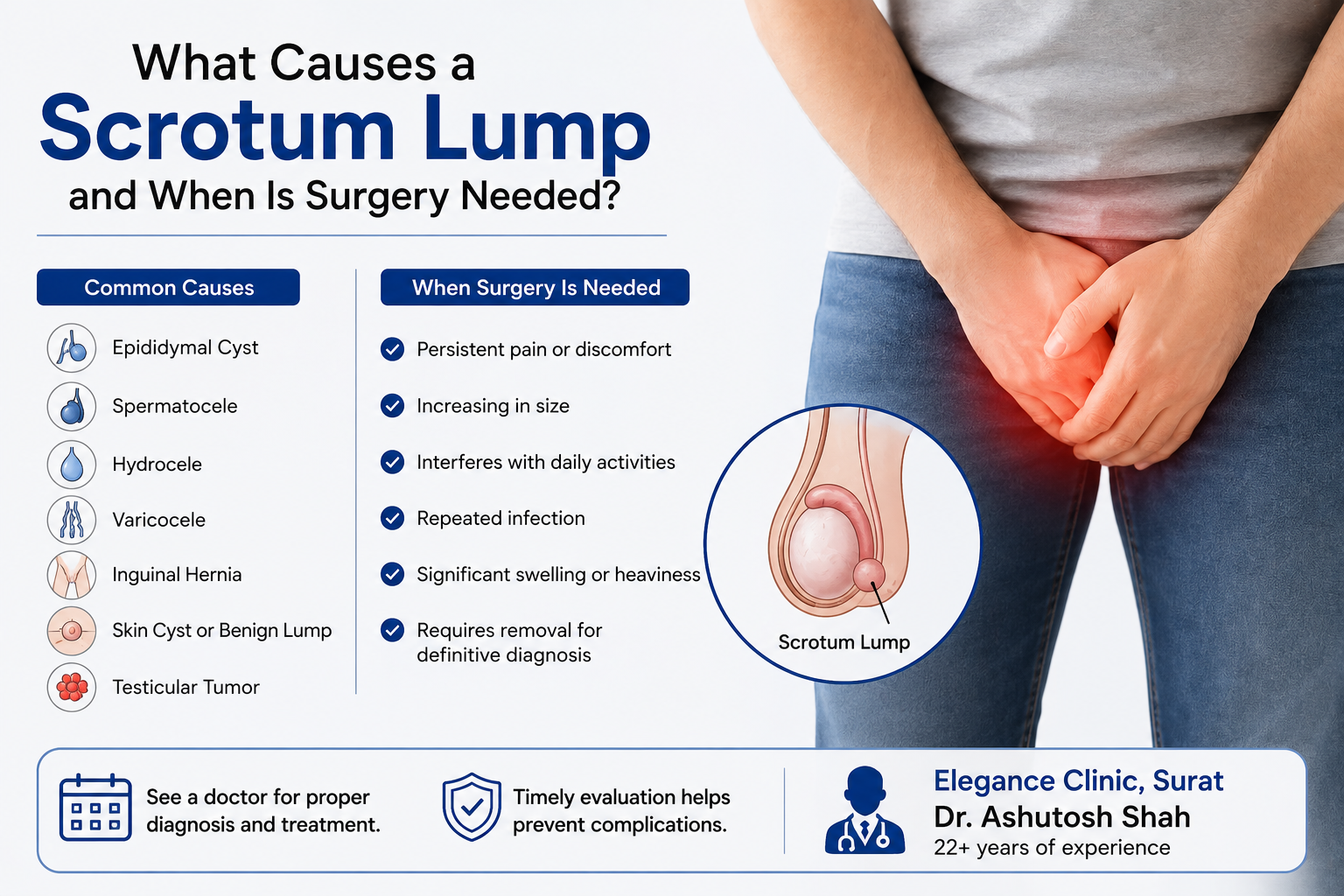
What Causes a Scrotum Lump?
A lump in or around the scrotum can result from several conditions.
1. Epididymal Cyst
An epididymal cyst is a fluid-filled sac that develops in the epididymis, the structure located behind the testicle. It may feel like a smooth lump above or behind the testicle.
Small cysts may not require treatment. However, a large or uncomfortable cyst may require surgical removal.
2. Spermatocele
A spermatocele is a cyst that usually contains fluid and sperm and develops near the epididymis. It is often painless but can become noticeable as it increases in size.
Treatment depends on symptoms and size. Surgery may be considered when the spermatocele causes significant discomfort or affects daily activities.
3. Hydrocele
A hydrocele occurs when fluid collects around a testicle. It can cause swelling or a feeling of heaviness in the scrotum.
Some hydroceles can be monitored, while persistent or bothersome hydroceles may require surgical treatment.
4. Varicocele
A varicocele involves enlarged veins within the scrotum. It can sometimes feel like a collection of soft, enlarged veins.
Not every varicocele requires surgery. Treatment may be considered when it causes persistent discomfort, testicular changes, or fertility-related concerns.
5. Inguinal Hernia
An inguinal hernia occurs when tissue pushes through a weak area in the abdominal wall and may extend into the groin or scrotum. It can appear as a swelling that becomes more noticeable when standing, coughing, or straining.
A hernia requires medical evaluation because it can sometimes become trapped or strangulated and require urgent treatment.
6. Skin Cyst or Other Benign Lump
A lump may also develop in the skin or soft tissues around the scrotum. For example, an epidermoid cyst can create a noticeable bump.
If the lump becomes painful, infected, repeatedly returns, or interferes with daily life, removal may be recommended.
7. Testicular Tumor
A lump that develops within the testicle requires prompt medical evaluation. Testicular cancer can sometimes present as a painless lump or change in the size or consistency of a testicle.
A new or unexplained testicular lump should therefore never be ignored.
When Is Scrotum Lump Removal Surgery Needed?
Surgery is not necessary for every scrotal lump. A doctor may recommend removal when:
- The lump causes persistent pain or discomfort.
- It continues to increase in size.
- It interferes with walking, sitting, exercise, or daily activities.
- It becomes repeatedly infected.
- It causes significant swelling or heaviness.
- The diagnosis requires tissue removal for further examination.
- The lump does not respond to appropriate non-surgical management.
- Its appearance causes significant concern after medical evaluation.
The recommended procedure depends entirely on the underlying condition.
How Is a Scrotum Lump Diagnosed?
Your doctor will usually begin with a physical examination. They may ask when you first noticed the lump, whether it has changed in size, and whether you have pain or other symptoms.
A scrotal ultrasound is commonly used to evaluate a scrotal lump. It can help determine whether the lump is fluid-filled or solid and whether it is located within or outside the testicle.
Additional tests may be recommended depending on the findings.
What Happens During Lump Removal Surgery?
The procedure varies according to the diagnosis. For a benign cyst or other superficial lump, the surgeon may remove the lump while preserving surrounding healthy tissue.
For conditions involving deeper structures, the surgical approach can be different. Your surgeon should explain the procedure, anesthesia, expected recovery, possible complications, and follow-up before surgery.
Is Scrotum Lump Removal Surgery Safe?
When performed for an appropriate diagnosis by a qualified surgeon, scrotal lump surgery can be an effective treatment. However, all surgical procedures carry potential risks, including bleeding, infection, swelling, scarring, pain, and injury to nearby structures.
The specific risks depend on the type and location of the lump.
When Should You See a Doctor?
You should arrange a medical evaluation if you notice a new lump, swelling, enlargement, or change in the testicle or scrotum.
Seek urgent medical attention if you develop sudden severe testicular pain, rapid swelling, nausea, or vomiting, as these symptoms can occur with testicular torsion, which requires immediate assessment.
Scrotum Lump Removal Surgery in Surat
If you have noticed a scrotal lump, the first step is to identify its cause rather than immediately deciding on surgery. At Elegance Clinic in Surat, Dr. Ashutosh Shah, with over 22 years of experience, can assess your concern and recommend appropriate evaluation and treatment based on the type and location of the lump.