What Is Penile Implant Surgery for Erection? Complete Treatment Guide
Implant surgery for erection is an advanced medical procedure used to help men who experience erectile dysfunction and cannot achieve or maintain an erection naturally. When medications and other therapies stop working, it offers a long-term solution by placing a penile implant inside the penis to restore sexual function. Under the expert care of Dr Ashutosh Shah, patients receive personalized treatment planning, helping them regain confidence, intimacy, and improved quality of life through modern surgical techniques.
Understanding Implant Surgery for Erection
Many men experience erectile dysfunction at some stage of life. However, when the condition becomes persistent and affects physical relationships, medical intervention becomes necessary.
Implant surgery for erection is designed specifically for men who do not respond well to oral medications, injections, or lifestyle changes. Unlike temporary treatments, this procedure offers a reliable and long-term solution.
Moreover, penile implants allow men to control erections whenever required, improving both confidence and sexual performance.
What Causes Erectile Dysfunction?
Before considering implant surgery for erection, doctors identify the underlying cause of erectile dysfunction.
1. Poor Blood Circulation
Healthy blood flow is essential for an erection. However, cardiovascular disease can reduce circulation and cause erection problems.
2. Diabetes
Diabetes can damage nerves and blood vessels. As a result, erectile function gradually decreases over time.
3. Hormonal Imbalance
Low testosterone levels often affect sexual desire and erectile strength.
4. Nerve Damage
Spinal injury, pelvic trauma, or previous surgeries sometimes damage the nerves responsible for erection.
5. Psychological Factors
Stress, anxiety, and depression can significantly affect sexual performance.
6. Aging Process
As men age, erectile function naturally becomes weaker due to vascular and hormonal changes.
Symptoms That May Need Implant Surgery
Men considering implant surgery for erection usually experience long-term erectile dysfunction symptoms.
Common signs include:
- Difficulty achieving an erection
- Inability to maintain an erection during intercourse
- Reduced firmness during sexual activity
- Poor response to ED medications
- Reduced sexual confidence
- Relationship stress due to intimacy problems
Additionally, repeated failure of non-surgical treatments often indicates the need for permanent correction.
Diagnosis Before Implant Surgery
Proper diagnosis helps doctors determine whether implant surgery for erection is the correct treatment option.
Physical Examination
The doctor evaluates genital health, penile structure, and overall sexual function.
Blood Testing
Blood tests help check testosterone levels, diabetes status, and hormone balance.
Ultrasound Examination
Penile Doppler ultrasound studies blood circulation and vascular function.
Medical History Review
Previous surgeries, medications, and long-term health conditions are reviewed carefully.
Erectile Function Assessment
Doctors assess the severity and duration of erectile dysfunction before recommending surgery.
Treatment Options for Erectile Dysfunction
Several treatments are available depending on severity.
Lifestyle Modification
Regular exercise, improved diet, and smoking cessation may improve erectile health.
Oral Medications
Drugs can temporarily improve blood flow for an erection.
Injection Therapy
Medication injections directly stimulate an erection when oral medications fail.
Vacuum Erection Devices
External pumps help improve temporary erection quality.
Penile Implant Surgery
When other treatments fail, Penile Implant Surgery becomes the most reliable long-term treatment option.
This is where implant surgery for erection provides permanent structural support.
Penile Implant Surgery Explained
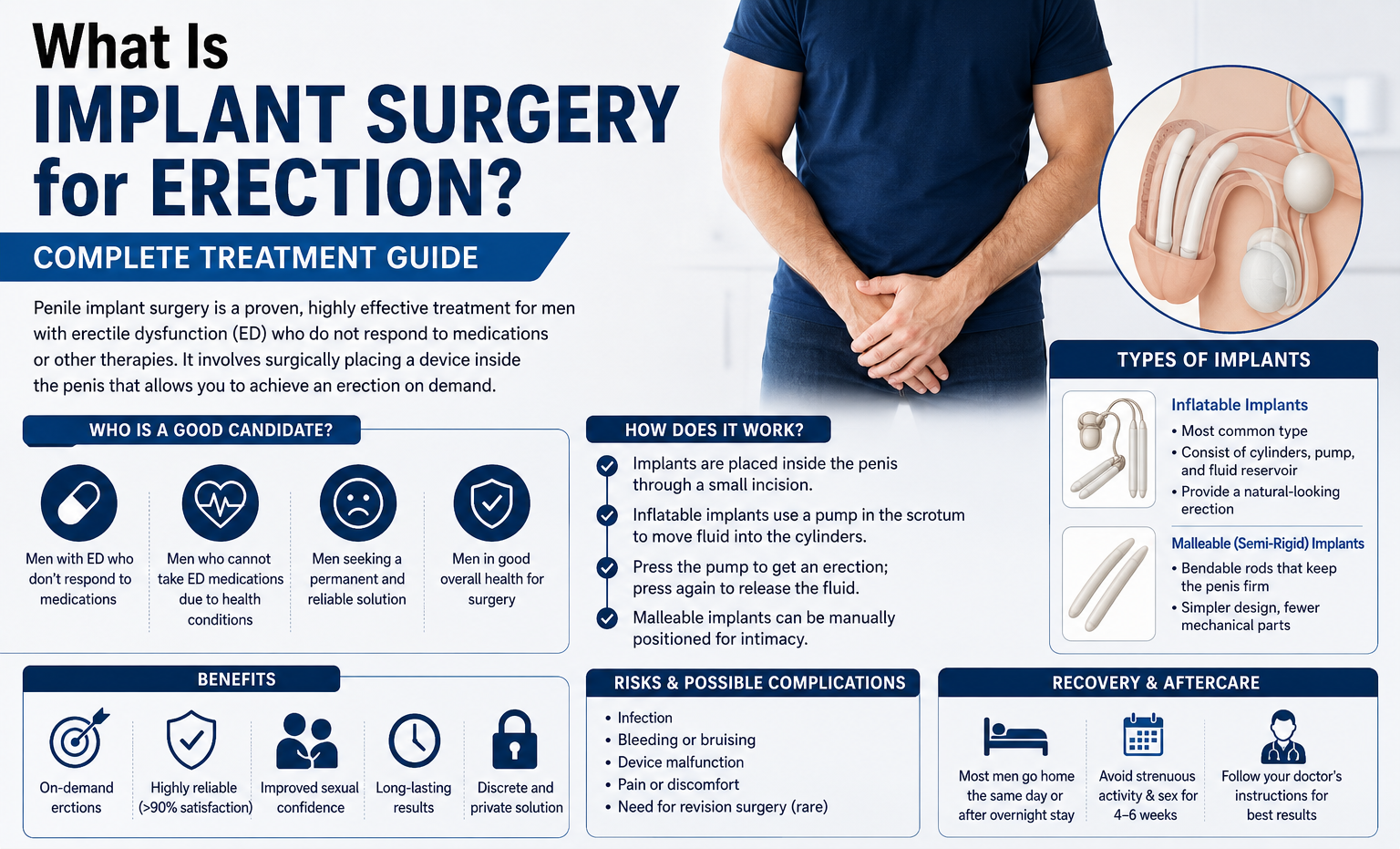
Implant surgery for erection involves placing a prosthetic device inside the penis to help create controlled erections.
There are two major implant types.
Inflatable Penile Implant
This implant allows men to control their erections using an internal pump.
Benefits include:
- Natural appearance
- Better control during intercourse
- More comfortable long-term use
Malleable Penile Implant
This implant uses bendable rods inside the penis.
Benefits include:
- Simpler mechanism
- Lower maintenance
- Easier surgical procedure
The doctor recommends the most suitable implant based on the patient's needs.
Surgical Procedure Step by Step
The surgical process for implant surgery for erection is carefully planned.
Step 1: Anesthesia
General or spinal anesthesia ensures complete comfort during surgery.
Step 2: Small Surgical Incision
A small incision is made near the penile base or lower pelvic area.
Step 3: Implant Placement
The penile implant device is inserted into the erectile chambers.
Step 4: Device Positioning
The implant is positioned securely for long-term function.
Step 5: Closing the Incision
After placement, the incision is closed carefully.
Usually, the procedure takes around 60 to 90 minutes.
Recovery and Aftercare
Recovery after implant surgery for erection usually progresses smoothly with proper care.
Important aftercare instructions include:
- Rest for the first few days
- Avoid sexual activity for 4 to 6 weeks
- Keep the surgical area clean and dry
- Take prescribed antibiotics and pain medication
- Attend follow-up appointments regularly
Most patients return to routine activities gradually within a few weeks.
Furthermore, proper aftercare improves long-term implant performance.
Risks and Benefits
Like any procedure, implant surgery for erection has both benefits and possible risks.
Benefits
- Permanent erectile dysfunction solution
- Improved sexual confidence
- Better relationship satisfaction
- Reliable erection whenever needed
- High long-term success rate
Risks
- Temporary swelling after surgery
- Mild discomfort during healing
- Rare infection risk
- Mechanical failure in rare cases
- Temporary bruising
However, advanced surgical techniques help reduce complications significantly.
Who Is the Right Candidate?
A patient may be suitable for implant surgery for erection if:
- Erectile dysfunction has lasted for a long period
- Oral medications are ineffective
- Diabetes affects erectile function
- Previous ED treatments have failed
- The patient wants a permanent solution
Therefore, careful consultation helps determine eligibility.
Long-Term Results
Most men experience a significant improvement in sexual performance after implant surgery for erection.
In addition:
- Satisfaction rates remain high
- Sexual confidence improves
- Performance becomes predictable
- Quality of life improves significantly
Because penile implants remain hidden inside the body, the external appearance stays natural.
Conclusion
Implant surgery for erection offers a reliable long-term solution for men suffering from persistent erectile dysfunction when other treatments fail. With modern penile implant surgery techniques, men can restore sexual confidence, improve intimacy, and achieve long-term satisfaction.
At Elegance Clinic, advanced treatment planning and surgical expertise help patients receive safe, personalized, and effective solutions for erectile dysfunction correction.
Considering treatment in Surat? Learn more about penile implant surgery in Surat, explore all adult circumcision options in Surat, or book an appointment with Dr. Ashutosh Shah.