What Is the Easiest and Safest Circumcision Method for Adults?
Choosing the easiest circumcision method for adults depends on several factors, including your age, medical condition, foreskin tightness, reason for circumcision, and personal preference. There is no single circumcision technique that is considered best for every adult. However, modern methods are designed to make the procedure more comfortable, controlled, and convenient compared with traditional techniques.
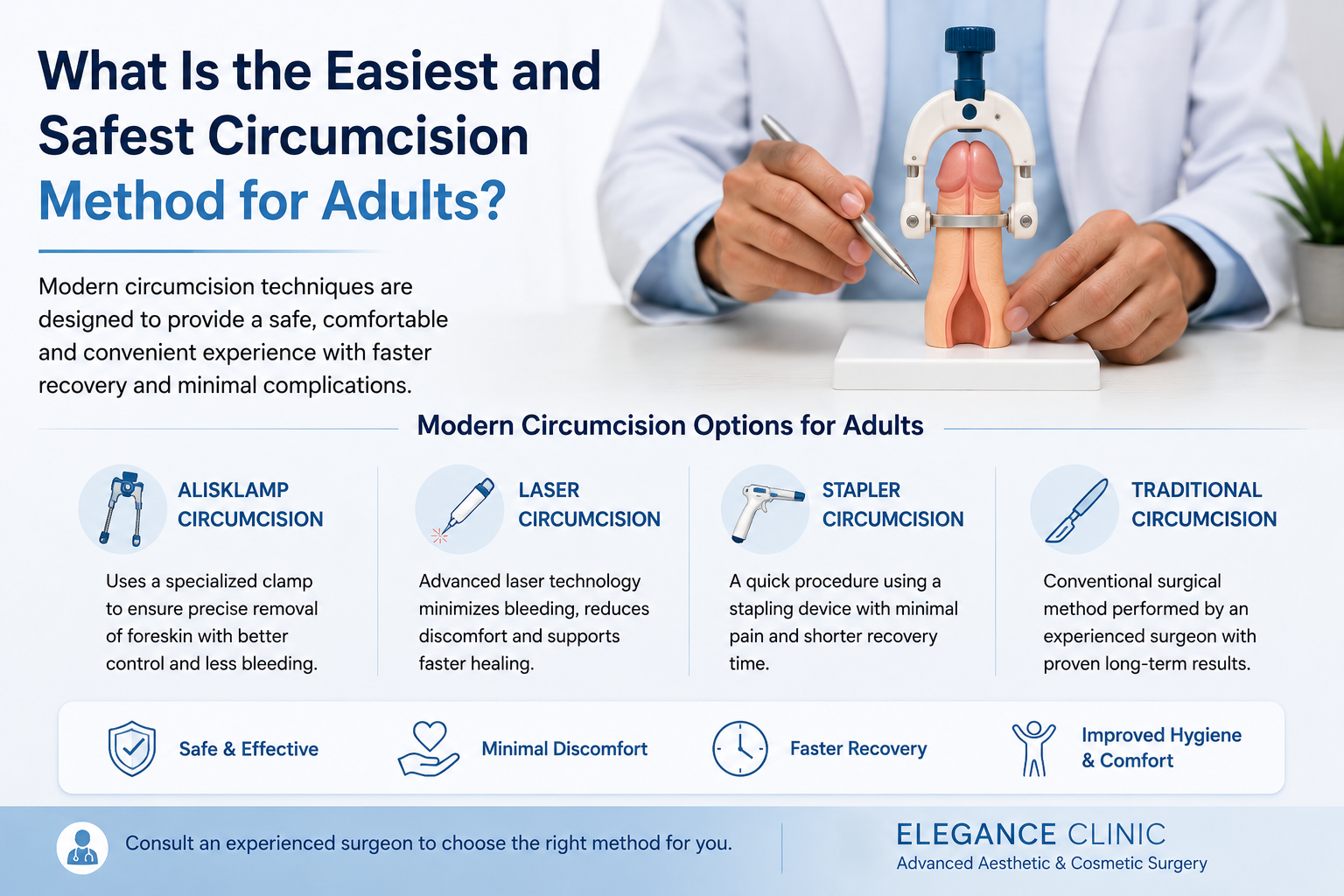
Today, adults can choose from different approaches, including Alisklamp circumcision, laser circumcision, stapler circumcision, and conventional surgical circumcision. Each method has its own advantages. Therefore, an experienced surgeon should evaluate your condition before recommending the most appropriate technique.
What Makes a Circumcision Method Easy and Safe?
For most adults, an easy circumcision method means a straightforward procedure, causes manageable discomfort, allows a convenient recovery, and produces predictable results.
Safety is equally important. A proper circumcision should be performed by a qualified surgeon in a suitable medical setting. The surgeon should also assess your medical history, medications, allergies, bleeding tendency, and any existing foreskin or penile conditions before surgery.
Depending on your situation, factors such as the following may influence the choice of technique:
- Degree of foreskin tightness
- Presence of phimosis or recurrent infections
- Previous penile procedures
- Skin condition
- General health
- Healing capacity
- Personal expectations
- Surgeon’s experience with the selected technique
Is Alisklamp Circumcision an Easy Option for Adults?
Alisklamp circumcision is a modern circumcision technique that uses a specialized clamp system to control and remove the foreskin. The device helps the surgeon maintain a defined area during the procedure.
For adults looking for a modern alternative to conventional circumcision, Alisklamp may be an option after proper evaluation. However, suitability depends on the individual's anatomy and medical requirements.
One advantage of using a specialized circumcision device is that it can help provide a more structured approach to the procedure. The exact technique, anesthesia, wound management, and recovery instructions can vary depending on the patient and the surgeon.
Is Laser Circumcision Better Than Traditional Circumcision?
Laser circumcision is another modern option that some adults consider. It uses laser technology during the surgical procedure and may be suitable for selected patients.
Traditional circumcision, however, remains a well-established surgical technique. It allows the surgeon to directly remove the foreskin and manage the tissue according to the patient's anatomy.
Therefore, laser circumcision is not automatically safer or better for every patient. Similarly, conventional circumcision is not necessarily more difficult for everyone. The appropriate method depends on the individual case and the surgeon's expertise.
Which Circumcision Method Has Less Discomfort?
Discomfort after circumcision varies from person to person. The type of procedure, individual pain tolerance, wound healing, and postoperative care can all influence the recovery experience.
Modern circumcision techniques may be designed to make the procedure more controlled and comfortable. However, it is important not to assume that a particular technique will be completely painless.
Your surgeon will usually provide instructions regarding pain medication, wound care, hygiene, clothing, and physical activity during recovery.
How Long Does Adult Circumcision Recovery Take?
Recovery varies depending on the technique and individual healing. Many adults can return to light daily activities relatively soon, although complete healing takes longer.
During the initial recovery period, mild swelling, tenderness, bruising, or sensitivity can occur. These symptoms generally improve as healing progresses.
You should follow your surgeon's instructions carefully. In particular, avoid strenuous exercise, activities that put pressure on the surgical area, and sexual activity until your surgeon confirms that healing is adequate.
Can Circumcision Treat Phimosis?
Yes. Circumcision can be recommended for adults with phimosis, particularly when the foreskin is persistently tight and causes problems such as pain, difficulty retracting the foreskin, recurrent infections, or problems during sexual activity.
However, not every person with a tight foreskin necessarily needs circumcision. Depending on the cause and severity, other treatments may sometimes be considered.
A proper examination is therefore important before choosing surgery.
Is Adult Circumcision Safe?
Adult circumcision is generally considered a commonly performed surgical procedure, but like any surgery, it can have potential risks. These may include bleeding, infection, swelling, discomfort, delayed healing, changes in sensitivity, or cosmetic concerns.
The risk can be reduced through appropriate patient evaluation, proper surgical technique, sterile conditions, and careful postoperative care.
For this reason, choosing the procedure based only on claims such as “painless,” “scarless,” or “instant recovery” is not advisable. The surgeon's experience and appropriate patient selection are important parts of safe treatment.
How Do You Choose the Right Circumcision Method?
The easiest circumcision method for adults is ultimately the one that is appropriate for your specific condition.
During a consultation, the surgeon can examine the foreskin and determine whether circumcision is required. The surgeon can then explain the available options, including Alisklamp, laser, or conventional circumcision, and discuss their expected recovery, benefits, limitations, and possible risks.
At Elegance Clinic, Dr. Ashutosh Shah, a cosmetic and hair transplant surgeon with over 22 years of experience, provides individualized guidance for patients considering modern circumcision procedures. The recommended technique is selected according to the patient's condition, anatomy, and treatment requirements rather than using the same approach for everyone.