
Who Is a Good Candidate for Laser Circumcision? A Self-Check
A good candidate for laser circumcision has a clear medical or personal reason for considering the procedure, stable general health and realistic expectations. Conditions such as uncontrolled diabetes, poorly controlled blood pressure, active infection or smoking may require attention before surgery. Who can get laser circumcision depends on an individual medical assessment, not age or preference alone.
Key Takeaways
-
Laser circumcision may be suitable for adults with symptomatic phimosis, recurrent foreskin inflammation or certain other foreskin conditions.
-
Not everyone with a tight foreskin needs surgery; nonsurgical treatment may be appropriate.
-
Diabetes, high blood pressure and smoking require individual assessment but do not automatically rule out circumcision.
-
There is no universal maximum age, although medical fitness matters.
-
Laser-assisted circumcision still carries surgical risks.
-
A consultation with a qualified surgeon helps determine the most appropriate treatment.
Who Usually Benefits Most From Laser Circumcision?
Laser circumcision is a surgical technique that uses laser energy to remove the foreskin. It may help selected patients who have medical conditions affecting the foreskin or who choose circumcision for personal reasons.
1. Men With Symptomatic Phimosis
Phimosis occurs when the foreskin cannot be retracted normally.
Some adults experience pain, recurrent inflammation, difficulty with hygiene or discomfort during sexual activity.
However, not every case requires surgery. Depending on the cause and severity, topical steroid treatment or other options may be considered first.
2. Patients With Recurrent Balanitis
Balanitis refers to inflammation of the head of the penis. When inflammation repeatedly affects the foreskin, circumcision may be considered after identifying and treating the underlying cause.
3. Patients With Foreskin Scarring
Certain conditions, including lichen sclerosus, can cause scarring and tightening of the foreskin.
Circumcision may be recommended when symptoms are persistent or medical treatment is insufficient.
4. Adults Seeking Elective Circumcision
Some adults consider circumcision for religious, cultural or personal reasons.
These patients should understand the procedure, permanent anatomical changes, recovery, and possible complications before consenting.
To compare treatment methods, read is laser circumcision better.
Who Should Wait or Avoid Laser Circumcision for Now?
Not every patient is ready for elective surgery immediately.
Some medical conditions require assessment, stabilisation or treatment before circumcision can be performed safely.
Uncontrolled Diabetes
Poorly controlled blood glucose can increase the risk of infection and delayed wound healing.
Patients with diabetes may still undergo circumcision, but their surgeon should review glucose control and overall health.
Poorly Controlled Blood Pressure
Severely elevated blood pressure may require assessment and treatment before elective surgery.
The decision depends on the blood pressure reading, symptoms and other medical risks.
Active Infection
An active local infection may need treatment before elective circumcision.
However, urgent medical conditions require individual evaluation rather than simply postponing care.
Smoking and Nicotine Use
Smoking can impair circulation and wound healing.
Patients should disclose cigarette smoking, vaping, and other nicotine use.
Bleeding Disorders or Blood-Thinning Medicines
Patients taking anticoagulants or antiplatelet medicines may need additional planning.
Never stop prescribed blood-thinning medication without medical advice.
Unrealistic Expectations
Circumcision does not guarantee improved sexual performance, increased penile size or freedom from all genital infections.
Patients should understand what the procedure can and cannot achieve.
For additional safety information, read safe laser circumcision what men should know before treatment.
Laser Circumcision Eligibility: Self-Check Table
The following checklist helps patients prepare for consultation. It cannot replace a medical examination.
| Self-Check Question |
|---|
| Do you have a tight foreskin causing symptoms? |
| Have you experienced repeated foreskin inflammation? |
| Is your general health stable? |
| Do you have diabetes or high blood pressure? |
| Do you smoke or use nicotine? |
| Do you take blood-thinning medicines? |
| Do you understand the possible complications? |
| Can you follow postoperative care instructions? |
| Have you discussed nonsurgical alternatives? |
How Do Age, Weight and Health Conditions Matter?
Patients often ask whether age or body weight affects their eligibility.
Is There a Laser Circumcision Age Limit?
There is no single maximum age that applies to every patient.
Older adults may undergo circumcision if their medical condition and surgical risk are acceptable.
For children, indications, anaesthesia and consent requirements differ from those for adults.
Parents seeking information about paediatric techniques can review new generation laser circumcision.
Does Body Weight Matter?
Weight alone usually does not determine whether someone can undergo circumcision.
However, obesity may affect surgical access, anaesthesia planning and wound care in some patients.
A surgeon may recommend additional assessment when necessary.
What About Diabetes?
Patients with diabetes require careful evaluation because elevated blood glucose can increase infection and wound-healing risks.
The surgeon may review recent glucose readings, HbA1c and other health factors.
Can Patients With High Blood Pressure Have Circumcision?
Many patients with controlled hypertension can undergo minor surgery following appropriate assessment.
However, severely uncontrolled blood pressure or associated medical problems may require treatment first.
What Tests Are Done Before Laser Circumcision?
Preoperative testing depends on the patient's medical history, physical examination, planned anaesthesia and associated health conditions.
Medical History
The surgeon may ask about:
-
Previous operations and anaesthesia.
-
Diabetes and hypertension.
-
Bleeding problems.
-
Medication and allergies.
-
Previous foreskin infections.
-
Smoking and alcohol use.
Physical Examination
The surgeon examines the foreskin condition, identifies scarring or inflammation and determines whether circumcision is appropriate.
Blood Tests
Not every healthy adult requires routine blood testing before minor surgery.
However, tests may be recommended when medical conditions or clinical findings make them necessary.
Anaesthesia Assessment
The surgeon or anaesthesia team determines whether local anaesthesia is appropriate or whether another approach is required.
Treatment Planning
The doctor discusses available techniques, expected recovery, possible complications and follow-up arrangements.
Laser Circumcision in Vesu Surat: How Is Suitability Assessed?
Patients considering laser circumcision in vesu surat should begin with a qualified surgical consultation rather than selecting a technique based only on advertisements.
An appropriate assessment includes identifying the underlying condition, discussing nonsurgical options and reviewing medical fitness.
At Elegance Clinic, patients can consult Dr. Ashutosh Shah regarding circumcision suitability and available treatment approaches.
Before scheduling surgery, ask whether the recommended technique is appropriate for your condition and what postoperative care will be required.
The consultation should also address costs, anaesthesia, expected healing and arrangements for medical assistance if complications occur.
What Are Realistic Expectations After Laser Circumcision?
Laser-assisted circumcision permanently removes the selected foreskin tissue.
However, patients should understand that the technique does not eliminate surgical risks.
Recovery Takes Time
Adults commonly require approximately four to six weeks for wound healing following circumcision.
Individual recovery may be shorter or longer depending on the patient's condition and postoperative course.
Some Swelling Is Expected
Swelling, tenderness and mild discomfort may occur during the early recovery period.
These symptoms should generally improve over time.
Scarring Is Possible
Circumcision produces a surgical scar. Its appearance varies between patients.
Laser technology does not guarantee a scar-free result.
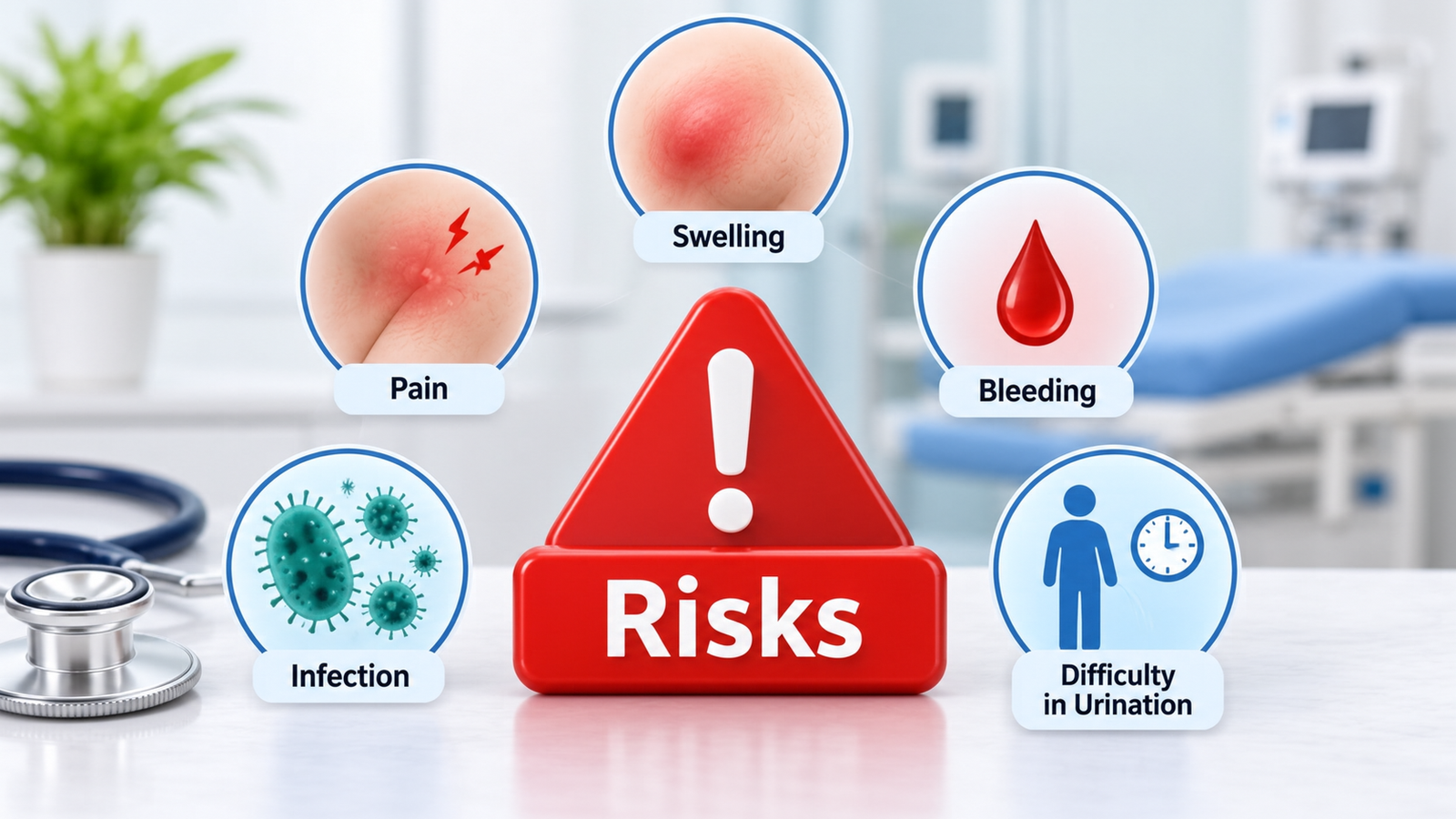
Complications Can Occur
Possible complications include bleeding, infection, delayed healing, wound separation, altered sensitivity and dissatisfaction with the appearance.
Sexual Function Outcomes Vary
Circumcision is not a proven treatment for every sexual performance concern.
Patients should not expect guaranteed improvements in erection quality, ejaculation control, or sexual satisfaction.
Follow-Up Matters
Patients should follow wound-care instructions and attend recommended reviews.
Heavy bleeding, inability to pass urine, fever with wound infection, or severe worsening pain requires urgent medical assessment.
Why Consult Dr. Ashutosh Shah?
Dr. Ashutosh Shah (M.S., M.Ch., D.N.B.) is a Plastic, Reconstructive and Cosmetic Surgeon associated with Elegance Clinic.
An individual consultation helps establish whether circumcision is indicated and whether laser-assisted surgery is an appropriate option.
The assessment should consider medical history, foreskin condition, anaesthesia requirements, risks and expected recovery.
Patients can discuss treatment options, cost estimates and follow-up arrangements before making a decision.
To enquire about an appointment, contact us.
Conclusion
Understanding who can get laser circumcision requires more than checking age or general health.
The decision depends on the underlying foreskin condition, treatment alternatives, medical fitness, informed consent and realistic expectations.
Laser-assisted circumcision may be suitable for selected patients, but it is not automatically better than conventional surgery.
A consultation with Dr. Ashutosh Shah at Elegance Clinic can help patients understand their options and make an informed treatment decision.