Why Is My Baby's Urine Opening Not at the Tip of the Penis?
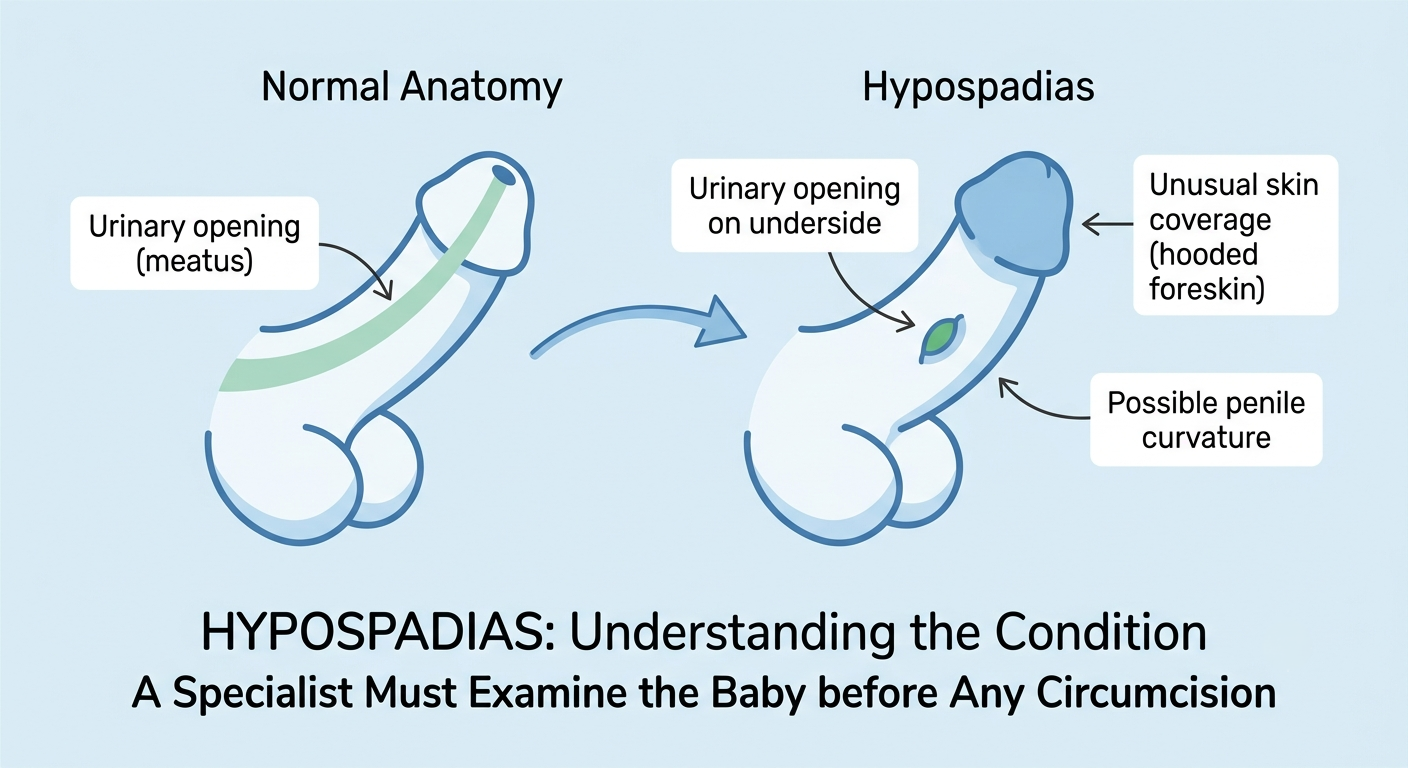
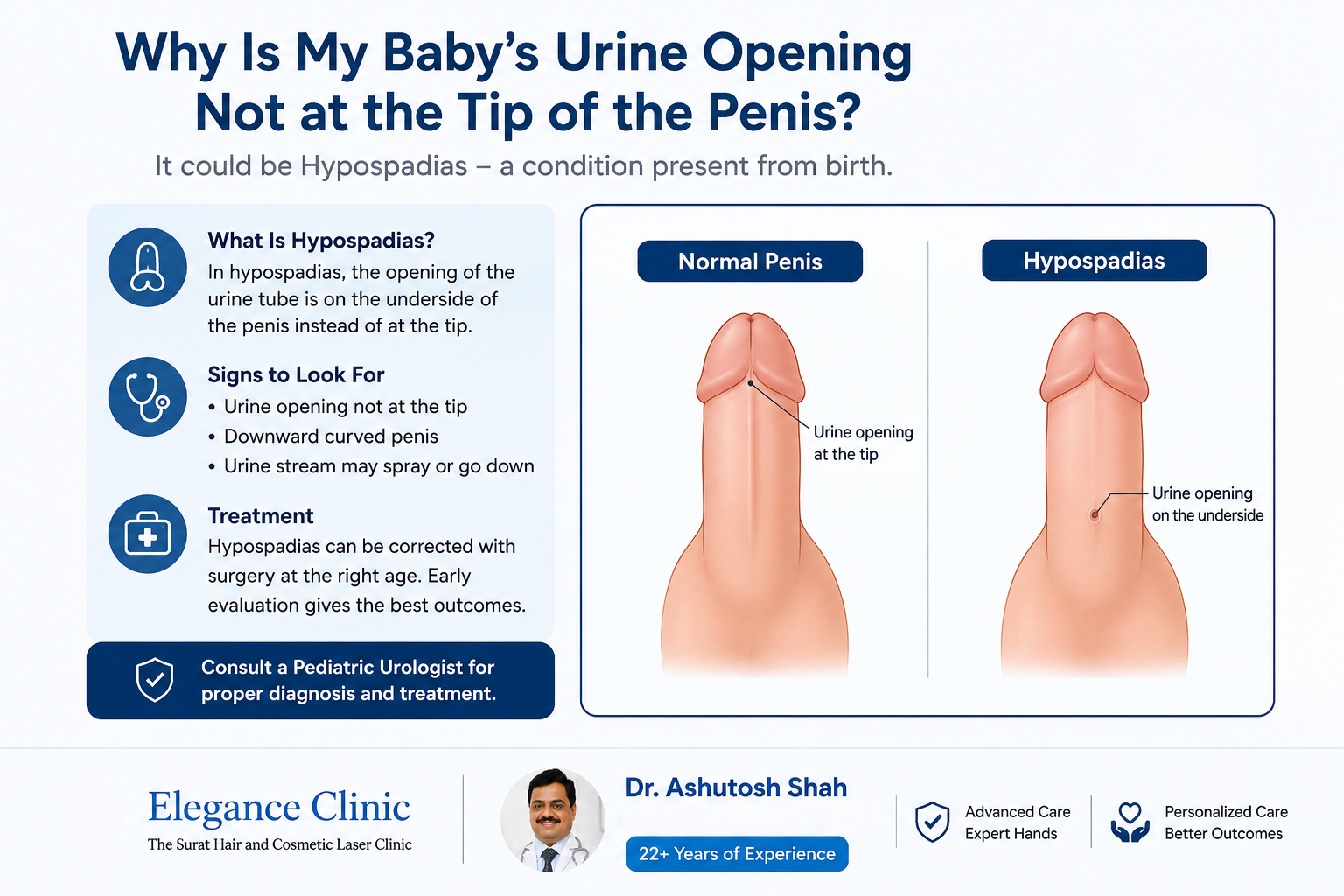
If you notice that your baby’s urine opening is not located at the tip of the penis, it may be a condition called hypospadias. In hypospadias, the opening of the urethra develops on the underside of the penis instead of at the usual location.
Hypospadias is a congenital condition, meaning it is present from birth. The position of the opening can vary. In some babies, it is just below the tip, while in others, it may be farther down the shaft or closer to the base of the penis.
Dr. Ashutosh Shah, with over 22 years of experience, provides personalized evaluation and treatment planning for patients with various surgical and cosmetic concerns. Parents can discuss their baby's condition with an appropriately qualified specialist to understand whether hypospadias correction is required.
What Does a Normal Urine Opening Look Like?
In most baby boys, the urethral opening is located at the tip of the penis. Urine passes through this opening during urination.
If the opening is positioned somewhere along the underside of the penis, it may indicate hypospadias.
The opening can be located:
- Close to the tip
- Along the shaft
- Near the junction of the penis and scrotum
- Closer to the base in more severe cases
The exact position helps the doctor understand the severity of the condition.
What Is Hypospadias?
Hypospadias is a congenital condition in which the urethral opening is located somewhere other than the tip of the penis.
Some babies may also have:
- Downward curvature of the penis
- An unusually developed foreskin
- A urine stream that points downward or sprays
- Difficulty directing the urine stream
- Differences in penile appearance
The condition varies considerably from child to child. Therefore, treatment is individualized.
Why Does Hypospadias Happen?
Hypospadias develops while the penis is forming during pregnancy. The exact cause is not always known.
Genetic, hormonal, and developmental factors may play a role.
Most importantly, parents should not blame themselves. Hypospadias is a developmental condition that occurs before birth.
Is Hypospadias Serious?
Hypospadias is generally not an immediate emergency, but it should be evaluated by a qualified specialist.
Its significance depends on:
- Location of the urinary opening
- Degree of penile curvature
- Urinary stream
- Penile development
- Other associated anatomical findings
Mild cases may cause few functional problems, while more significant cases can affect urination and potentially sexual function later in life.
Does Every Baby With Hypospadias Need Surgery?
Not necessarily.
The need for surgery depends on the severity and specific anatomy.
Surgery may be recommended when the position of the urinary opening, penile curvature, or other anatomical features are likely to cause functional or significant cosmetic concerns.
A specialist examination is necessary before making a treatment decision.
How Is Hypospadias Diagnosed?
Hypospadias is usually identified through a physical examination after birth.
The doctor may assess:
Urinary opening:
Where is the urethral opening located?
Penile curvature:
Is the penis curved downward?
Foreskin:
Is the foreskin normally developed?
Urination:
Is the urine stream normal?
In many cases, a physical examination provides enough information for an initial diagnosis and treatment plan.
When Is Hypospadias Surgery Usually Performed?
When surgery is recommended, hypospadias repair is commonly performed during infancy or early childhood. The timing depends on the child's condition, overall health, severity, and surgical requirements.
An early consultation can help parents understand the condition and discuss appropriate treatment timing.
How Is Hypospadias Corrected?
Hypospadias correction is a surgical procedure designed to improve the position of the urinary opening and, when necessary, correct penile curvature.
Depending on the child's anatomy, the surgeon may:
- Reconstruct the urethra
- Move the urinary opening toward the tip
- Correct penile curvature
- Improve penile appearance
- Help achieve a more functional urine stream
The specific surgical technique depends on the location of the opening and severity of the condition.
Can Hypospadias Be Corrected in One Surgery?
Some children can achieve satisfactory correction with one procedure. However, more complex cases may require additional surgery.
The possibility of requiring another procedure depends on the severity of hypospadias, surgical technique, healing, and whether complications occur.
Parents should discuss the expected treatment plan and possible need for further procedures with the treating surgeon.
What Is Recovery Like After Hypospadias Surgery?
After surgery, temporary swelling, bruising, or discomfort may occur.
Depending on the procedure, a urinary catheter or stent may be used temporarily to support healing and urine drainage.
Parents may receive instructions regarding:
- Wound care
- Medication
- Bathing
- Diaper care
- Physical activity
- Follow-up visits
- Catheter or stent care, when applicable
Following postoperative instructions carefully can support proper healing.
What Complications Can Occur After Hypospadias Surgery?
Like any surgical procedure, hypospadias repair has potential complications.
These may include:
- Infection
- Bleeding
- Wound-healing problems
- Urethral fistula
- Narrowing of the urinary opening
- Recurrent penile curvature
- Need for additional surgery
The risk varies according to the severity of hypospadias and the surgical technique used.
Can Hypospadias Affect My Child Later in Life?
Many children who receive appropriate evaluation and treatment can grow up with good urinary and sexual function.
However, untreated or inadequately corrected significant hypospadias can potentially affect:
- Direction of urine flow
- Ability to urinate while standing
- Penile appearance
- Penile curvature
- Sexual function later in life
Therefore, professional evaluation is important even if your baby currently urinates without difficulty.
Should I Be Worried If My Baby Has Hypospadias?
There is no need to panic. Hypospadias is a treatable congenital condition, and many children do well with appropriate evaluation and treatment.
If you notice that your baby's urine opening is not at the tip of the penis, do not attempt to correct or manipulate the area yourself. Instead, arrange an evaluation with an appropriately qualified specialist.
Expert Care at Elegance Clinic
Elegance Clinic has over 22 years of experience in surgical and cosmetic care. Parents can seek a professional consultation to understand their child's condition and discuss appropriate treatment options.
Because hypospadias is a pediatric congenital condition, the child's specific anatomy and surgical requirements should be assessed by a qualified pediatric urologist or pediatric surgeon experienced in hypospadias repair.
Final Takeaway
If your baby's urine opening is not at the tip of the penis, hypospadias is one possible explanation. The condition can range from mild to more complex forms, so the exact position of the opening, penile curvature, and overall anatomy should be evaluated.
Early professional assessment allows parents to understand the condition, determine whether treatment is necessary, and discuss the appropriate timing and surgical approach.