Adult Circumcision Healing Day by Day: Dressings, Pain and Getting Back to Normal
Adult circumcision healing day by day usually involves swelling and sensitivity during the first week, followed by gradual wound healing over the next few weeks.
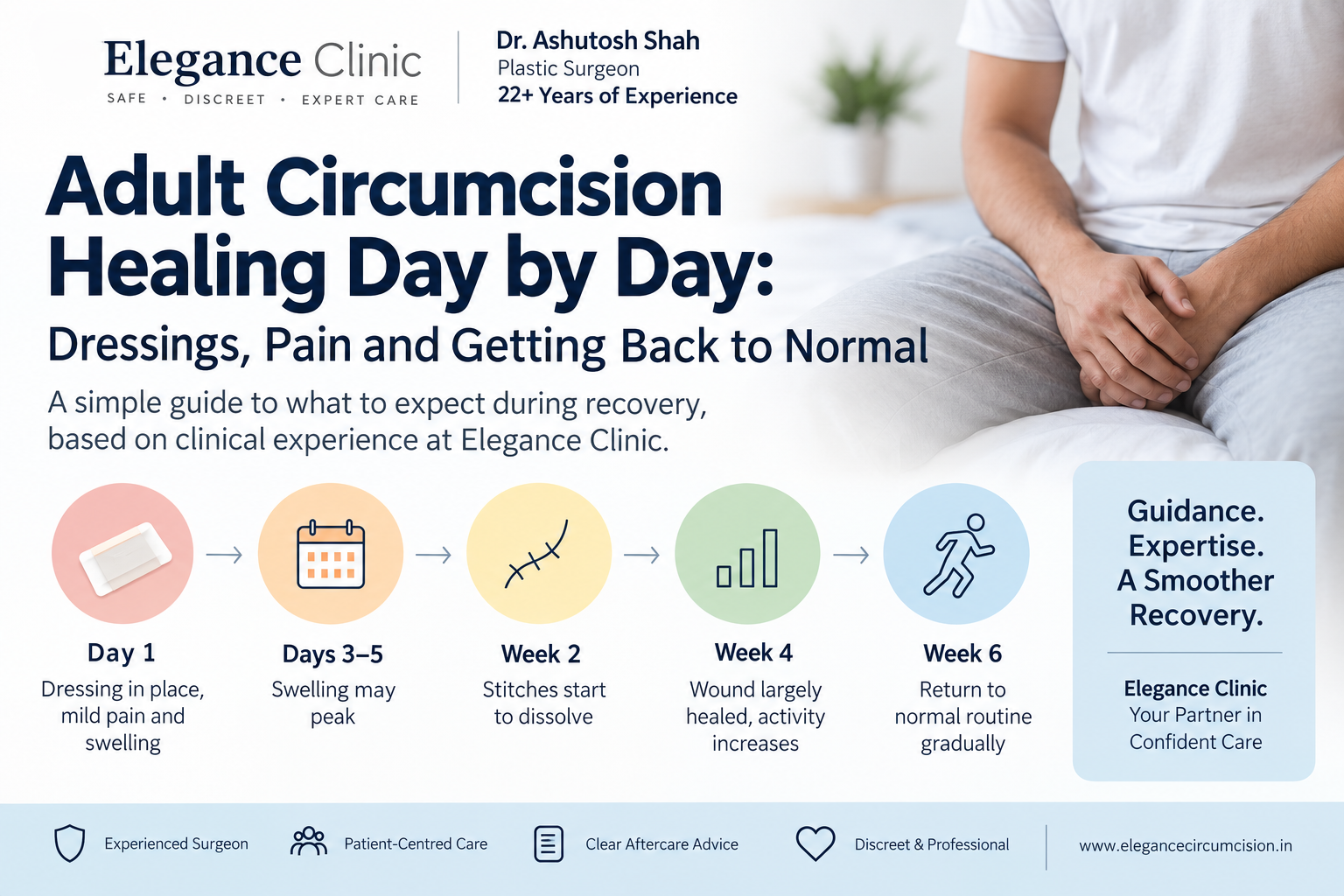
Most adults can resume routine activities gradually, but complete healing and return to sexual activity generally require several weeks. Most adult circumcision wounds are comfortable within a week and largely healed by four to six weeks; swelling usually peaks around days three to five, and dissolvable stitches separate on their own over two to four weeks. The exact circumcision recovery time for adults can vary depending on the procedure, wound care, and individual healing.
Understanding what is normal at each stage can make recovery less stressful. Mild pain, swelling, sensitivity, and changes in the appearance of the wound can occur during healing. Following your surgeon's instructions about dressings, hygiene, and physical activity is important for a smooth recovery.
At Elegance Clinic, adult circumcision procedures are performed under the guidance of Dr. Ashutosh Shah, a plastic surgeon with 22+ years of experience. Patients receive individual aftercare instructions based on the procedure performed and their clinical needs.
What happens in the first 24 hours after the procedure?
The first day is mainly about protecting the surgical area and keeping discomfort under control.
A dressing is generally placed around the surgical site after circumcision. Its purpose is to protect the wound, absorb minor spotting, and reduce friction from clothing.
During the first several hours, you may notice:
- Mild to moderate soreness
- Increased sensitivity around the surgical area
- Mild swelling
- A small amount of blood staining on the dressing
- Discomfort while walking
- Tightness around the stitches
The effects of local or regional anaesthesia gradually wear off. Take only the pain-relief medicines prescribed or recommended by your surgeon.
Rest is usually advisable on the day of surgery. Walking short distances around the house is generally acceptable, but unnecessary physical activity should be avoided.
Loose, comfortable clothing can reduce friction against the operated area.
If you want to understand the procedure itself before looking at recovery, read What happens during circumcision surgery.
How are dressings managed at home in the first week?
Dressing care after circumcision depends on the technique used and your surgeon's specific instructions. Do not remove or replace the initial dressing earlier than advised simply because the wound looks uncomfortable.
When a dressing change is required, wash your hands thoroughly before touching the area. The wound should be handled gently, without rubbing or trying to remove tissue that appears attached to the incision.
For wound care at home after circumcision, follow the instructions given at discharge regarding:
- When to remove the first dressing
- Whether another dressing is required
- How to clean the surgical area
- Whether an ointment should be applied
- When bathing or showering can restart
- Which underwear or clothing is most comfortable
Do not routinely apply antiseptics, powders, creams or home remedies unless they have been recommended by your treating surgeon.
Minor spotting during the early healing period can occur. Persistent bleeding, however, should be assessed.
Patients undergoing a day-care procedure can usually return home on the same day when medically appropriate. You can learn more from Day-care circumcision explained.
When does the swelling peak and start to settle?
Swelling does not always reach its maximum immediately after surgery. It may gradually increase during the first few days.
For many patients, swelling is most noticeable around days three to five. Mild bruising or colour changes can also occur.
After this stage, swelling should generally begin to reduce gradually rather than continue worsening.
The surgical area may still appear uneven or puffy during early healing. This does not necessarily represent the final result.
Sensitivity can also temporarily increase because an area that was previously covered is now more exposed to clothing and movement. This usually becomes easier to tolerate as healing progresses.
Contact your surgeon if swelling becomes rapidly worse, is associated with severe pain, or occurs together with fever, pus, persistent bleeding, or other concerning symptoms.
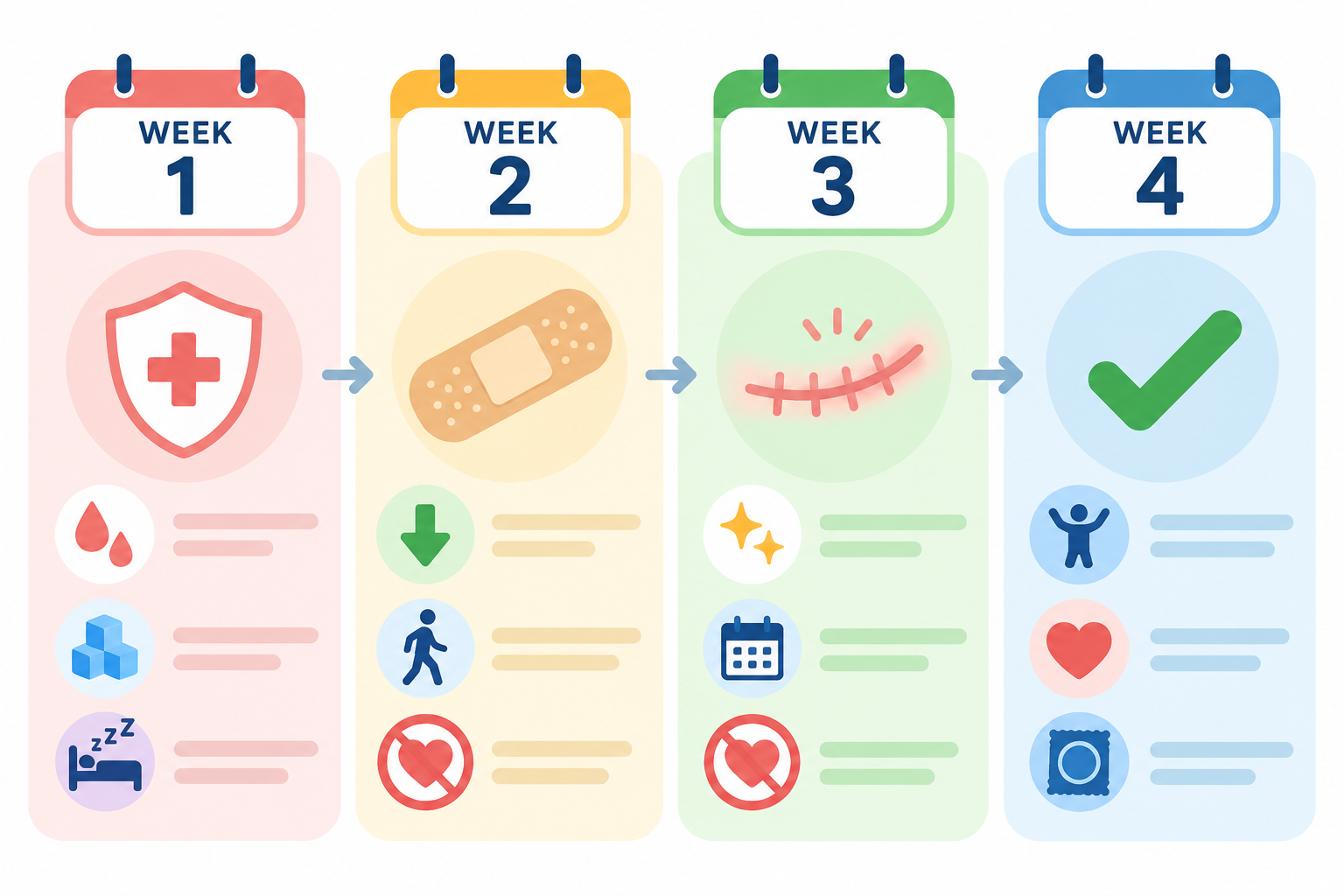
Day-by-Day Adult Circumcision Healing Timeline
| Day range | Dressing status | Expected pain and swelling | Permitted activity | Warning signs |
| First 24 hours | Initial dressing generally remains in place as instructed | Soreness, sensitivity, and mild swelling | Rest and short walks at home | Heavy bleeding, severe uncontrolled pain |
| Days 2–3 | Dressing changed or removed according to instructions | Swelling may increase; discomfort usually remains manageable | Gentle household movement | Persistent bleeding, increasing redness, or severe pain |
| Days 3–5 | Dressing needs vary by wound and technique | Swelling may be at its most noticeable | Light routine activities if comfortable | Rapidly worsening swelling, fever, or discharge |
| Days 6–7 | Many wounds require less dressing protection | Pain commonly improves; sensitivity may remain | Light work may be possible | Increasing pain after initial improvement |
| Weeks 2–3 | Usually minimal dressing requirement | Swelling continues to settle; stitches may begin separating | Gradual return to routine activity | Wound opening, pus, or increasing redness |
| Weeks 4–6 | Dressing generally unnecessary | Wound largely healed in uncomplicated recovery | Most routine activities can gradually resume with medical advice | Persistent wound problems, unusual discharge, or significant pain |
This timeline is a general guide. Your surgeon's instructions should take priority because recovery differs between patients.
Which activities are restricted and for how long?
One of the most common questions about circumcision recovery time for adults is when normal activity can restart.
Light walking is usually encouraged relatively early, but strenuous exercise should wait until the wound is sufficiently healed.
Activities that create pressure, friction, or stretching around the surgical area may need to be avoided temporarily.
This can include:
- Gym workouts
- Running
- Cycling
- Heavy lifting
- Strenuous sports
- Long two-wheeler rides
- Sexual activity
Office work may be possible sooner than physically demanding work. The amount of leave needed therefore depends partly on your occupation.
Do not judge readiness only by pain. A wound can feel considerably better before it has regained enough strength for strenuous activity.
Sexual intercourse and masturbation are generally postponed until adequate wound healing has occurred, commonly around four to six weeks, depending on the surgeon's assessment.
What does normal healing look like at two, four and six weeks?
Around two weeks
Pain and swelling should usually be noticeably better than during the first few days.
The incision may still look uneven, slightly swollen or different in colour. Dissolvable stitches can still be visible.
Some patients notice small amounts of yellowish material around the healing incision. This can sometimes be part of normal healing, but thick pus, foul-smelling discharge or worsening redness needs assessment.
Around four weeks
The wound should be much more settled in an uncomplicated recovery.
Many dissolvable stitches will have loosened or disappeared by this point, although the exact timing varies.
Sensitivity and mild residual swelling can remain.
Around six weeks
Many adult circumcision wounds are largely healed by four to six weeks.
Routine activities can often be resumed progressively once the surgeon is satisfied with healing. The appearance of the surgical area may continue to mature beyond this point as residual swelling settles and the scar softens.
Patients who want to understand whether adult circumcision is appropriate for them can also visit the Adult circumcision service page.
When do stitches dissolve after circumcision?
A common concern is when stitches dissolve following adult circumcision.
Absorbable sutures are frequently used, meaning routine stitch removal may not be necessary. They commonly begin loosening or separating during the following two to four weeks.
However, not every stitch disappears at the same time.
Do not pull, cut, or remove a stitch yourself simply because it appears loose. If a stitch remains longer than expected or is causing irritation, let your surgeon examine it.
Which signs mean the wound needs to be reviewed?
Healing should generally show a trend towards less pain and swelling.
Arrange a medical review if you develop:
- Increasing rather than improving pain
- Rapidly worsening swelling
- Persistent or heavy bleeding
- Pus or foul-smelling discharge
- Increasing redness around the wound
- Fever or feeling significantly unwell
- Separation of the wound edges
- Difficulty passing urine
- Unusual colour changes that concern you
Early assessment is particularly important when several symptoms occur together.
For more information about infection-related symptoms, see Signs of wound infection.
Do not try to diagnose an infection based only on the wound's appearance. Normal healing tissue and infection can sometimes look similar to a patient, so a clinical examination is more reliable when there is uncertainty.
How long does circumcision take to heal completely?
When patients ask how long circumcision takes to heal, there is no single day that applies to everyone.
Pain can become much easier within the first week, while swelling and stitches may take several weeks to settle. The wound is commonly largely healed within four to six weeks in an uncomplicated recovery.
Complete scar maturation can take longer.
Recovery may also vary with age, general health, diabetes, smoking, wound care, the surgical technique, and whether any postoperative complication develops.
For this reason, follow-up advice should be personalised rather than based only on a fixed online recovery calendar.
A Smooth Recovery Depends on Good Aftercare
Adult circumcision recovery is a gradual process rather than a single healing date. The first few days usually involve the most noticeable swelling and sensitivity, while comfort improves progressively over the following weeks.
Good dressing care, hygiene, avoiding excessive friction, and returning to activity gradually all contribute to uncomplicated healing.
If pain or swelling begins worsening instead of improving, or if there is significant bleeding, fever, discharge, or wound separation, contact your treating surgeon rather than waiting for the next routine follow-up.
The information above provides a general guide to circumcision recovery time for adults. Individual recovery and postoperative instructions may differ according to the surgical technique, medical history, and clinical findings.