
Can Phimosis Be Treated Without Circumcision?
Yes, phimosis can sometimes be treated without circumcision, depending on the severity, cause, age, symptoms, and condition of the foreskin. Treatment may include prescription creams, gentle stretching, or foreskin-preserving procedures such as preputioplasty.
Not every person with a tight foreskin needs circumcision. A proper examination can help determine whether the foreskin can be preserved or whether circumcision would provide a more suitable solution.
What Is Phimosis?
Phimosis is a condition in which the foreskin is too tight to retract comfortably over the head of the penis.
Some people have naturally tight foreskin, while others develop phimosis because of repeated inflammation, infection, scarring, or skin conditions.
In children, a non-retractable foreskin can be a normal part of development. In adults, persistent tightness with pain, difficulty during sexual activity, recurrent infections, or problems with urination may require evaluation.
Can Phimosis Improve Without Circumcision?
Yes, selected cases can improve with non-surgical or foreskin-preserving treatment.
The appropriate treatment depends on why the foreskin is tight and whether scarring is present.
Common approaches may include:
1. Prescription Steroid Cream
A doctor may prescribe a topical corticosteroid cream for certain cases of phimosis. It can help soften and increase the flexibility of the foreskin, particularly when there is no significant scarring.
The cream should be used exactly as prescribed. Trying to force the foreskin back can cause small tears and additional scarring.
2. Gentle Foreskin Stretching
Gentle stretching may be recommended along with prescribed treatment. The aim is to gradually improve foreskin flexibility without causing pain or injury.
Stretching should never be forceful. Pain, cracking, bleeding, or tearing can make the condition worse.
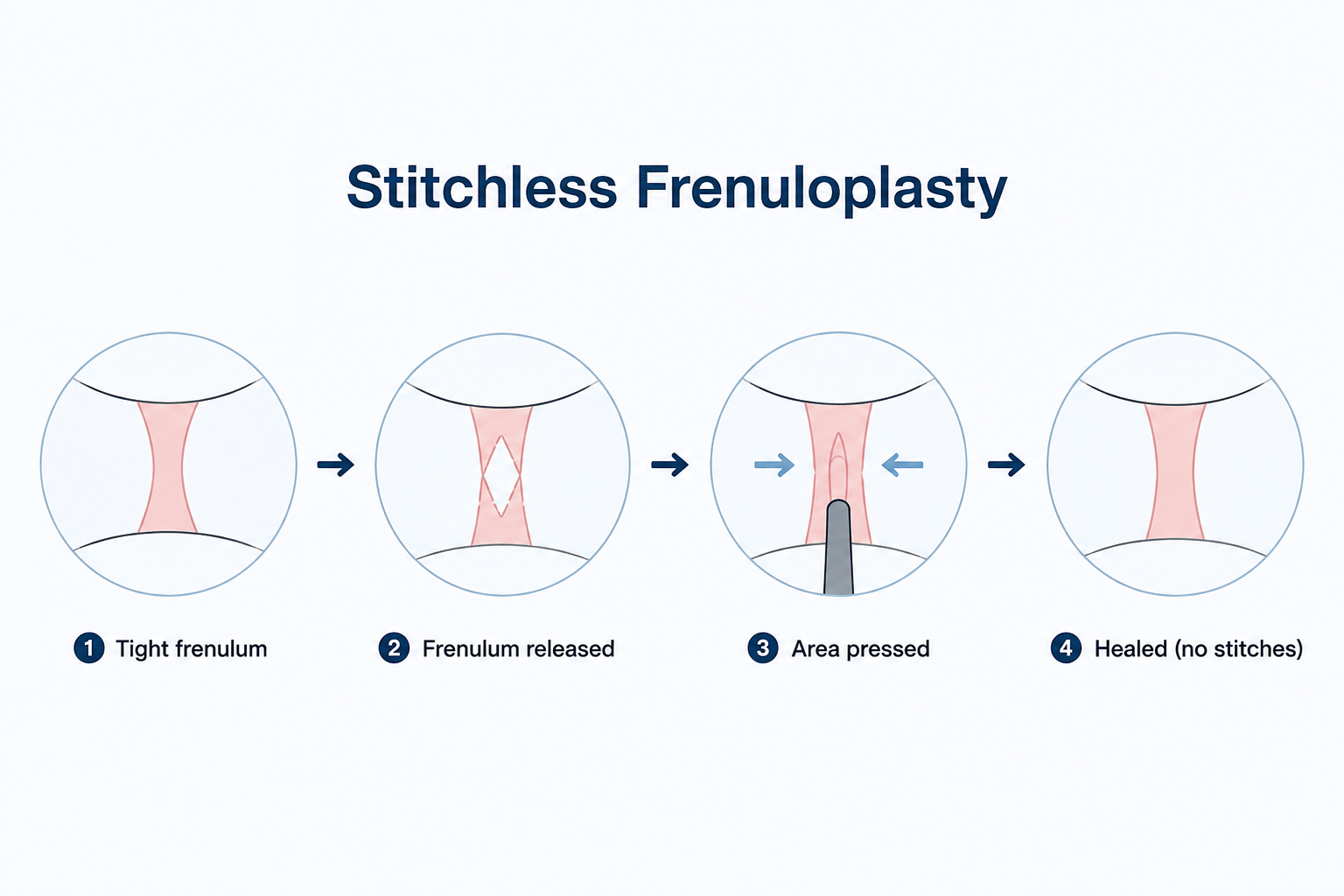
3. Preputioplasty
Preputioplasty is a foreskin-preserving surgical option for selected patients with phimosis.
Instead of removing the foreskin completely, the procedure releases the tight area so that the foreskin can retract more easily.
This may be considered by patients who want to preserve their foreskin and whose condition is suitable for a foreskin-preserving approach.
Is Preputioplasty an Alternative to Circumcision?
Yes. Preputioplasty can be an alternative to circumcision in selected cases of phimosis.
The main difference is that circumcision removes the foreskin, while preputioplasty aims to loosen the tight portion while preserving it.
However, preputioplasty is not appropriate for every patient. Significant scarring, recurrent problems, or certain underlying conditions may make circumcision a more suitable option.
Can Adults Treat Phimosis Without Circumcision?
Yes, some adults can be treated without circumcision. The treatment depends on the severity of tightness and whether the foreskin has developed scarring.
A doctor may consider:
- Prescription steroid treatment
- Gentle stretching
- Treatment of inflammation or infection
- Foreskin-preserving surgery
- Circumcision when other options are unsuitable
Adults should avoid attempting aggressive stretching or using unprescribed creams because this can cause injury.
When Is Circumcision Recommended?
Circumcision may be recommended when non-surgical or foreskin-preserving treatments are unsuccessful or when the foreskin has substantial scarring.
It may also be considered for recurrent infections, persistent painful phimosis, or other conditions where preserving the foreskin is unlikely to provide a satisfactory result.
The decision should be based on an individual examination rather than the presence of tight foreskin alone.
What Are the Benefits of Foreskin-Preserving Treatment?
For appropriately selected patients, preserving the foreskin may provide several benefits.
These can include:
- Retaining the foreskin
- Avoiding complete foreskin removal
- Improving foreskin retractability
- Addressing the tight area directly
- Offering an alternative to traditional circumcision
However, the expected outcome depends on the underlying cause and condition of the foreskin.
What If Phimosis Causes Pain During Sex?
A tight foreskin can sometimes cause discomfort or pain during sexual activity. Repeated stretching of a scarred foreskin may also result in small tears.
If you experience pain, tearing, bleeding, or difficulty retracting the foreskin during sexual activity, medical evaluation is advisable. Treatment can then be selected according to the cause.
Can Phimosis Return After Treatment?
Recurrence is possible, particularly when the underlying cause is not addressed, or significant scarring is present.
Following postoperative or medical treatment instructions carefully and managing conditions that cause inflammation can help support better long-term results.
When Should You See a Doctor?
You should seek medical evaluation if you have:
- Painful foreskin retraction
- Recurrent infections
- Cracking or bleeding of the foreskin
- Pain during sexual activity
- Difficulty urinating
- Increasing foreskin tightness
- A foreskin that becomes stuck behind the head of the penis
A foreskin that is retracted and cannot be returned over the head of the penis can be an urgent medical problem and requires prompt medical attention.
Phimosis Treatment at Elegance Clinic
At Elegance Clinic, patients with phimosis can be evaluated to determine whether a non-surgical, foreskin-preserving, or circumcision-based treatment is appropriate.
Dr. Ashutosh Shah, a cosmetic and hair transplant surgeon with over 22 years of experience, can assess the condition of the foreskin, understand the patient's symptoms and treatment goals, and discuss suitable options.
For selected patients, a foreskin-preserving approach may be considered when complete circumcision is not necessary or is not the preferred option.
Conclusion
Yes, phimosis can sometimes be treated without circumcision. Depending on the cause and severity, treatment may include prescription steroid creams, gentle stretching, treatment of underlying inflammation, or a foreskin-preserving procedure such as preputioplasty.
However, not every case can be successfully treated without circumcision. A medical examination is important to determine whether the foreskin can be safely preserved and which treatment is most appropriate.