Lichen Sclerosus (BXO) of the Foreskin: The Scarring Cause of Tightness That Usually Needs Circumcision
Lichen sclerosus, also called balanitis xerotica obliterans (BXO), is a chronic inflammatory skin condition that can make the foreskin white, stiff, scarred, and progressively tighter. Unlike uncomplicated phimosis, significant BXO scarring often responds poorly to stretching. Doctors may prescribe potent steroid creams, but circumcision is frequently recommended when persistent scarring affects the foreskin.
Many men notice that their foreskin has become tighter over several months. Some develop a white ring around the opening, painful cracks, or difficulty retracting the skin during cleaning.
These changes may indicate more than ordinary foreskin tightness.
BXO can gradually damage the foreskin's elasticity and may also affect the glans or urinary opening.
Early diagnosis helps doctors control inflammation, assess scarring, and determine whether medical treatment or circumcision offers the most appropriate solution.
This guide explains lichen sclerosus foreskin treatment, its symptoms, how it differs from ordinary phimosis, and when surgery may become necessary.
What Is Lichen Sclerosus (BXO) of the Foreskin?
Lichen sclerosus is a chronic inflammatory skin disorder that can affect genital skin.
When it involves the male foreskin and glans, clinicians may use the term balanitis xerotica obliterans, or BXO.
The condition can cause skin thinning, thickening, inflammation, and scarring.
Over time, affected foreskin tissue may lose flexibility and become difficult to retract.
Unlike temporary inflammation, BXO can produce structural changes that persist even after active inflammation improves.
Why Does BXO Cause Tight Foreskin?
Healthy foreskin stretches naturally.
However, lichen sclerosus can replace flexible tissue with scarred, less elastic skin.
This process may create a firm ring around the foreskin opening.
As the ring tightens, patients may experience:
-
Difficulty retracting the foreskin
-
Pain during erections
-
Small cracks or skin tears
-
Bleeding after attempted retraction
-
Recurrent inflammation
-
Difficulty cleaning beneath the foreskin
The condition may progress gradually, making early assessment important.
What Does Lichen Sclerosus of the Foreskin Look Like?
BXO can produce several visible changes.
However, not every white patch or tight foreskin indicates lichen sclerosus.
A clinician must examine the area and consider other possible causes.
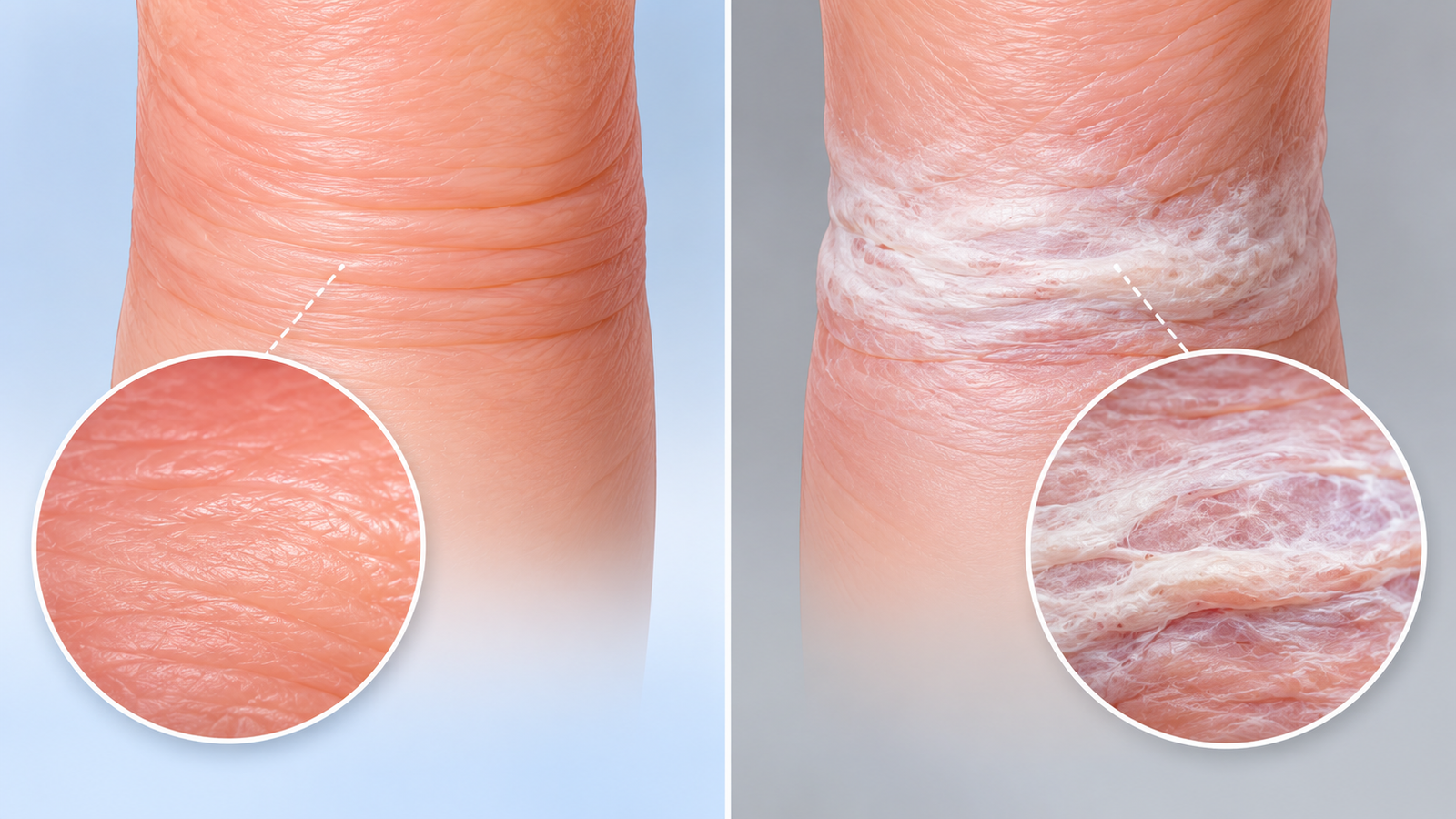
1. White Ring Around the Foreskin
A pale or whitish ring may develop around the foreskin opening.
The affected tissue can feel firmer than the surrounding skin.
Patients sometimes describe it as a tight band that prevents normal retraction.
2. Shiny or Pale Skin
The foreskin may appear unusually white, shiny, or smooth.
Some patients develop irregular pale patches rather than a complete ring.
3. Repeated Skin Cracking
Scarred foreskin may tear during retraction or erections.
These cracks can cause pain, bleeding, and additional inflammation.
Patients searching for crack in foreskin treatment should avoid repeatedly stretching damaged skin and seek an examination to identify the cause.
4. Progressive Tightness
The foreskin may retract normally at first but gradually become more difficult to move.
This acquired tightening is particularly important when it develops alongside white scarring.
5. Changes Around the Urinary Opening
In some patients, lichen sclerosus affects the glans or urinary opening, called the meatus.
This may cause urinary spraying, a weaker stream, or difficulty passing urine.
These symptoms require medical evaluation because narrowing can extend beyond the foreskin.
How Is BXO Different From Ordinary Phimosis?
Phimosis means that the foreskin cannot retract normally over the glans.
However, phimosis describes a physical finding rather than one specific disease.
It may occur naturally during childhood or develop because of inflammation and scarring.
BXO is one possible cause of pathological phimosis.
Phimosis vs BXO: Comparison Table
| Feature | Physiological Phimosis | Acquired Phimosis | Lichen Sclerosus (BXO) |
|---|---|---|---|
| Common age group | Young children | Adolescents and adults | Children and adults |
| Main cause | Normal foreskin development | Inflammation, infection, or scarring | Chronic inflammatory skin disease |
| Skin appearance | Usually healthy | May show redness or scarring | Often white, shiny or scarred |
| Tightness | Often improves naturally | May worsen over time | May progressively worsen |
| Skin cracking | Uncommon | Possible | Can occur repeatedly |
| Response to steroid cream | Often effective when treatment is indicated | Depends on the cause | May control inflammation, but established scarring may persist |
| Need for biopsy | Usually unnecessary | Depends on examination findings | Histology may help confirm diagnosis |
| Circumcision | Usually unnecessary | Sometimes recommended | Often considered for significant scarred foreskin |
| Follow-up | Based on symptoms | Based on underlying cause | Important for persistent or recurrent disease |
Why Is the Difference Important?
A patient with uncomplicated phimosis may improve with prescribed topical steroids and gentle stretching.
However, a patient with BXO-related scarring may continue experiencing tightness even after inflammation improves.
Repeated forceful stretching can cause further cracking and injury.
Therefore, identifying the underlying cause is essential before selecting treatment.
Read more about treatment options for a tight foreskin.
Can Steroid Cream Treat BXO Without Surgery?
Yes, prescribed potent topical corticosteroids can help control lichen sclerosus, particularly when active inflammation is present.
Treatment may reduce irritation, soreness, and inflammatory changes.
However, the response depends on the location, severity, and extent of scarring.
When May Steroid Treatment Help?
Doctors may recommend topical corticosteroids when:
-
The disease is diagnosed early.
-
Inflammation remains active.
-
Significant fixed scarring has not developed.
-
The glans or other affected skin requires medical treatment.
-
The patient needs ongoing disease control after surgery.
The doctor determines the medication, application method, and duration.
Patients should not apply potent steroid creams without medical supervision.
Can Cream Reverse a Scarred White Ring?
Medical treatment may improve inflammation and sometimes tissue flexibility.
However, established scar tissue may not return to normal elasticity.
When severe narrowing persists, circumcision may offer more reliable relief from foreskin constriction.
Should Patients Stretch a BXO-Affected Foreskin?
Patients should not forcefully stretch a scarred foreskin.
Aggressive stretching may cause additional tearing, bleeding, and inflammation.
Any stretching advice should come from a clinician who has assessed the skin condition.
For additional information, read: Can phimosis be treated without circumcision?.
When Does Lichen Sclerosus Need Circumcision?
Circumcision is frequently considered when lichen sclerosus causes significant foreskin scarring, persistent tightness, or recurrent painful cracking.
The procedure removes the affected foreskin tissue.
However, the surgeon must assess whether the condition also involves the glans or urinary opening.
Common Reasons to Consider Surgery
Severe scarred phimosis: A firm white ring prevents comfortable foreskin retraction.
Repeated cracking: The foreskin develops painful tears during normal movement or erections.
Persistent symptoms: Appropriate medical treatment does not provide sufficient relief.
Recurrent inflammation: The affected foreskin continues causing discomfort.
Progressive narrowing: Tightness worsens and begins interfering with normal function.
Suspicious skin changes: Persistent abnormal lesions require further investigation, sometimes including biopsy.
Does Every Patient With BXO Need Circumcision?
No.
Some patients with early or limited disease respond to medical treatment.
However, significant scarring of the foreskin often makes surgery an appropriate option.
The decision should consider symptoms, clinical findings, response to treatment, and patient preferences.
Why Is the Removed Foreskin Sent for Biopsy?
When a surgeon removes foreskin affected by suspected lichen sclerosus, they may send the tissue for histopathological examination.
A pathologist examines the tissue under a microscope.
This examination can help confirm lichen sclerosus and identify other relevant abnormalities.
What Can Histopathology Show?
The report may identify:
-
Changes consistent with lichen sclerosus
-
Chronic inflammation
-
Tissue scarring
-
Other skin disorders
-
Precancerous or malignant changes, when present
Not every circumcision specimen requires the same investigations.
However, histological assessment is particularly useful when the diagnosis remains uncertain or suspicious lesions are present.
Is BXO a Type of Cancer?
No. Lichen sclerosus is an inflammatory skin disease, not cancer.
However, genital lichen sclerosus is associated with an increased risk of penile squamous cell carcinoma.
Most patients with lichen sclerosus do not develop cancer.
Nevertheless, persistent ulcers, lumps, bleeding, or abnormal skin changes require prompt examination.
What Happens if BXO Affects the Urine Opening?
BXO can sometimes involve the urinary meatus or urethra.
Inflammation and scarring may narrow the urinary passage.
Doctors call narrowing of the urinary opening meatal stenosis.
When narrowing affects the urethra, clinicians may diagnose a urethral stricture.
Symptoms of Urinary Opening Narrowing
Patients may notice:
-
Weak urinary stream
-
Spraying or split urine flow
-
Difficulty starting urination
-
Straining while passing urine
-
Prolonged urination
-
Pain or discomfort
-
Recurrent urinary symptoms
These symptoms do not always indicate BXO, but they require appropriate evaluation.
How Does a Doctor Check the Urinary Opening?
The clinician examines the glans and meatus.
The doctor may ask about urinary flow, spraying, straining, and previous urinary problems.
If narrowing is suspected, additional investigations or a urology referral may be necessary.
Circumcision alone may not correct narrowing that affects the urinary opening or urethra.
Tight Foreskin Doctor Near Ghod Dod Road Surat: When Should You Consult?
Patients should seek medical advice when foreskin tightness develops alongside white patches, repeated cracking, or progressive scarring.
These changes deserve assessment because untreated inflammatory disease may continue damaging the tissue.
At Elegance Clinic, Dr. Ashutosh Shah, a Plastic, Reconstructive & Cosmetic Surgeon with over 22 years of surgical experience, evaluates foreskin-related concerns and discusses suitable treatment options. The assessment may include foreskin scarring, glans changes, symptoms affecting the urinary opening, and whether medical treatment or circumcision is appropriate.
Patients should explain when the symptoms began, whether the foreskin was previously retractable, and which treatments they have already tried.
A proper examination helps distinguish BXO from other causes of tight foreskin.
What Happens During Circumcision for BXO?
Circumcision removes the affected foreskin.
The procedure usually involves consultation, anaesthesia, foreskin removal, wound closure, and postoperative monitoring.
Before Surgery
The surgeon examines the foreskin and surrounding tissue.
The doctor reviews medical history, medicines, diabetes status, and other factors that may influence healing.
If the patient has active inflammation or another medical concern, the surgeon may recommend treatment before the operation.
During Surgery
The surgeon administers appropriate anaesthesia and removes the foreskin using a suitable technique.
The surgeon controls bleeding and closes the wound.
When indicated, the removed tissue is sent for histopathological examination.
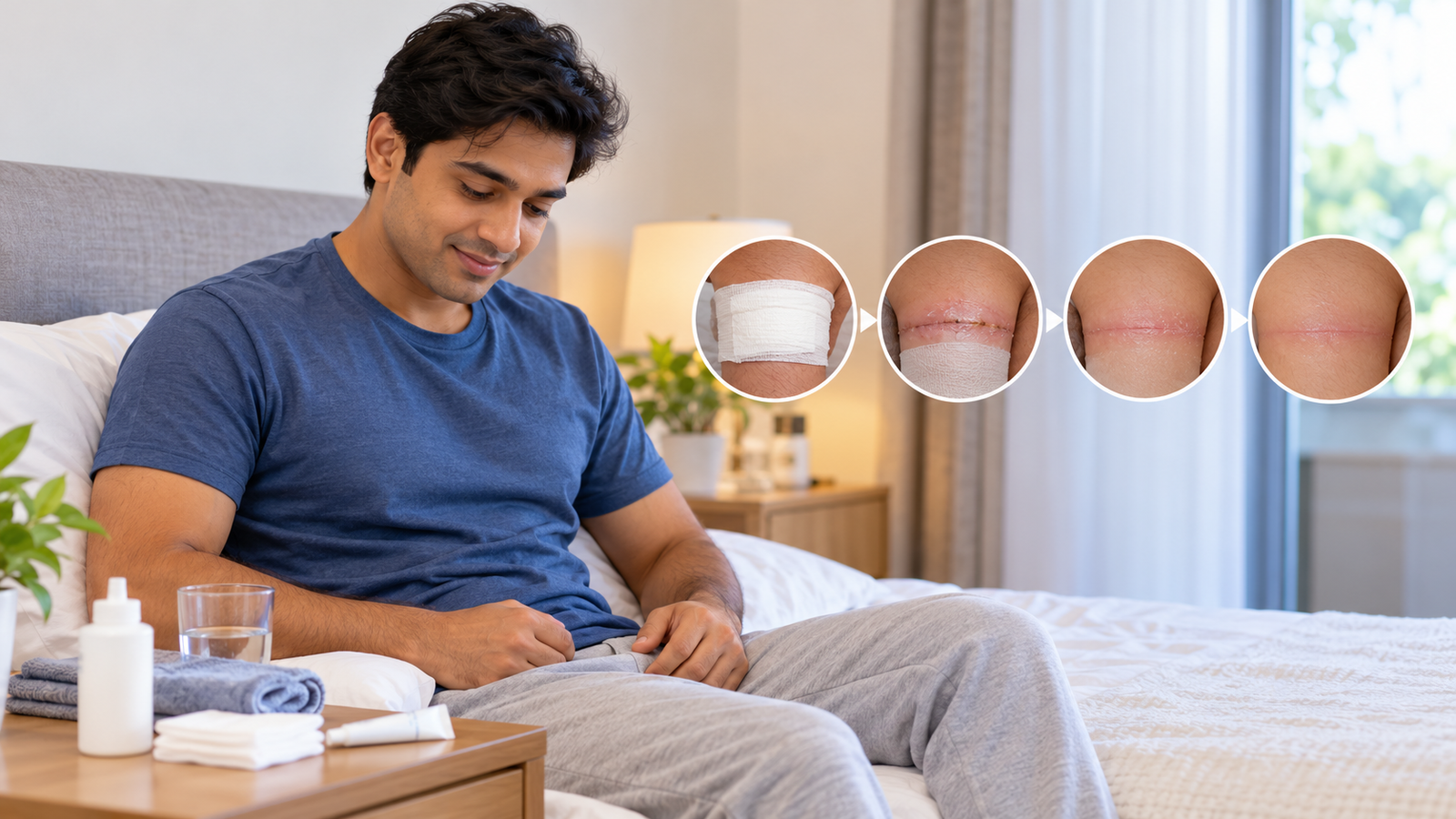
After Surgery
Patients receive instructions about wound cleaning, dressings, medication, and follow-up.
The surgeon may also recommend continued treatment or specialist review if disease affects the glans or urinary opening.
Patients can read more about medical indications for circumcision and conventional circumcision.
How Long Does Recovery Take After Circumcision for BXO?
Recovery varies according to the severity of scarring, surgical technique, general health, and wound condition.
First Few Days
Patients may experience swelling, tenderness, and mild spotting.
The surgeon may recommend pain medication, suitable dressings, and loose clothing.
First Two Weeks
Swelling and discomfort usually begin to improve.
Patients should avoid unnecessary friction and follow wound-care instructions.
Four to Six Weeks
Substantial healing commonly takes approximately four to six weeks.
Doctors generally recommend avoiding sexual intercourse and masturbation until the wound has healed adequately.
Some patients need longer recovery or additional follow-up.
When Should You Seek Medical Attention?
Contact a doctor if you develop:
-
Heavy or persistent bleeding
-
Increasing redness or swelling
-
Fever
-
Pus or concerning discharge
-
Severe or worsening pain
-
Wound separation
-
New urinary symptoms
An inability to pass urine requires emergency medical attention.
Can BXO Return After Circumcision?
Yes, lichen sclerosus can persist or recur after circumcision.
Circumcision removes affected foreskin tissue and may successfully control disease limited to the foreskin.
However, the condition can also involve the glans, urinary opening, or urethra.
These areas may require continued medical treatment or specialist monitoring.
Why Is Follow-Up Important?
Follow-up helps doctors identify:
-
Persistent white patches
-
Recurrent inflammation
-
Changes around the urinary opening
-
Weakening urinary stream
-
New scarring
-
Suspicious skin lesions
Patients should report new symptoms rather than assuming circumcision has permanently eliminated the condition.
BXO Follow-Up Checklist: What to Monitor
| Symptom or Finding | Why It Matters | What to Do |
|---|---|---|
| White patches on the glans | Possible persistent disease | Arrange medical review |
| Weak urinary stream | Possible meatal or urethral narrowing | Seek specialist assessment |
| Spraying during urination | May indicate changes around the meatus | Inform the clinician |
| Straining to urinate | Possible urinary obstruction | Obtain prompt assessment |
| Recurrent soreness | May indicate active inflammation | Review treatment |
| Persistent ulcer or lump | Requires exclusion of serious disease | Seek prompt examination |
| Inability to pass urine | Possible acute obstruction | Seek emergency care |
Patients should follow the individual review schedule recommended by their treating clinician.
Conclusion: When Does BXO Need Circumcision?
Lichen sclerosus foreskin treatment depends on the severity of inflammation, the amount of scarring, and whether the disease affects other penile tissues.
Early or limited disease may respond to prescribed potent topical corticosteroids.
However, a persistently white, scarred and tightening foreskin often requires surgical assessment.
Circumcision can remove affected foreskin tissue and relieve constriction, but it does not guarantee that lichen sclerosus will never recur elsewhere.
Patients should seek medical advice when they notice progressive tightness, white patches, repeated cracking, or changes in their urinary stream.
Early diagnosis, appropriate treatment and continued follow-up help reduce complications and protect long-term genital and urinary health.