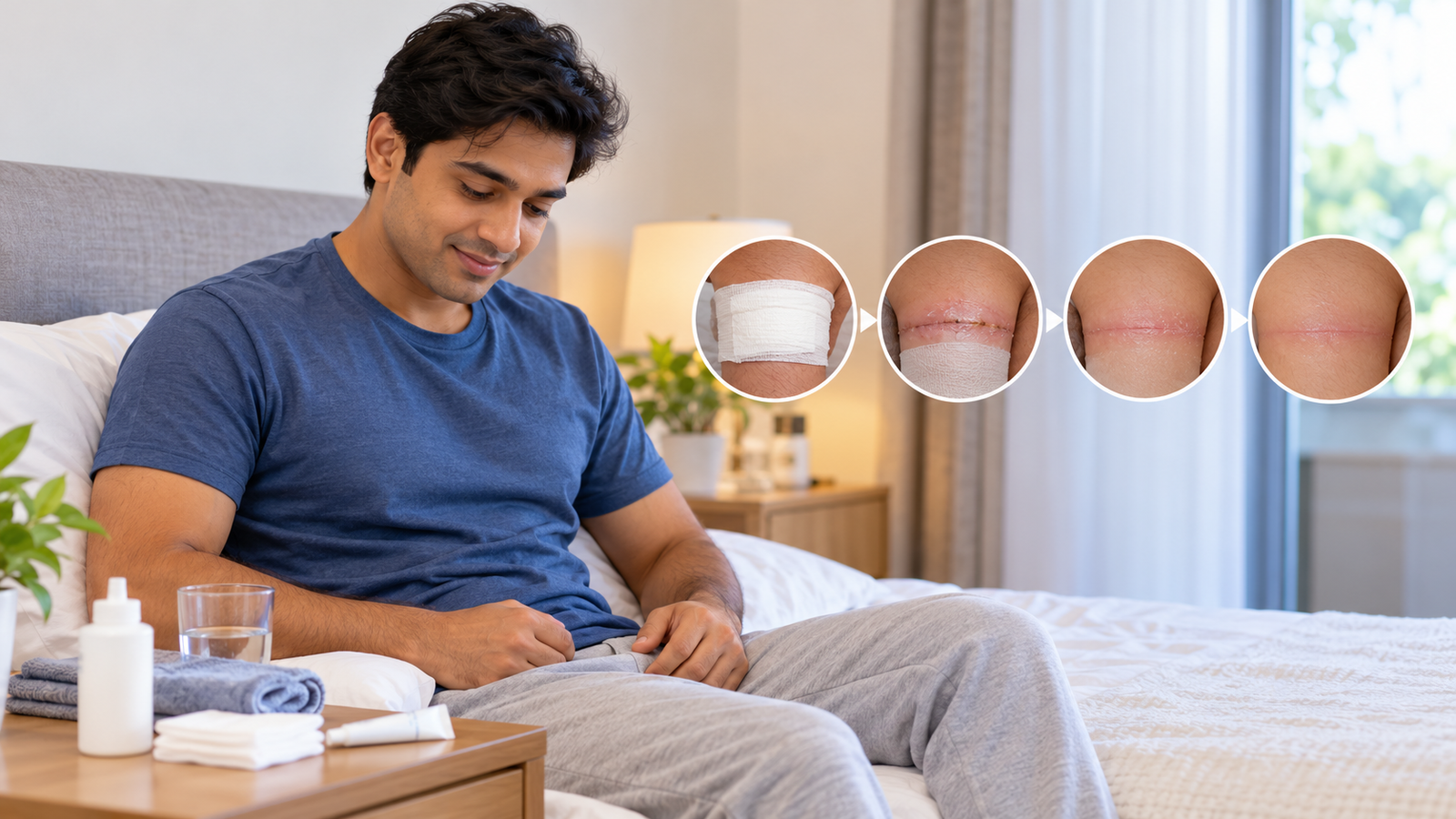

Why Is Circumcision Done? Common Medical Reasons
Circumcision removes the foreskin covering the head of the penis. Common medical reasons for circumcision include severe phimosis, repeated foreskin infections, scarring, and painful foreskin conditions. Some people also choose the procedure for religious, cultural, or personal reasons. However, not every foreskin problem requires surgery, and doctors may recommend non-surgical treatment first.
Many men consider circumcision because they experience difficulty retracting the foreskin, repeated inflammation, or discomfort during erections.
Parents may also seek advice when their child's foreskin does not retract normally.
However, the need for circumcision depends on the patient's age, symptoms, and underlying medical condition.
Understanding the reasons for circumcision helps patients distinguish between conditions that may require surgery and those that can improve with appropriate medical treatment.
What Is Circumcision?
Circumcision is a surgical procedure that removes the foreskin, also called the prepuce, from the penis.
The foreskin normally covers and protects the glans, or head of the penis.
During circumcision, the surgeon removes the foreskin and closes the wound using an appropriate surgical technique.
Doctors may perform circumcision for medical, religious, cultural, or personal reasons.
In adults, the procedure commonly takes place under local anaesthesia, although some patients may require another anaesthesia approach.
The surgeon selects the technique based on the patient's anatomy, medical history, and treatment needs.
What Are the Most Common Medical Reasons for Circumcision?
Doctors may recommend circumcision when a foreskin condition causes persistent symptoms or does not respond adequately to conservative treatment.
1. Phimosis: Tight Foreskin
Phimosis occurs when the foreskin cannot retract comfortably over the glans.
Some men experience pain, cracking, repeated inflammation, or difficulty cleaning beneath the foreskin.
Mild phimosis may improve with prescribed topical corticosteroids and medically guided gentle stretching.
However, severe scarring or persistent symptoms may require circumcision.
Circumcision is not automatically necessary for every patient with phimosis.
Patients can read more about phimosis treatment without surgery to understand conservative treatment options.
2. Recurrent Balanitis
Balanitis refers to inflammation of the glans.
When inflammation affects both the glans and foreskin, doctors call it balanoposthitis.
Patients may experience redness, swelling, irritation, discharge, or discomfort.
Fungal infections, skin conditions, irritants, and other causes can contribute to these symptoms.
Doctors usually treat the underlying cause first.
However, repeated episodes despite appropriate treatment may make circumcision a reasonable option.
3. Repeated Foreskin Infections
Some men develop recurrent inflammation or infections beneath the foreskin.
These episodes may cause swelling, soreness, discharge, and difficulty retracting the skin.
Circumcision removes the foreskin and may reduce recurrent foreskin-related problems in selected patients.
However, the doctor should first identify and treat contributing conditions, such as diabetes, inflammatory skin disease, or infections.
4. Foreskin Scarring
Repeated inflammation, injury, or forceful retraction can create scar tissue.
Scarred foreskin may become thick, stiff, and difficult to retract.
When significant scarring prevents normal movement, medical treatment may not provide adequate relief.
Circumcision can remove the affected foreskin tissue when the surgeon determines that surgery is appropriate.
5. Lichen Sclerosus
Lichen sclerosus is a chronic inflammatory skin condition that can affect the foreskin and glans.
It may cause white patches, tightening, cracking, and progressive scarring.
Doctors may prescribe potent topical corticosteroids for appropriate cases.
However, persistent or severe foreskin scarring may require circumcision.
Patients with suspected lichen sclerosus should undergo medical assessment because the condition may also affect other penile tissues.
6. Painful Erections Due to Foreskin Tightness
A tight foreskin can create tension during erections.
Some men experience pain, pulling, or small skin tears.
The doctor should examine the foreskin to identify whether phimosis, a short frenulum, or another condition causes the discomfort.
Circumcision may help selected patients with severe foreskin tightness, but it is not the correct treatment for every cause of penile pain.
7. Recurrent Paraphimosis
Paraphimosis occurs when the foreskin retracts behind the glans and becomes trapped.
The trapped foreskin may cause swelling and restrict blood flow.
Paraphimosis requires urgent medical attention.
Doctors usually attempt appropriate reduction first. Emergency surgery may become necessary when reduction fails.
After the emergency resolves, the surgeon may discuss circumcision if the condition recurs or an underlying tight foreskin creates continued risk.
Read more about why the foreskin gets stuck behind the glans.
8. Selected Precancerous or Cancerous Foreskin Conditions
Certain abnormal foreskin lesions may require surgical removal.
However, not every suspicious lesion needs circumcision.
The doctor may recommend examination, biopsy, or specialist treatment depending on the findings.
Patients should seek medical advice for persistent ulcers, unexplained bleeding, lumps, or skin changes rather than assuming they have a routine foreskin infection.
Medical Reasons for Circumcision: Comparison Table
| Medical Condition | Common Symptoms | Is Circumcision Always Necessary? |
|---|---|---|
| Mild phimosis | Tight foreskin without severe scarring | No, conservative treatment may help |
| Severe scarred phimosis | Painful or restricted foreskin movement | Often considered |
| Recurrent balanitis | Repeated redness, irritation, or swelling | Sometimes |
| Repeated foreskin infections | Recurrent inflammation or discharge | Sometimes |
| Lichen sclerosus | White patches, tightness and scarring | May be necessary |
| Painful erections from tight foreskin | Pulling, cracking or discomfort | Depends on the cause |
| Recurrent paraphimosis | Foreskin becomes trapped behind the glans | May be recommended after emergency treatment |
| Suspicious foreskin lesions | Persistent ulcers, lumps or abnormal skin | Requires specialist diagnosis |
The decision depends on the severity of symptoms, response to medical treatment and examination findings.
Is Circumcision Necessary for Phimosis?
Not always.
Phimosis is one of the common medical reasons for circumcision, but many patients can try conservative treatment first.
Doctors may prescribe topical corticosteroids for a limited period.
They may also recommend gentle foreskin stretching when the tissue remains flexible, and the approach is appropriate.
However, patients should never force the foreskin backward.
Forceful retraction can cause bleeding, tearing, and scarring.
When Does Phimosis Need Surgery?
Doctors may recommend surgery when:
-
Significant scarring prevents normal retraction.
-
Painful erections continue despite treatment.
-
Repeated inflammation affects daily comfort.
-
Conservative treatment fails.
-
A progressive skin condition causes severe narrowing.
Patients who want to preserve their foreskin may ask whether preputioplasty for phimosis suits their condition.
Preputioplasty widens the foreskin opening without removing the entire foreskin, but it is still a surgical procedure and does not suit every patient.
Can Repeated Foreskin Infections Require Circumcision?
Yes, recurrent foreskin inflammation may become a reason to consider circumcision.
However, doctors should identify the cause before recommending surgery.
For example, repeated fungal infections may occur in patients with poorly controlled diabetes.
Treating the infection and improving blood glucose management may reduce recurrence.
Similarly, contact irritation from soaps or other products may improve after avoiding the irritant.
Circumcision becomes an option when the foreskin itself contributes to persistent problems despite appropriate treatment.
Can Circumcision Prevent Every Genital Infection?
No.
Circumcision may reduce the risk of certain infections in particular populations and circumstances, but it does not eliminate the risk of sexually transmitted infections or other genital diseases.
Patients should continue appropriate hygiene and safer-sex practices regardless of circumcision status.
When Is Circumcision Recommended for Adults?
Doctors may recommend adult circumcision when foreskin problems affect comfort, hygiene, or normal function and other suitable treatments do not provide sufficient relief.
The surgeon should examine the foreskin and discuss the available options.
Common situations include severe phimosis, recurrent balanoposthitis, significant scarring, and selected chronic skin conditions.
However, some adults request circumcision without a medical problem.
Personal preference may also influence the decision after the patient understands the benefits, limitations, and surgical risks.
Medical vs Personal Reasons for Circumcision
Circumcision is not always performed to treat a disease.
Patients may choose it for different reasons.
| Medical Reasons | Personal Reasons |
|---|---|
| Severe phimosis | Religious practices |
| Recurrent foreskin inflammation | Cultural traditions |
| Significant foreskin scarring | Personal preference |
| Selected cases of lichen sclerosus | Individual hygiene preferences |
| Recurrent paraphimosis | Personal or family considerations |
Doctors should discuss the expected benefits and risks regardless of the reason for surgery.
Circumcision is generally an elective procedure unless an urgent medical condition requires intervention.
When Can Foreskin Problems Be Treated Without Surgery?
Many foreskin conditions improve with medical treatment.
The appropriate approach depends on the diagnosis.
Topical Corticosteroid Creams
Doctors may prescribe steroid creams for selected cases of phimosis.
These medicines can reduce inflammation and improve foreskin flexibility.
Antifungal or Other Medication
Fungal infections may require antifungal medicines.
Other infections or inflammatory conditions require treatment suited to the underlying cause.
Gentle Foreskin Care
Patients should clean the external genital area gently and avoid harsh products.
Those who can retract the foreskin comfortably should return it to its normal position after cleaning.
Observation in Children
A non-retractile foreskin is common during childhood.
Parents should not forcibly retract it.
When children have no symptoms or pathological scarring, observation may be appropriate.
The presence of foreskin tightness alone does not establish a need for surgery.
What Happens During Circumcision?
Circumcision generally involves consultation, anaesthesia, foreskin removal and wound closure.
Step 1: Consultation
The surgeon reviews the patient's symptoms, medical history and current medicines.
The doctor examines the foreskin and determines whether surgery is appropriate.
Step 2: Anaesthesia
The clinical team selects local, regional, or general anaesthesia according to the patient's needs and planned procedure.
Step 3: Foreskin Removal
The surgeon removes the foreskin using the selected surgical technique.
The surgeon then controls bleeding and closes the wound.
Step 4: Recovery and Discharge
The medical team monitors the patient and provides instructions for wound care, medicines, and follow-up.
Many uncomplicated adult circumcisions take place as day-care procedures.
Patients can read about adult circumcision treatment options before discussing the most appropriate technique with their surgeon.
What Are the Benefits of Circumcision?
The potential benefits depend on the reason for surgery.
For patients with severe phimosis, circumcision can remove the tight foreskin ring.
For those with recurrent foreskin inflammation, it may reduce further foreskin-related episodes.
Circumcision may also make cleaning the glans easier because the foreskin no longer covers it.
However, the procedure does not guarantee improved sexual performance, prevent every infection, or treat unrelated penile conditions.
Patients should discuss realistic expectations before surgery.
What Are the Risks of Circumcision?
Circumcision is a surgical procedure and carries potential risks.
These include:
-
Bleeding
-
Infection
-
Swelling
-
Temporary pain
-
Delayed wound healing
-
Wound separation
-
Scarring or cosmetic dissatisfaction
-
Changes in sensation
-
Rare complications requiring further treatment
The risk varies according to the patient's health, surgical technique, and wound care.
The surgeon should explain the relevant risks before obtaining consent.
How Long Does Circumcision Recovery Take?
Many adults experience swelling and tenderness during the first several days.
Initial wound healing generally progresses over the following weeks.
Substantial healing commonly takes approximately four to six weeks, although individual recovery varies.
Doctors usually recommend avoiding sexual intercourse and masturbation until the wound heals adequately, often for around four to six weeks.
Patients should also avoid strenuous activities until the surgeon confirms that they can resume them safely.
Increasing redness, heavy bleeding, fever, worsening pain, or difficulty passing urine requires prompt medical assessment.
When Should You Consult a Surgeon?
Patients should consult a doctor when foreskin problems cause persistent symptoms.
Warning signs include:
-
Difficulty retracting the foreskin with pain
-
Repeated inflammation or infections
-
Painful erections
-
Cracking or bleeding of the foreskin
-
White scar-like patches
-
Persistent swelling
-
Unexplained penile lesions
At Elegance Clinic, Dr. Ashutosh Shah, a Plastic, Reconstructive & Cosmetic Surgeon with over 22 years of surgical experience, evaluates foreskin-related concerns and discusses suitable treatment options. Depending on the patient's symptoms and examination findings, he may recommend medical treatment, a foreskin-preserving procedure, or circumcision.
The goal is to identify the underlying problem and recommend treatment that matches the patient's needs.
Conclusion: Why Is Circumcision Done?
The reasons for circumcision vary between patients.
Some men need treatment for severe phimosis, recurrent infections, scarring, or chronic foreskin conditions.
Others choose circumcision for religious, cultural, or personal reasons.
However, not every foreskin problem requires surgery.
Doctors may recommend medicines, gentle foreskin care or other treatments before considering circumcision.
The right decision depends on the diagnosis, severity of symptoms, treatment response, and the patient's preferences.
A medical examination helps patients understand whether circumcision is necessary and which treatment offers the most appropriate outcome.