Balanitis That Keeps Coming Back: Causes, Treatment and When Surgery Is Considered
Balanitis that keeps returning is usually driven by an underlying factor such as poor sugar control, a tight foreskin, an irritant product, or a skin condition; treatment addresses that factor first, and circumcision is discussed only when episodes persist.
For men dealing with repeated redness and swelling of the foreskin, itching, soreness, or discharge, simply using the same cream every time may not solve the problem. Effective recurrent balanitis treatment starts by identifying why the inflammation keeps returning.
At Elegance Clinic, Surat, Dr. Ashutosh Shah, a plastic surgeon with 22+ years of experience, evaluates recurrent foreskin problems to identify the likely cause and determine whether medical treatment, changes in hygiene, treatment of phimosis, or a surgical option should be considered.
What is balanitis and how does it differ from balanoposthitis?
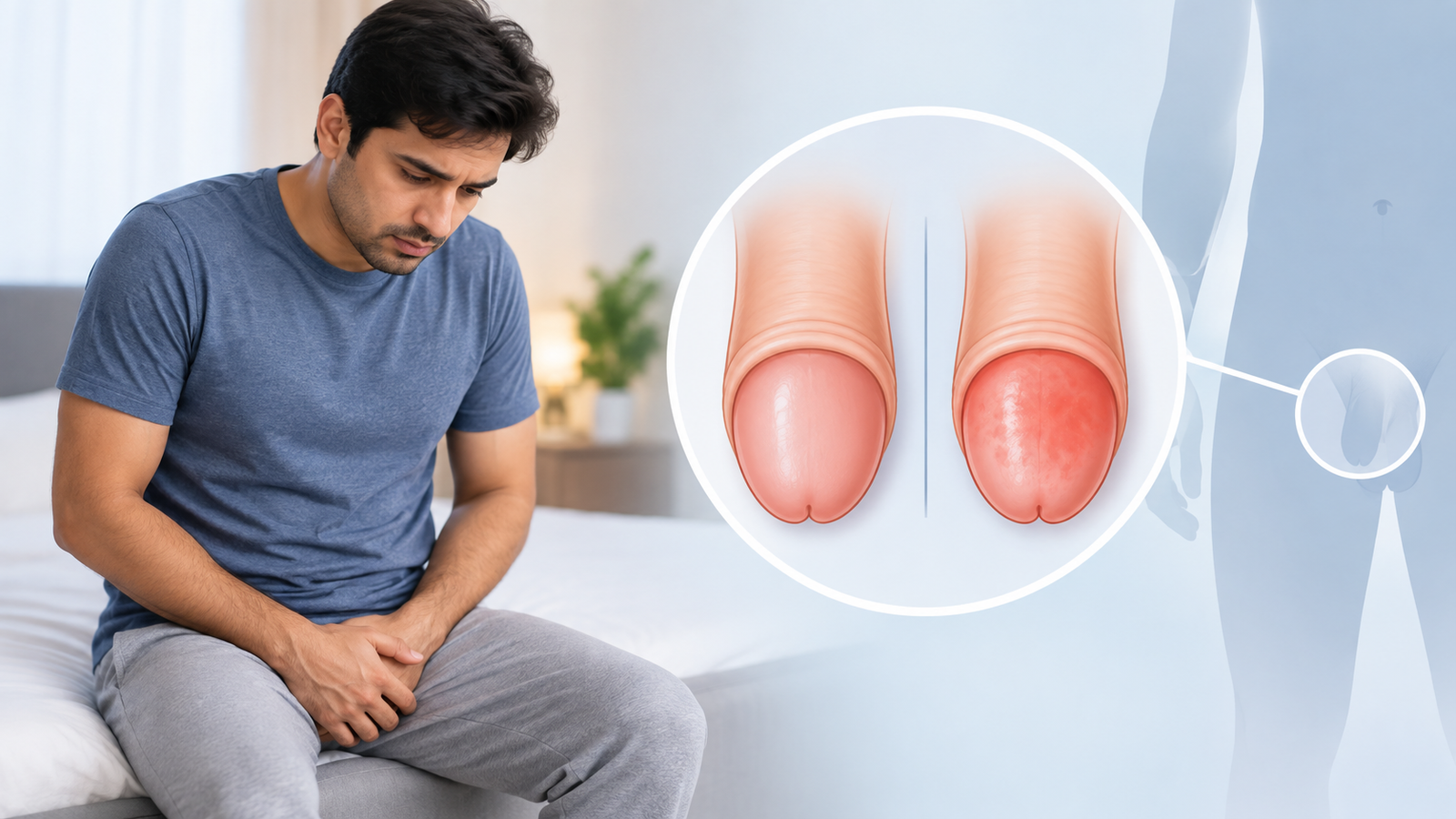
Balanitis refers to inflammation of the glans, or head of the penis.
Posthitis refers specifically to inflammation of the foreskin.
When both the glans and foreskin are inflamed, the condition is called balanoposthitis.
Symptoms can overlap and may include:
- Redness of the glans
- Swelling of the foreskin
- Itching or burning
- Soreness
- Unpleasant smell
- Discharge beneath the foreskin
- Cracking or dryness
- Pain while retracting the foreskin
- Difficulty retracting a tight foreskin
A single episode may settle after appropriate treatment. When symptoms repeatedly disappear and return, however, it becomes important to investigate the underlying cause.
Repeatedly treating the visible inflammation without identifying the trigger can result in another episode weeks or months later.
Patients experiencing persistent irritation can also read about foreskin irritation treatment.
Which causes are infective, irritant, or skin-condition related?
There is no single cause of recurrent balanitis. Several different problems can produce similar symptoms, which is why treatment should be based on clinical assessment rather than assumptions.
Fungal or yeast infection
Candida can cause inflammation around the glans and beneath the foreskin.
Possible symptoms include redness, soreness, itching under the foreskin, and sometimes discharge.
Diabetes can make recurrent candidal infection more likely, particularly when blood glucose is poorly controlled.
Bacterial infection
Certain bacterial infections can also cause balanitis or balanoposthitis.
Pain, redness, swelling, unpleasant odour and discharge may occur, although symptoms alone cannot reliably identify the organism responsible.
Irritant or contact dermatitis
Not every red or itchy foreskin is infected.
Irritation may result from:
- Strong soaps
- Shower gels
- Fragranced products
- Antiseptics
- Lubricants
- Certain condoms
- Excessive washing
- Repeated scrubbing
Continuing to expose the skin to the irritant can cause symptoms to return even after temporary improvement with treatment.
Poorly controlled diabetes
Repeated balanitis can sometimes be associated with diabetes.
High blood glucose may increase susceptibility to infection and create conditions that encourage recurrent yeast problems.
In someone with unexplained recurrent episodes, checking blood glucose may therefore form part of the investigation.
Tight foreskin or phimosis
Phimosis can make normal cleaning and drying underneath the foreskin difficult.
Inflammation can also contribute to further scarring and tightening, creating a cycle:
Inflammation → scarring → tighter foreskin → difficult hygiene → further inflammation.
Learn more about treatment for a tight foreskin.
Skin conditions
Dermatological conditions can affect genital skin and sometimes resemble infection.
Depending on the appearance and clinical history, a doctor may consider inflammatory or dermatological conditions such as eczema, psoriasis or lichen sclerosus.
These require different treatment from a straightforward fungal or bacterial infection.
Cause-and-Action Guide for Recurrent Balanitis
| Likely cause | Typical symptom pattern | Test used | First-line treatment | When surgery is discussed |
|---|---|---|---|---|
| Fungal/yeast infection | Itching, redness, soreness, and sometimes discharge | Clinical examination; swab when appropriate | Appropriate antifungal treatment and management of contributing factors | If episodes remain recurrent and significant, especially with phimosis |
| Bacterial infection | Redness, tenderness, discharge or unpleasant smell | Examination and swab/culture when indicated | Appropriate antimicrobial treatment based on clinical findings | If recurrent inflammation is associated with structural foreskin problems |
| Irritant/contact dermatitis | Burning, dryness, redness or itching after exposure to products | Mainly clinical history and examination | Stop the irritant and use appropriate skin care/treatment | Surgery is generally not first-line treatment for an irritant cause alone |
| Diabetes-related recurrence | Repeated infections, often fungal, especially with elevated glucose | Blood glucose and/or HbA1c when appropriate | Improve glucose control plus treatment of the active episode | Considered when significant foreskin-related episodes continue |
| Phimosis/tight foreskin | Difficult retraction, cracking, inflammation and poor hygiene access | Physical examination | Conservative management where appropriate | Circumcision or another foreskin procedure may be considered if persistent |
| Underlying skin condition | Persistent patches, colour or texture changes, scarring or recurring inflammation | Clinical assessment; specialist review or biopsy in selected cases | Condition-specific dermatological treatment | Depends on diagnosis, scarring and response to medical treatment |
The table is a general guide. Symptoms can overlap, so self-diagnosing the cause from appearance alone is unreliable.
Which tests are done when episodes keep repeating?
Not every patient needs every test.
A first uncomplicated episode may be diagnosed from history and examination. Repeated episodes may justify further investigation.
Blood glucose testing
Because recurrent balanitis can occur in people with diabetes, blood glucose or HbA1c testing may be recommended when diabetes is known, suspected or inadequately controlled.
Swab or culture
When infection is suspected, particularly if symptoms repeatedly return or have not responded to treatment, a sample may sometimes be taken to identify an organism.
This can help avoid repeatedly prescribing inappropriate antimicrobial creams.
Sexual-health testing
Some sexually transmitted infections can cause genital symptoms that overlap with balanitis.
Testing may be appropriate depending on symptoms, sexual history and clinical findings.
Balanitis itself, however, is not automatically a sexually transmitted infection.
Examination for phimosis
The doctor will assess whether the foreskin retracts normally and whether there is evidence of cracking, scarring or narrowing.
Skin assessment
Persistent changes in skin colour, texture, thickness or scarring may require closer dermatological evaluation.
Occasionally, a biopsy may be considered when the diagnosis remains uncertain or when a persistent abnormal area needs to be identified accurately.
What does first-line medical treatment involve?
Recurrent balanitis treatment should target the underlying cause.
There is no single cream that appropriately treats every case.
Antifungal treatment
When a fungal cause is clinically suspected or confirmed, an appropriate antifungal treatment may be prescribed.
Any contributing factors, such as poorly controlled diabetes, also need attention.
Antibiotic treatment
Antibiotics may be appropriate for selected bacterial infections. They should not automatically be used whenever the foreskin becomes red.
Repeatedly using antibiotic creams without establishing the cause may fail to treat fungal, inflammatory or irritant conditions.
Anti-inflammatory treatment
Certain non-infective inflammatory skin conditions may require topical anti-inflammatory medication under medical supervision.
Avoiding irritants
If a soap, antiseptic, lubricant or other product is contributing to inflammation, stopping that product can be an important part of treatment.
Treating diabetes
When high blood glucose contributes to recurrent infection, better diabetes control is an important part of preventing further episodes.
Managing phimosis
Some patients with a tight foreskin may be suitable for conservative treatment before surgery is considered.
Read more about treating phimosis without surgery.
When is circumcision or preputioplasty discussed?
Circumcision is not automatically required because someone develops balanitis.
Many cases can be successfully managed by identifying and treating the underlying cause.
Surgery may become a reasonable discussion when there are:
- Frequent recurrent episodes
- Persistent phimosis
- Significant foreskin scarring
- Repeated cracking of the foreskin
- Difficulty maintaining hygiene because of narrowing
- Recurrent inflammation despite appropriate treatment
- Specific foreskin disorders for which surgery is clinically appropriate
Circumcision removes the foreskin and may be considered when the foreskin itself is contributing substantially to repeated disease.
What about preputioplasty?
Preputioplasty is a foreskin-preserving procedure that widens a narrowed foreskin rather than completely removing it.
It may be an option in selected cases of phimosis, but suitability depends on the cause and degree of narrowing, the condition of the foreskin and whether an underlying skin disorder is present.
The decision should therefore be made after examination rather than assuming that one procedure is appropriate for every patient.
Patients considering surgery can review the indications for circumcision.
When does balanitis need circumcision?
The question of when balanitis needs circumcision cannot be answered simply by counting episodes.
The severity and underlying cause matter.
For example, someone experiencing recurrent inflammation because of an irritating hygiene product may improve once that product is stopped. Circumcision would not ordinarily be the first solution to that problem.
Someone with repeated balanitis combined with severe phimosis and progressive scarring presents a different situation.
Circumcision may be discussed when appropriate medical treatment and preventive measures have failed, and the foreskin continues to contribute to significant recurrent problems.
Which hygiene changes reduce recurrence?
Good hygiene is important, but aggressive cleaning can actually worsen irritation.
Wash gently
Use lukewarm water and avoid vigorous scrubbing.
If soap repeatedly irritates, your doctor may recommend avoiding fragranced or harsh products in the area.
Dry carefully
Persistent moisture beneath the foreskin can contribute to irritation and microbial growth.
After washing, dry gently rather than rubbing aggressively.
Retract only when comfortable
If the foreskin retracts normally, gentle retraction allows cleaning underneath.
Never force a tight or painful foreskin backward. Forceful retraction can cause small tears, bleeding, scarring, or difficulty returning the foreskin to its normal position.
Avoid unnecessary antiseptics
Regularly applying strong antiseptic solutions without medical advice can irritate sensitive genital skin.
Manage diabetes
If diabetes is present, maintaining appropriate blood glucose control can help reduce susceptibility to recurrent infections.
Complete prescribed treatment
Stopping treatment as soon as symptoms improve may sometimes allow the underlying problem to persist.
Follow the duration advised by your treating clinician.
Finding the Cause Is More Important Than Repeating the Same Treatment
When balanitis repeatedly returns, the goal should not simply be to make the redness disappear for a few days.
Effective recurrent balanitis treatment means identifying whether infection, diabetes, irritation, phimosis, hygiene practices, or an underlying skin disorder is driving the problem.
Medical treatment and correction of contributing factors are usually considered first. Circumcision or a foreskin-preserving procedure may be discussed when clinically appropriate, particularly when recurrent inflammation is associated with persistent narrowing or scarring.
If you have repeated redness and swelling of the foreskin, persistent itching under the foreskin, discharge, cracking, or increasing difficulty retracting the foreskin, a clinical examination can help establish the cause and guide the next step rather than repeatedly self-treating the symptoms.