Sensation After Circumcision: What Changes, What Settles and What to Expect
After circumcision, the glans is no longer covered and usually feels different during the first few weeks as the surface adapts. For many men, the initial change becomes less noticeable as healing progresses over the following weeks and months. However, experiences vary, and research on long-term sensation does not show the same result in every study.
Understanding these changes before surgery is important because whether circumcision affects sensitivity is one of the most common questions adults ask when considering the procedure. Early sensitivity, dryness, friction, and the eventual healed sensation are different issues and should not be treated as though they are the same experience.
At Elegance Clinic, Surat, Dr. Ashutosh Shah, a plastic surgeon with 22+ years of experience, evaluates each patient individually and discusses healing, circumcision technique, and realistic expectations before surgery.
What Physically Changes in the First Weeks After Healing?
Circumcision removes part or all of the foreskin that previously covered the glans. After surgery, both the incision and the newly exposed glans need time to adjust.
During the early healing period, patients may notice:
- Swelling around the surgical area
- Increased sensitivity when the glans touches clothing
- Mild tenderness or discomfort
- A different feeling while walking
- Dryness of the exposed glans
- Temporary numbness around parts of the incision
- Tightness or pulling around the healing scar
These early sensations should not be used to judge the final result.
The tissues are still recovering from surgery, swelling is changing, and the incision is maturing. The glans is also becoming accustomed to regular contact with clothing rather than being continuously covered by the foreskin.
Some men initially describe the glans as unusually sensitive. Others notice temporary numbness or a combination of sensitive and less-sensitive areas.
These experiences can change considerably as healing progresses.
Why Does the Glans Feel Different Initially and How Does It Settle?
Before circumcision, the foreskin normally covers at least part of the glans when the penis is not erect. After circumcision, the glans has more regular contact with underwear and clothing.
This change can make ordinary contact feel unusually noticeable during the early adjustment period.
The sensation generally becomes less distracting as the patient becomes accustomed to the new exposure and the surgical tissues continue to heal.
Dryness of the Glans After Circumcision
Some patients are particularly concerned about dryness of the glans after circumcision.
The surface may appear or feel different once it is continuously exposed. This does not necessarily mean there is a healing problem.
During recovery, patients should avoid repeatedly applying creams, antiseptics, or other products unless their surgeon has recommended them. Unnecessary products may irritate healing skin.
Once the surgical wound has adequately healed, normal hygiene is usually sufficient unless the surgeon advises otherwise.
If dryness is associated with cracking, persistent redness, discharge, significant itching or pain, it deserves medical review rather than simply being assumed to be normal adaptation.
A Practical Sensory-Adaptation Timeline
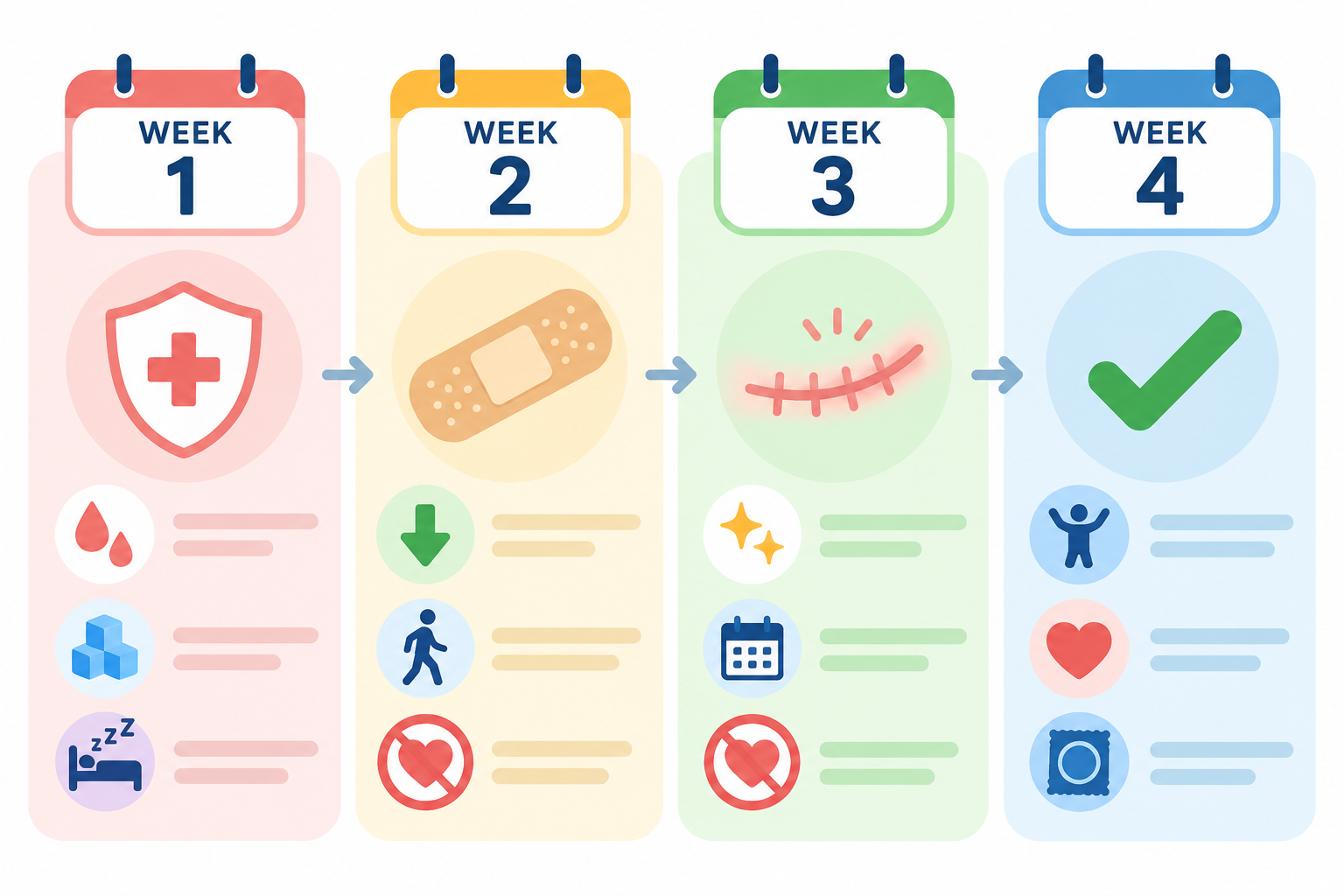
| Healing stage | Expected sensory change | Self-care step | When to seek review |
|---|---|---|---|
| First week | Tenderness, swelling and increased awareness of the glans may occur | Follow dressing, hygiene and medication instructions | Increasing pain, significant bleeding, fever, or concerning swelling |
| Weeks 2–4 | Sensitivity may still feel different as swelling decreases and the wound continues healing. | Avoid unnecessary friction and follow activity restrictions | Increasing redness, discharge, wound separation, or worsening pain |
| Weeks 4–8 | Many patients become more accustomed to clothing contact and everyday movement | Gradually resume activities only when cleared | Persistent significant pain, troublesome numbness or abnormal scar changes |
| 2–3 months | Sensation often feels more settled as the scar continues to mature | Assess the result after adequate healing rather than during the early postoperative period | Persistent discomfort or sensory change that interferes with normal function |
| Later recovery | The healed sensation becomes easier to judge | Continue normal hygiene and follow-up as advised | New pain, scar problems, or ongoing functional concerns |
This timeline is approximate. Recovery is influenced by the surgical technique, wound healing, individual anatomy, and whether complications occur.
Patients should also follow their surgeon's guidance about when intimacy can resume, rather than using improvement in sensitivity alone as a sign that healing is complete. The linked recovery guide specifically discusses when sexual activity can generally restart after adequate healing.
What Does the Available Research Report About Long-Term Sensation?
The question does circumcision affects sensitivity does not have a useful one-word answer.
Studies have examined several different outcomes, including:
- Sensitivity
- Sexual satisfaction
- Erectile function
- Orgasm
- Ejaculatory function
- Overall sexual experience
Research findings are not completely uniform, partly because sensation and sexual experience are difficult to measure objectively. Different studies also use different populations, surgical techniques, questionnaires and follow-up periods.
Importantly, the very noticeable sensory changes immediately after surgery should not automatically be interpreted as permanent changes.
Early postoperative sensation is influenced by swelling, wound healing, scar formation, and continuous exposure of the glans. Long-term experience should therefore be assessed after adequate healing.
Men considering circumcision should understand that the sensation may feel different, but an exact individual sensory outcome cannot be guaranteed before surgery.
How Does the Amount of Skin Removed Influence the Outcome?
Circumcision is not one identical operation in every patient.
The final result can vary according to factors such as:
- Amount of foreskin removed
- Position of the scar
- Remaining skin mobility
- Individual anatomy
- Surgical technique
- Healing and scar formation
The terms "high" and "low" generally refer to the position of the circumcision scar, while "tight" and "loose" describe how much skin mobility remains.
These characteristics should not be chosen solely based on claims that one style guarantees greater or lower sensitivity.
Patients researching different techniques may find it useful to understand Low cut circumcision explained and High cut stapler circumcision before discussing which approach is technically appropriate for their anatomy. The linked Elegance Clinic article discusses scar position and lists low-cut and high-cut among its circumcision approaches.
The aim should be a safe functional result with appropriate skin removal rather than trying to predict sensation from scar position alone.
Does the Circumcision Technique Matter?
Different circumcision techniques can create different scar positions and postoperative appearances.
The technique selected may depend on:
- Age
- Foreskin condition
- Presence of phimosis or scarring
- Previous infections
- Penile anatomy
- Amount of skin requiring removal
- Surgeon's assessment
Technique can influence healing and the final appearance, but sensation is more complicated than simply choosing one device or incision position.
A patient should therefore discuss both functional and cosmetic expectations before surgery rather than assuming a particular method guarantees a particular sensory outcome.
When Is Reduced Comfort a Technical Problem Rather Than Adaptation?
Temporary discomfort and unusual sensation can occur during normal recovery. Persistent problems deserve assessment.
A surgical review may be appropriate if there is:
- Persistent painful tightness
- Pain associated with the scar
- Significant scar thickening
- Recurrent cracking
- Ongoing wound problems
- Marked discomfort with erection after healing
- Persistent numbness that is concerning
- Pain during sexual activity after adequate recovery
- Significant asymmetry or tethering of the scar
These findings do not automatically mean that the circumcision was performed incorrectly. Several healing and skin-related conditions can cause persistent symptoms.
However, ongoing symptoms should be examined rather than being dismissed as normal adaptation.
Patients unsure of the normal final appearance can review What to expect from the healed skin and compare it with their surgeon's postoperative guidance. The linked article discusses swelling, scar maturation, and why the final appearance should not be judged too early.
What About Intimacy After Circumcision?
Intimacy after circumcision should not resume simply because the patient feels comfortable.
The external surface may appear substantially healed before deeper tissues have completed their recovery. Friction or tension too early can irritate the scar or interfere with healing.
The appropriate time to resume sexual activity depends on:
- Wound closure
- Swelling
- Scar tenderness
- Presence of stitches
- Surgical technique
- Individual healing
- Surgeon assessment
Patients should follow their own postoperative instructions rather than relying on a fixed date found online.
Once healing is complete and sexual activity is resumed, the experience may initially feel different. Allowing time for adjustment is important.
A suitable lubricant may reduce excessive friction after healing, but it should not be used to push through persistent pain.
Pain is a reason to stop and seek advice if it continues.
Does Circumcision Affect Erections?
Circumcision changes the foreskin and does not directly remove the structures responsible for producing an erection.
Therefore, the operation itself is not intended to prevent normal erectile function.
During early recovery, however, spontaneous erections can temporarily feel tight or uncomfortable because the incision is still healing.
This generally needs to be distinguished from erectile dysfunction.
If erection quality changes persistently after the recovery period, the patient should be assessed because erectile difficulties can have vascular, hormonal, neurological, medication-related,d and psychological causes unrelated to the circumcision itself.
What Should Be Discussed Before Surgery So Expectations Are Realistic?
Good counselling before circumcision should cover more than the operation itself.
Adults should understand:
- Why circumcision is being recommended
- How much foreskin is expected to be removed
- Where the scar is likely to sit
- Expected early swelling and tenderness
- Possible temporary sensitivity of the exposed glans
- Expected wound-care requirements
- Approximate recovery stages
- When exercise can restart
- When sexual activity can resume
- Potential complications
- What the healed appearance may look like
Patients should also be able to explain their own priorities.
For example, one person may be primarily concerned about repeated infections, while another may have painful phimosis or recurrent foreskin tearing. These different reasons can affect the discussion about technique and expectations.
No surgeon can guarantee exactly how an individual patient will describe sensation after complete healing.
Avoid Judging the Final Result Too Early
One of the most important points during adjustment after circumcision is not to assess the final sensation during the first days or weeks.
During early recovery, several things are happening simultaneously:
- The incision is healing
- Swelling is decreasing
- Nerve endings around the incision are recovering
- The scar is beginning to mature
- The glans is adapting to regular exposure
- The patient is becoming accustomed to clothing contact
A sensation that feels unusual during week two may therefore be very different several weeks later.
The same applies to appearance. Swelling and the early scar can make the result look different from the eventual healed outcome.
Setting Realistic Expectations About Sensation After Circumcision
So, does circumcision affect sensitivity? Circumcision changes the physical relationship between the foreskin and glans, so some change in how the area feels is expected, particularly during the early healing and adjustment period. Increased awareness of clothing contact, temporary tenderness, dryness, or altered sensation may occur initially, while the longer-term experience varies between individuals and research findings are not completely uniform. The amount of skin removed, scar position, healing, and individual anatomy can all influence the final experience, but no particular circumcision style can guarantee a specific level of sensitivity. Patients considering surgery should discuss technique, healing, sexual activity, and realistic sensory expectations beforehand. At Elegance Clinic, Surat, Dr. Ashutosh Shah, with 22+ years of experience, can assess the individual condition and explain the expected recovery and healed result before treatment.