Swelling After Circumcision: What Is Normal?
Mild to moderate swelling after circumcision is common, especially around the incision during the first few days. Swelling should generally begin improving as healing progresses, although some puffiness may persist for weeks. Rapidly increasing swelling, severe pain, fever, spreading redness, uncontrolled bleeding, or difficulty urinating requires prompt medical assessment.
Many men become concerned when they notice swelling around the surgical area after circumcision. Some swelling is a normal part of healing, but it can be difficult to distinguish expected postoperative changes from a complication.
Patients commonly ask whether swelling should disappear within a few days, why the area below the glans looks puffy, and when they should contact their surgeon.
The amount of swelling after circumcision varies depending on the surgical technique, individual healing response, activity level, and wound condition.
Understanding the expected recovery timeline and recognising warning signs can help patients recover more confidently.
How Much Swelling Is Normal After Circumcision?
Circumcision involves removing the foreskin and allowing the surgical wound to heal.
During this process, the body produces an inflammatory response that can cause temporary swelling.
Mild to moderate swelling around the incision is common, particularly during the first several days.
Patients may notice:
-
Puffiness around the incision line
-
Mild swelling below the glans
-
Tenderness near the surgical wound
-
Temporary bruising
-
Increased sensitivity
-
Slight differences in swelling on either side
These changes are often part of normal postoperative healing.
However, swelling should generally stabilise and gradually improve rather than continue increasing.
Does Normal Swelling Look the Same for Everyone?
No.
Some patients experience minimal swelling, while others develop more noticeable puffiness.
The appearance can vary depending on tissue characteristics, surgical technique, and postoperative activity.
A photograph or description alone may not reliably distinguish normal swelling from a complication.
If the appearance is concerning, patients should contact their treating surgeon.
Why Does Swelling Happen After Circumcision?
Swelling occurs because the body responds to surgery by increasing blood flow and sending inflammatory cells to the healing area.
This response supports tissue repair but also causes temporary fluid accumulation.
1. Surgical Inflammation
The surgical incision triggers a normal inflammatory response.
Fluid can collect around the wound during early healing.
2. Temporary Changes in Fluid Drainage
Surgery may temporarily disrupt small lymphatic vessels.
This can contribute to puffiness around the incision and adjacent tissue.
3. Tissue Handling During Surgery
Different surgical techniques involve different instruments and methods of wound closure.
The amount of tissue manipulation may influence postoperative swelling.
4. Friction and Physical Activity
Excessive walking, strenuous exercise, or clothing friction may increase discomfort and swelling.
5. Individual Healing Response
Age, diabetes, circulation, medications, and other health factors can influence healing.
Patients with underlying medical conditions may need closer postoperative monitoring.
Circumcision Swelling Days: What to Expect During Recovery
The following circumcision swelling days timeline provides a general guide to recovery.
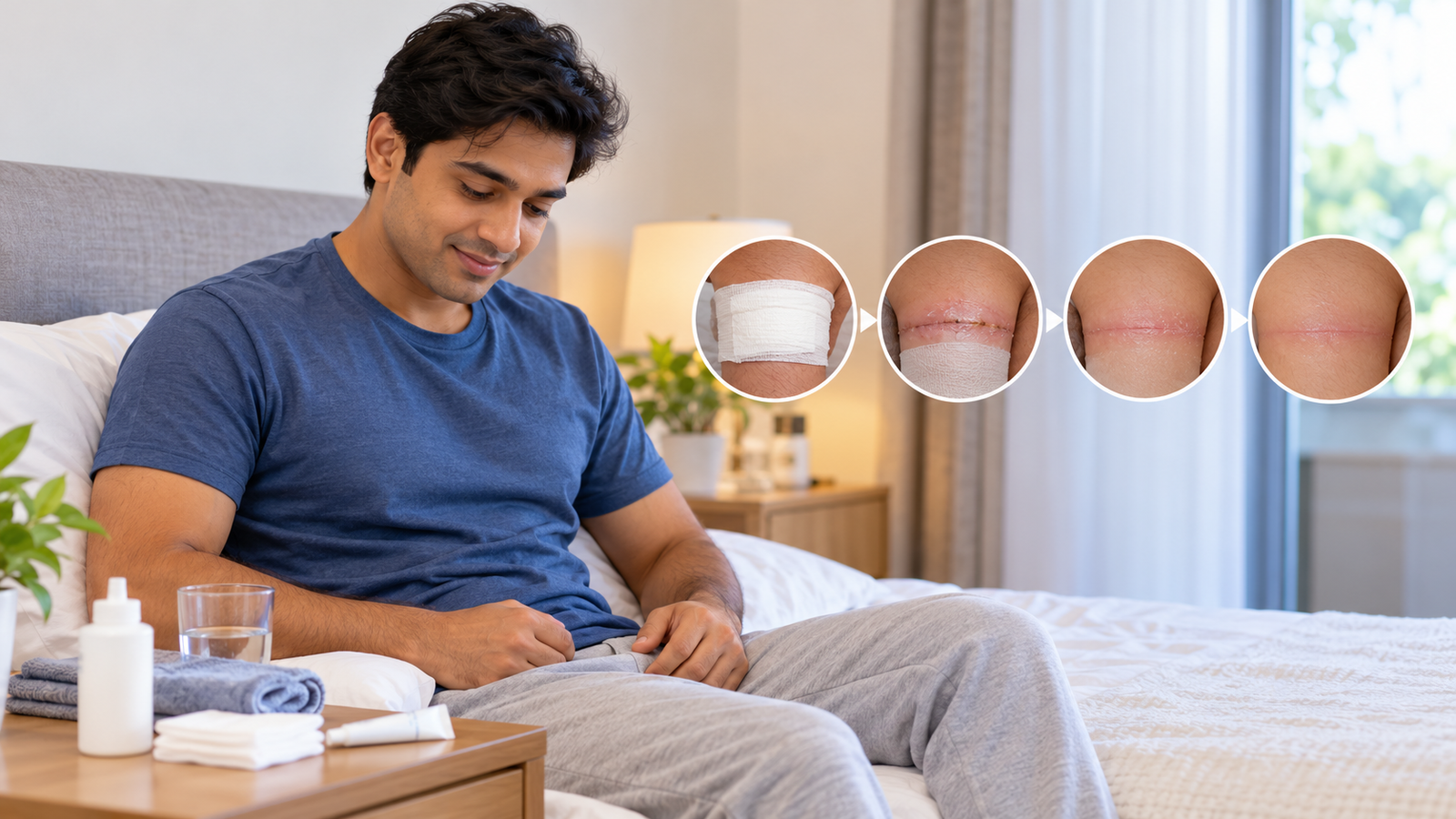
| Recovery Period | What May Be Normal | When to Contact a Doctor |
|---|---|---|
| First 24 hours | Mild swelling, tenderness, and slight bruising | Rapid swelling, severe pain, or heavy bleeding |
| Days 2–3 | Swelling may become more noticeable | Increasing pain, marked discoloration or difficulty urinating |
| Days 4–7 | Swelling often begins improving | Fever, pus, or spreading redness |
| Weeks 2–3 | Residual puffiness may remain | Swelling that continues worsening |
| Weeks 4–6 | Most swelling is substantially reduced | Persistent significant swelling or wound problems |
| After 6 weeks | Some residual firmness or puffiness may remain | New, persistent or increasing swelling |
These are approximate recovery patterns rather than guaranteed deadlines.
First 24 Hours
Mild swelling may appear soon after surgery.
The area can feel tender as the anaesthesia wears off.
Patients should follow the surgeon's instructions regarding dressings, rest, and medication.
Rapidly expanding swelling or significant bleeding requires urgent assessment.
Days 2–3
Swelling may become more noticeable during the first two or three days.
Mild bruising and sensitivity may also occur.
The wound should be monitored for increasing pain, spreading redness, or unusual discharge.
Days 4–7
For many patients, swelling begins to decrease.
Some puffiness may remain around the incision.
Patients should continue avoiding unnecessary friction and strenuous activity.
Weeks 2–3
The wound usually becomes more comfortable as healing progresses.
Residual swelling or firmness may still be present.
Patients should avoid assuming that a less painful wound is fully healed.
Weeks 4–6
Many adults achieve substantial healing within approximately four to six weeks.
Most postoperative swelling should have improved considerably.
However, some residual swelling can persist longer.
After Six Weeks
Persistent puffiness, a firm area near the scar, or new swelling should be discussed with the surgeon.
Some changes may reflect scar maturation, while others require examination.
What Does Normal Swelling Look Like?
Normal postoperative swelling is generally mild to moderate and gradually improves.
It may appear as a slightly raised area around the incision.
Is Swelling Around the Stitches Normal?
Yes, mild swelling around stitches is common during early healing.
The tissue may appear slightly raised or uneven.
Absorbable stitches can also cause local irritation as they dissolve.
However, increasing redness, pus, severe pain, or wound separation requires assessment.
Why Is the Area Below the Glans Swollen?
The tissue just below the glans may become puffy after circumcision.
Temporary fluid accumulation and changes in lymphatic drainage can contribute to this appearance.
The swelling often decreases gradually.
If the area becomes increasingly painful, tense, discoloured, or severely swollen, medical assessment is necessary.
Is Uneven Swelling Normal?
Mild differences in swelling between the two sides can occur.
However, a rapidly enlarging lump, significant one-sided swelling or increasing pain may indicate bleeding or another complication.
Patients should not assume that all uneven swelling is harmless.
When to Worry After Circumcision
Knowing when to worry after circumcision is important because certain symptoms may indicate infection, bleeding, impaired circulation, or another complication.
1. Swelling That Increases Rapidly
Sudden or rapidly worsening swelling requires prompt medical assessment.
It may indicate bleeding beneath the skin or another postoperative problem.
2. Severe or Increasing Pain
Mild discomfort is expected.
However, severe pain or pain that becomes worse rather than better should not be ignored.
For more information about expected discomfort, read Is Circumcision Painful? What Adults Can Expect.
3. Spreading Redness or Fever
Increasing redness, warmth, fever, or pus may indicate infection.
Patients should contact their surgeon promptly.
4. Persistent Bleeding
Small spots of blood on a dressing can occur after surgery.
However, persistent or heavy bleeding requires urgent medical evaluation.
5. Difficulty Passing Urine
Difficulty urinating may occur because of severe swelling, dressing pressure, or another problem.
An inability to pass urine requires emergency medical assessment.
6. Marked Discoloration
Some bruising is common.
However, new dark discoloration accompanied by severe pain, increasing swelling, or cold tissue requires emergency assessment.
7. A Tight Dressing
An overly tight dressing may increase discomfort or interfere with circulation.
Patients should follow the surgeon's dressing instructions and seek immediate advice if the dressing appears constrictive.
Do not cut or manipulate surgical dressings without appropriate instructions unless emergency medical professionals direct you to do so.
How to Reduce Swelling After Circumcision
Appropriate postoperative care can help minimise discomfort and support healing.
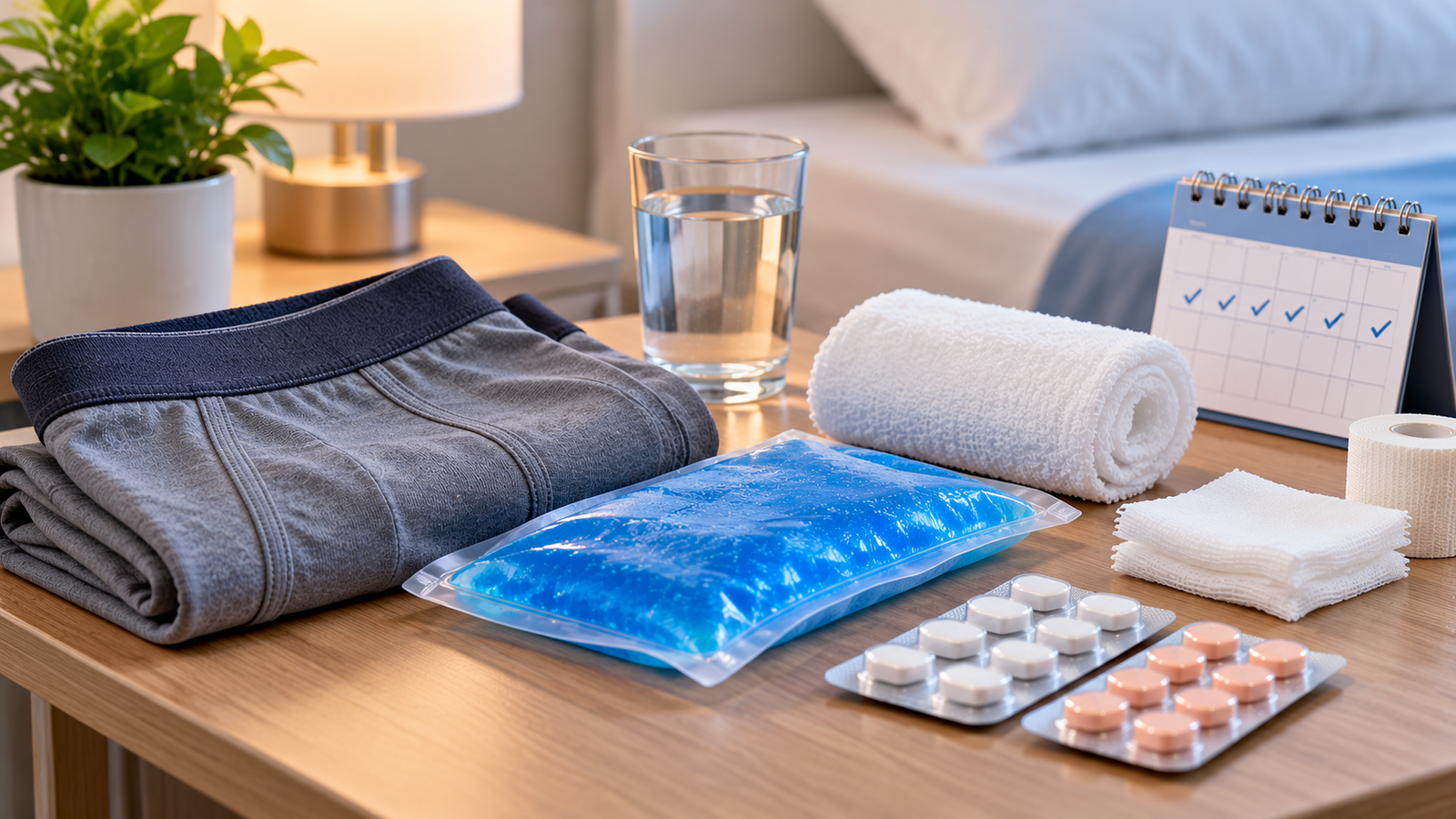
1. Rest During Early Recovery
Avoid strenuous activity during the initial recovery period.
Gentle movement may be appropriate, but prolonged walking or physical exertion can increase friction and discomfort.
2. Wear Supportive Underwear
Soft, supportive underwear may help reduce unnecessary movement of the healing area.
Avoid tight clothing that creates painful pressure.
3. Take Medication as Prescribed
The surgeon may recommend pain-relief medication.
Some medicines may also help manage inflammation when medically appropriate.
Do not take additional anti-inflammatory medicines without checking whether they are suitable for your health conditions and other medications.
4. Follow Wound-Care Instructions
Keep the wound clean according to the surgeon's advice.
Follow instructions about bathing, dressings, and cleaning.
Avoid applying unprescribed creams, powders, or antiseptics.
5. Avoid Sexual Activity Until Healing
Sexual intercourse and masturbation may place tension on the surgical wound.
Patients are commonly advised to avoid these activities for approximately four to six weeks or until the surgeon confirms adequate healing.
6. Ask Before Using a Cold Compress
A wrapped cold compress may be recommended in selected circumstances.
However, direct ice contact can injure sensitive tissue.
Patients should only use cooling methods according to their surgeon's instructions.
7. Attend Follow-Up Appointments
Follow-up allows the surgeon to assess wound healing and identify complications.
Patients should not skip a scheduled review simply because swelling has decreased.
Does Laser or Stapler Circumcision Cause Less Swelling?
Patients often compare surgical techniques when planning circumcision.
Different methods may produce different postoperative experiences, but no technique guarantees swelling-free recovery.
Conventional Circumcision
Conventional circumcision involves removing the foreskin using surgical instruments and commonly closing the wound with absorbable sutures.
Temporary swelling around the incision is expected.
Laser Circumcision
Laser circumcision uses laser energy to cut tissue.
Although tissue handling and bleeding control may differ from conventional techniques, swelling can still occur.
Laser-assisted surgery does not eliminate the body's normal inflammatory response.
Stapler Circumcision
Stapler circumcision uses a specialised device for foreskin removal and wound closure.
Swelling may occur around the device closure line.
Patients should follow the surgeon's instructions regarding wound care and any retained staples.
Which Method Has the Least Swelling?
Research findings vary depending on technique, patient selection, and how postoperative swelling is measured.
No single method can be guaranteed to produce the least swelling in every patient.
The surgeon should recommend the technique based on the patient's condition and individual needs.
Can Swelling Delay Circumcision Healing?
Mild swelling is part of the healing process and does not necessarily indicate delayed recovery.
However, significant or persistent swelling can make the area uncomfortable and may accompany a complication.
What Factors Can Affect Healing?
Several factors influence recovery:
-
Diabetes and blood sugar control
-
Smoking or nicotine exposure
-
Wound infection
-
Excessive friction
-
Poor wound care
-
Circulation problems
-
Certain medications
-
Individual tissue response
Patients with diabetes or other conditions affecting wound healing should discuss follow-up requirements with their surgeon.
Does Swelling Mean the Circumcision Has Failed?
No.
Swelling alone does not mean the procedure has failed.
Early postoperative appearance is not the same as the final healed result.
The incision and surrounding tissues can change considerably as swelling decreases and the scar matures.
Persistent swelling, unusual scarring, or wound concerns should be assessed during follow-up.
When Should You Contact Your Surgeon?
Contact your surgeon if swelling is not improving as expected or if you notice concerning symptoms.
Seek urgent medical advice for:
-
Increasing swelling with worsening pain
-
Spreading redness or fever
-
Pus or foul-smelling discharge
-
Persistent bleeding
-
Wound separation
-
Significant new bruising or a rapidly enlarging lump
-
Concerning discoloration
Seek emergency care for inability to urinate, uncontrolled bleeding, or rapidly worsening severe symptoms.
Early evaluation is safer than attempting to manage a possible complication with home remedies.
Discussing Circumcision Recovery With Dr. Ashutosh Shah
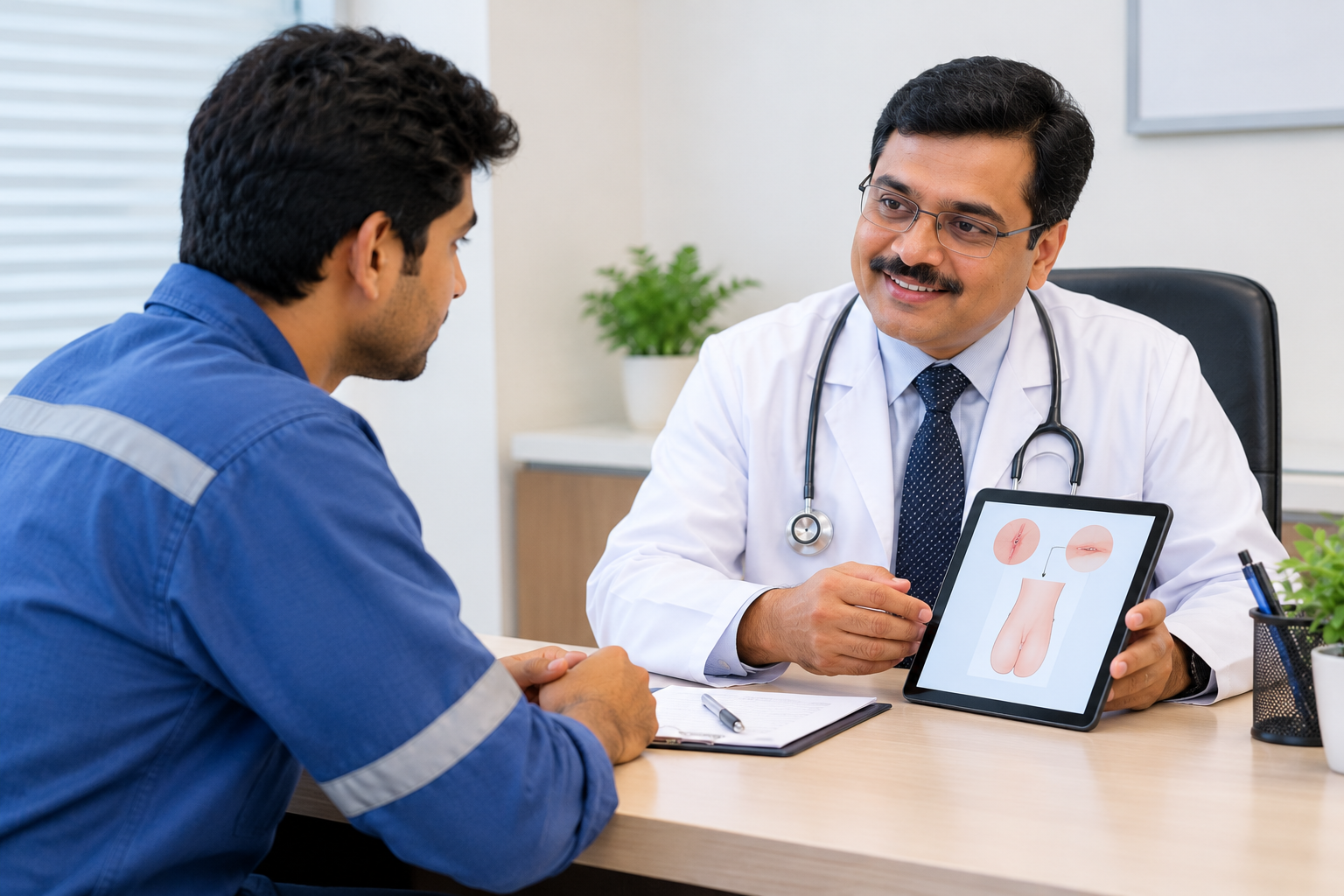
At Elegance Clinic, patients consulting Dr. Ashutosh Shah, a Plastic, Reconstructive & Cosmetic Surgeon with over 22 years of surgical experience, can discuss expected swelling, wound care, and recovery following circumcision. Individual assessment helps determine whether postoperative changes are consistent with healing or require further examination.
Patients should follow their personalised postoperative instructions and report any unexpected symptoms.
For medical guidance, patients can book a circumcision consultation.
Conclusion: Is Swelling After Circumcision Normal?
Swelling after circumcision is usually a temporary part of postoperative healing.
Mild puffiness, tenderness, and bruising are common during the first few days.
For many patients, swelling begins to improve during the first week and continues decreasing over the following weeks.
However, recovery varies, and some residual swelling may remain longer.
Appropriate wound care, prescribed medication, avoiding strenuous activities, and attending follow-up appointments can support healing.
Rapidly worsening swelling, severe pain, fever, uncontrolled bleeding, or urinary problems should never be ignored.
When in doubt, contact your treating surgeon for an assessment rather than attempting to diagnose a postoperative complication at home.