
Torn Frenulum: Immediate Care, Repeat Tears and Surgical Repair
A torn frenulum usually heals with rest, gentle hygiene, and avoiding sexual activity until the area recovers. Minor tears may heal on their own, while severe or repeatedly torn frenulums may need medical treatment. If there is heavy bleeding, severe pain, or repeated tearing, consult a urologist or experienced surgeon.
A torn frenulum can cause sudden pain and bleeding, which may look alarming because this small area has a good blood supply. However, a one-time minor tear is different from a frenulum that repeatedly splits because it is unusually short or tight. Effective frenulum tear treatment therefore depends on whether this is an isolated injury or part of a recurring problem.
At Elegance Clinic, Surat, Dr. Ashutosh Shah, a plastic surgeon with 22+ years of experience, evaluates repeated frenulum tears, scarring, and tightness to determine whether continued conservative care, frenuloplasty, or another surgical approach is appropriate.
What is a short frenulum and why does it tear?
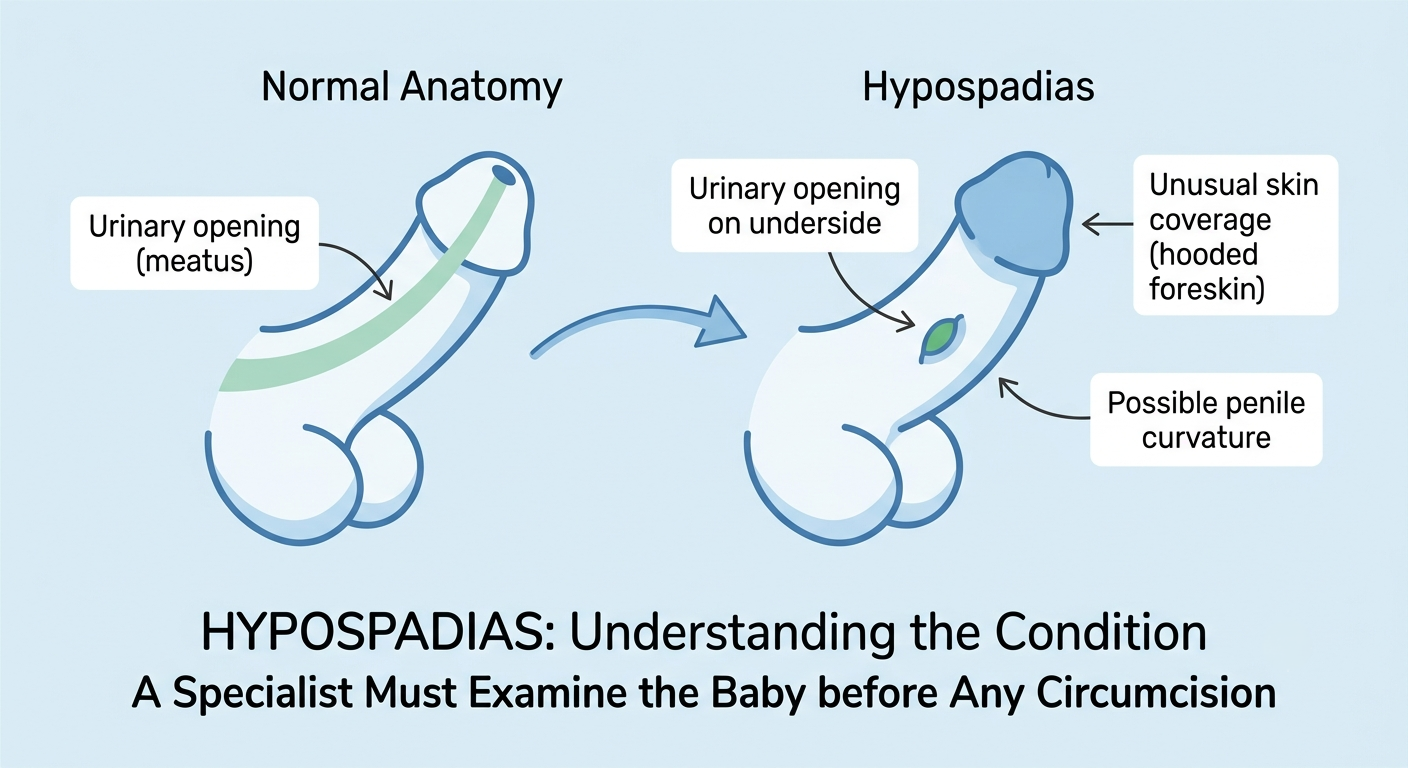
The frenulum is a small fold of tissue on the underside of the glans that connects to the foreskin. It helps coordinate foreskin movement.
In some men, the frenulum is naturally shorter or tighter than usual. This is commonly called frenulum breve.
A short frenulum may create excessive tension when the foreskin moves backward. Symptoms can include:
- Tightness during foreskin retraction
- Pain during erections
- Discomfort during sexual activity
- Repeated small cracks or tears
- Bleeding after a tear
- Difficulty retracting the foreskin comfortably
- A pulling sensation underneath the glans
A frenulum can also tear after excessive friction or sudden stretching, even when there was no previous obvious problem.
One isolated tear does not necessarily mean surgery is required. The more important question is whether the injury heals normally or repeatedly occurs at the same site.
Persistent short frenulum pain or repeated tearing should be examined because healing with scar tissue can make the area progressively less flexible.
What is the correct immediate response to bleeding?
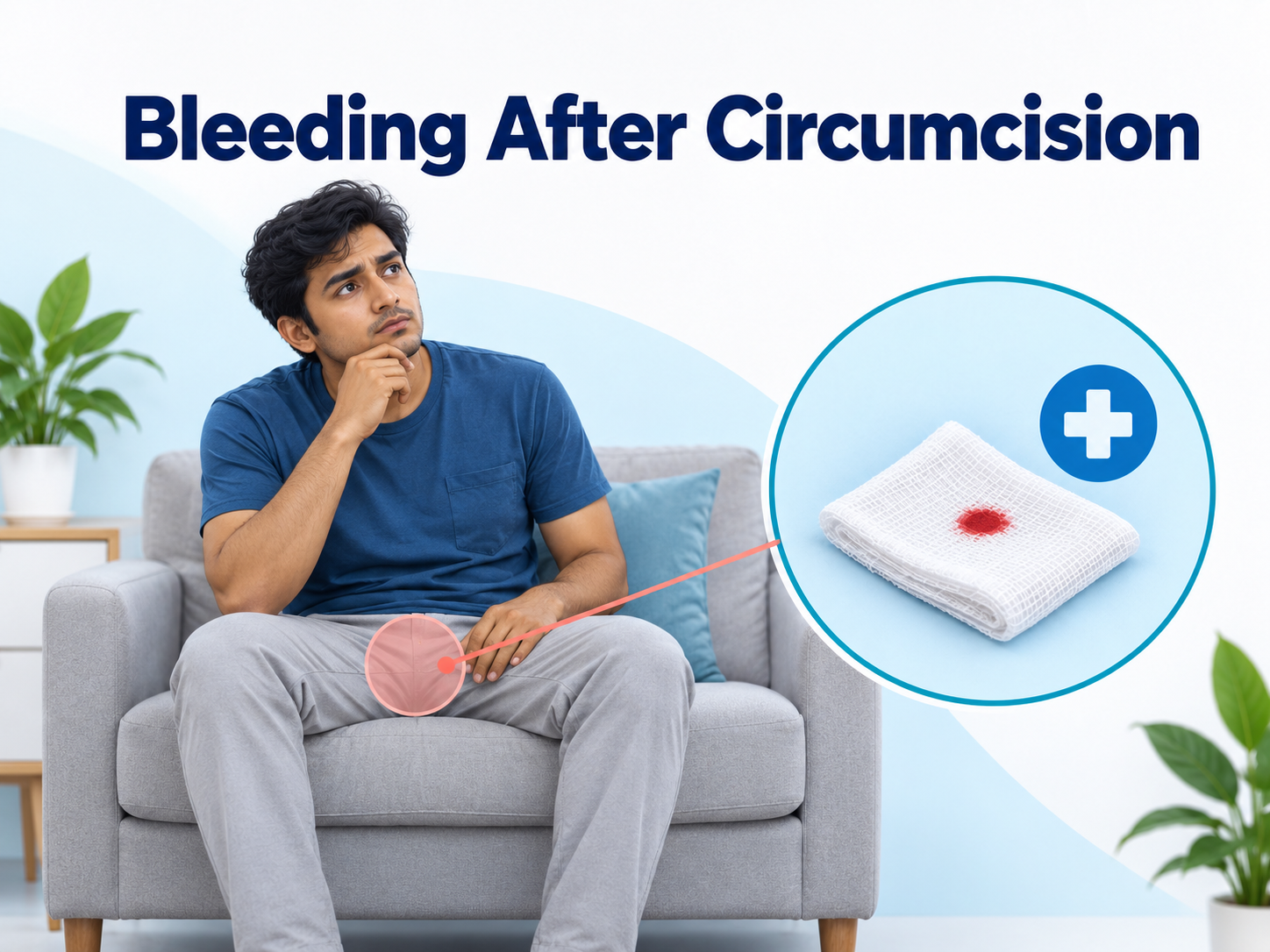
Torn frenulum bleeding can appear substantial because the area contains small blood vessels.
The first response should be calm, simple wound care.
Apply direct pressure
Use clean gauze or a clean soft cloth and apply steady direct pressure to the bleeding point.
Avoid repeatedly lifting the gauze every few seconds to see whether bleeding has stopped, as this can disturb the developing clot.
Keep the area clean
Once bleeding has stopped, keep the area clean and follow medical advice about washing and dressing.
Avoid aggressively rubbing the wound or applying strong antiseptics, powders, or unprescribed products.
Allow the tear to heal
Activities that stretch or repeatedly rub the healing area should be avoided until the wound has adequately healed.
Repeatedly reopening a partially healed tear can delay recovery and encourage further scar formation.
When should you seek medical care?
Arrange medical assessment if:
- Bleeding does not stop with sustained direct pressure
- Bleeding is heavy
- The wound appears deep or widely separated
- Pain or swelling becomes increasingly severe
- There are signs of infection
- The same area has torn several times
- The foreskin or frenulum has become progressively tighter
Significant or persistent bleeding warrants prompt medical attention rather than repeated home treatment.
Will a single frenulum tear heal?
A small uncomplicated tear can often heal without surgery.
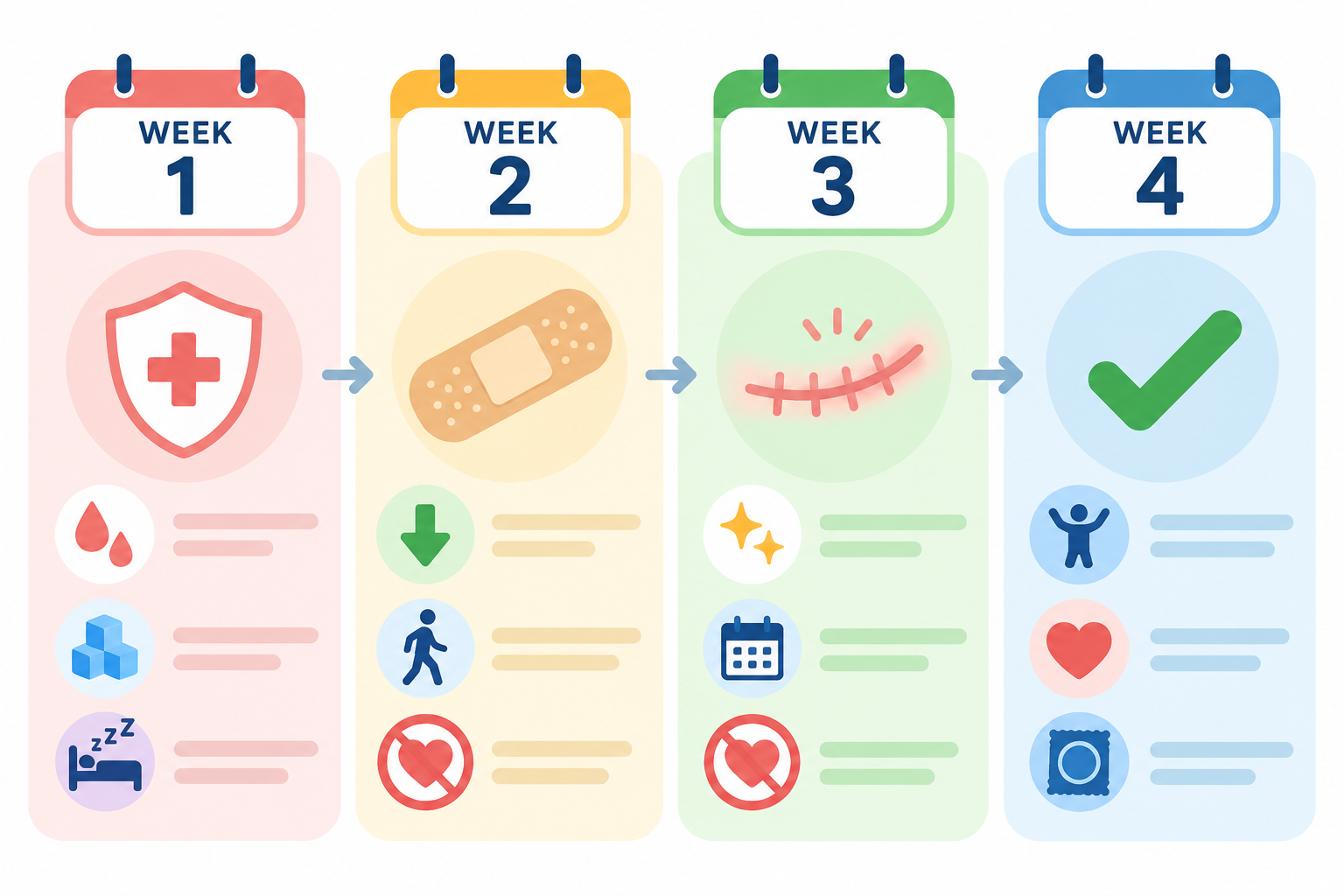
The wound may become increasingly comfortable over several days, with healing commonly occurring over approximately one to two weeks, depending on the extent of the tear and individual healing.
During this period, the area should be protected from unnecessary stretching and friction.
A common mistake is assuming that because pain has disappeared, the tissue has completely regained its strength. Restarting activities that stretch the frenulum too early may reopen the wound.
A single healed tear that causes no further tightness or symptoms may not require surgical treatment.
The situation changes when the tear repeatedly returns.
Why do repeated tears create scar tissue?
When tissue tears, the body repairs the injury by forming new healing tissue.
If the frenulum repeatedly tears at the same location, repeated cycles of injury and healing can produce scar tissue.
Scar tissue is generally less elastic than normal tissue. As a result, the area can become tighter.
This can create a cycle:
Short/tight frenulum → excessive tension → tear → healing and scarring → less flexibility → increased tension → another tear
Over time, a patient may notice that the foreskin feels increasingly restricted or that the same spot splits during erections or sexual activity.
Repeatedly treating only the bleeding does not correct the underlying mechanical tension.
This is why frenuloplasty for repeated tears may be considered when a short or scarred frenulum continues to cause symptoms.
For more information about recurrent skin splitting, see Skin cracking and frenulum repair.
Decision Checklist: Single Tear to Scarred Frenulum
| Situation | What it may mean | Usual next step | When medical review is appropriate |
|---|---|---|---|
| Single minor tear | One-time injury from excessive tension or friction | Control bleeding, keep clean, and allow adequate healing | If bleeding persists, the tear is deep, or symptoms worsen |
| Repeated tears | Ongoing excessive tension, possibly from a short frenulum | Assess the frenulum and identify why the same area keeps splitting | When the tear repeatedly occurs in the same place |
| Painful tight frenulum | Possible frenulum breve | Clinical examination and discussion of conservative or surgical options | When pain affects erections, retraction, or normal activity |
| Scarred frenulum | Repeated healing may have reduced tissue flexibility | Consider whether frenuloplasty is appropriate | When scarring causes persistent restriction or recurrent tearing |
| Frenulum problem plus significant foreskin disease | The problem may extend beyond the frenulum alone | Assess whether another procedure, including circumcision, is more appropriate. | Specialist assessment is recommended.d |
The decision is therefore based on the pattern of recurrence and tissue condition, not simply whether bleeding occurred once.
How is frenuloplasty performed and what does it preserve?
Frenuloplasty is a surgical procedure designed to release or lengthen a short frenulum.
Rather than removing the foreskin, the procedure addresses the tight band responsible for excessive tension.
The exact surgical method can vary. In general, the restrictive frenulum tissue is carefully released and repaired in a way that provides additional length and reduces tension.
This allows the foreskin to move more freely while preserving the foreskin.
A frenulum breve repair may be considered when:
- The frenulum is clearly short or tight
- Erections repeatedly cause painful pulling
- The same area keeps tearing
- Scar tissue has developed
- Foreskin movement is otherwise suitable
- Circumcision is not required for another condition
The procedure should only be recommended after examination confirms that the frenulum is the main source of the problem.
For a more detailed comparison, read Frenuloplasty vs circumcision.
You can also review Surgery for a tight frenulum.
When is circumcision advised instead of frenuloplasty?
A torn frenulum by itself does not automatically require circumcision.
When the problem is limited to a short frenulum and the foreskin is otherwise healthy and retracts appropriately, frenuloplasty may provide a more targeted treatment.
Circumcision may become more relevant when other foreskin problems are also present, such as:
- Significant phimosis
- Substantial foreskin scarring
- Repeated balanitis or inflammation
- Persistent foreskin disease
- Recurrent problems involving more than the frenulum
- Failure or unsuitability of a foreskin-preserving approach
The decision therefore depends on whether the problem is frenulum-specific or involves the foreskin more broadly.
Circumcision removes the foreskin, whereas frenuloplasty aims to correct frenulum tension while preserving it.
Patients considering circumcision can learn what happens during circumcision surgery.
What does healing and return to activity look like?
Healing depends on whether the patient has a simple tear or undergoes surgical repair.
After a minor tear
A small tear may heal in approximately one to two weeks, although individual recovery varies.
Avoid activities that repeatedly stretch the healing tissue until it has adequately recovered.
After frenuloplasty
Some swelling, sensitivity, and discomfort are expected during early healing. Patients should follow their surgeon's instructions regarding wound care, washing and physical activity.
Dissolvable stitches may be used depending on the surgical technique.
Normal daily activities may resume progressively as comfort improves, but strenuous activity and activities that place tension on the surgical area usually require a longer break.
Returning to intimacy
Sexual activity should not resume simply because pain has disappeared.
The repaired tissue needs sufficient time to heal and regain strength. Restarting too early can place tension on the wound and potentially cause bleeding or wound separation.
The surgeon should provide an individual timeframe based on wound healing at follow-up.
Can a short frenulum be treated without surgery?
Not every tight sensation requires an operation.
If symptoms are mild and there has been no repeated tearing or significant scarring, a clinician may first assess whether conservative management is reasonable.
However, forceful stretching of a short frenulum is not advisable.
Repeatedly pulling tissue hard enough to cause pain or small tears can create more scar tissue and potentially worsen the restriction.
If there is a genuine structural shortening with repeated painful tearing, conservative measures cannot always remove that mechanical restriction.
Clinical examination can distinguish between temporary tightness after inflammation, a short frenulum, phimosis, and other causes of painful foreskin movement.
Treat the Cause, Not Just the Tear
A single torn frenulum is often a wound-care problem: stop the bleeding, keep the area clean, and allow enough time for healing. When the same area repeatedly tears, however, the problem may no longer be the wound alone. A short or increasingly scarred frenulum can keep placing excessive tension on the tissue, leading to another cycle of tearing and healing.
In these cases, effective frenulum tear treatment means identifying the source of the tension. Frenuloplasty may be considered when the problem is confined to a short or scarred frenulum and foreskin preservation is appropriate. Circumcision is generally discussed when significant foreskin disease, scarring, phimosis, or other clinical factors make a frenulum-only procedure unsuitable.