White Spots or Bumps After Circumcision: Healing Tissue, Stitch Reaction or Something Else
White spots after circumcision are often caused by fibrin, a normal layer that forms during wound healing, or by a reaction to dissolving stitches. These white or yellowish areas do not automatically mean infection. However, the appearance, location, timing, and associated symptoms can help distinguish normal healing from a problem that needs medical attention.
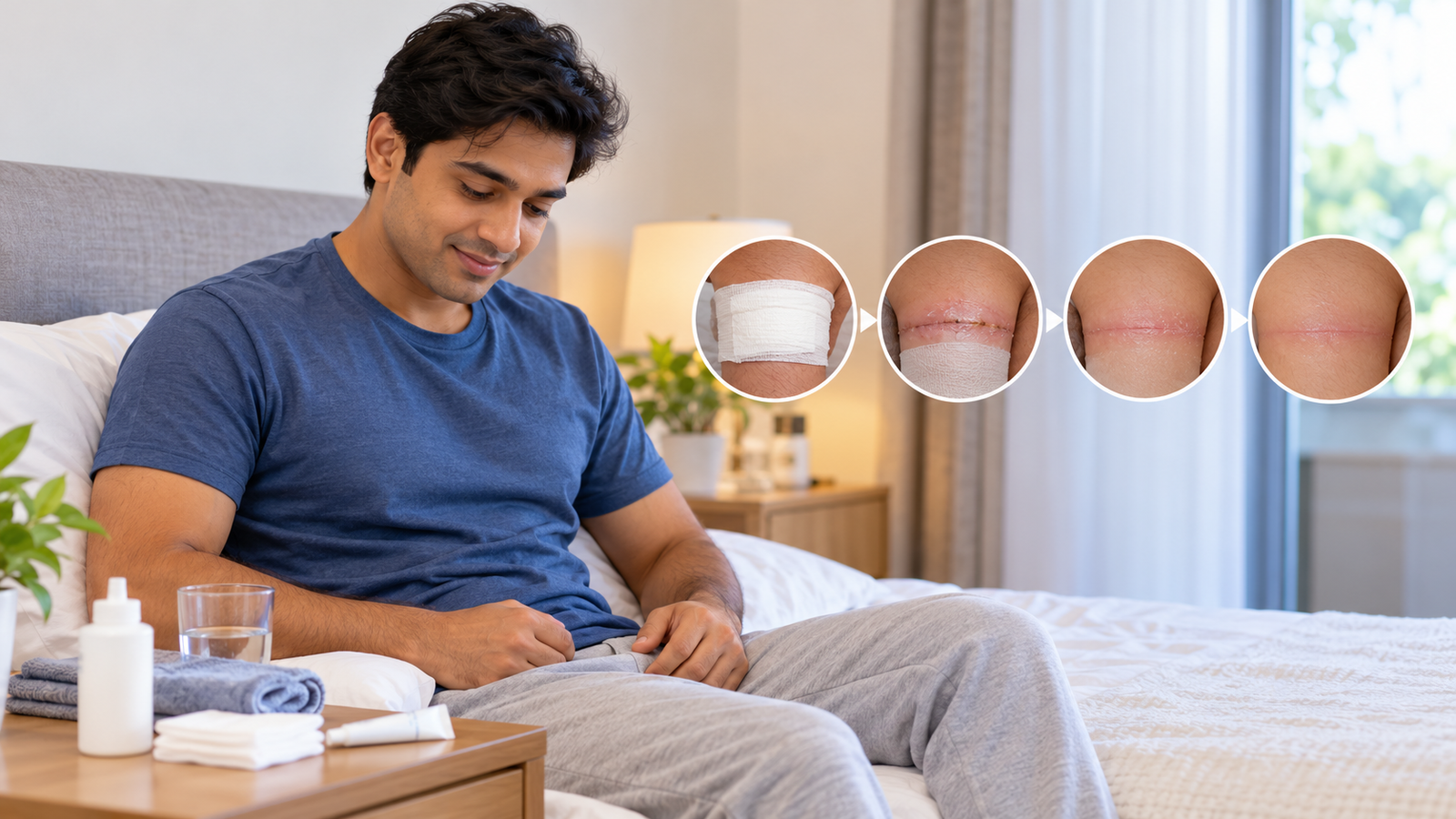
During the first two weeks after circumcision, the surgical area may look different from what you expected. You might notice a pale coating, tiny white bumps along the stitch line, or small spots on the glans, the head of the penis. Although these changes can be worrying, many are harmless. The important thing is to recognise warning signs and avoid disturbing the healing tissue.
What Causes White Spots After Circumcision?
Several conditions can cause white patches or bumps after circumcision. Their appearance and timing provide useful clues, although an examination may be necessary to confirm the cause.
1. Fibrin, a Normal Part of Wound Healing
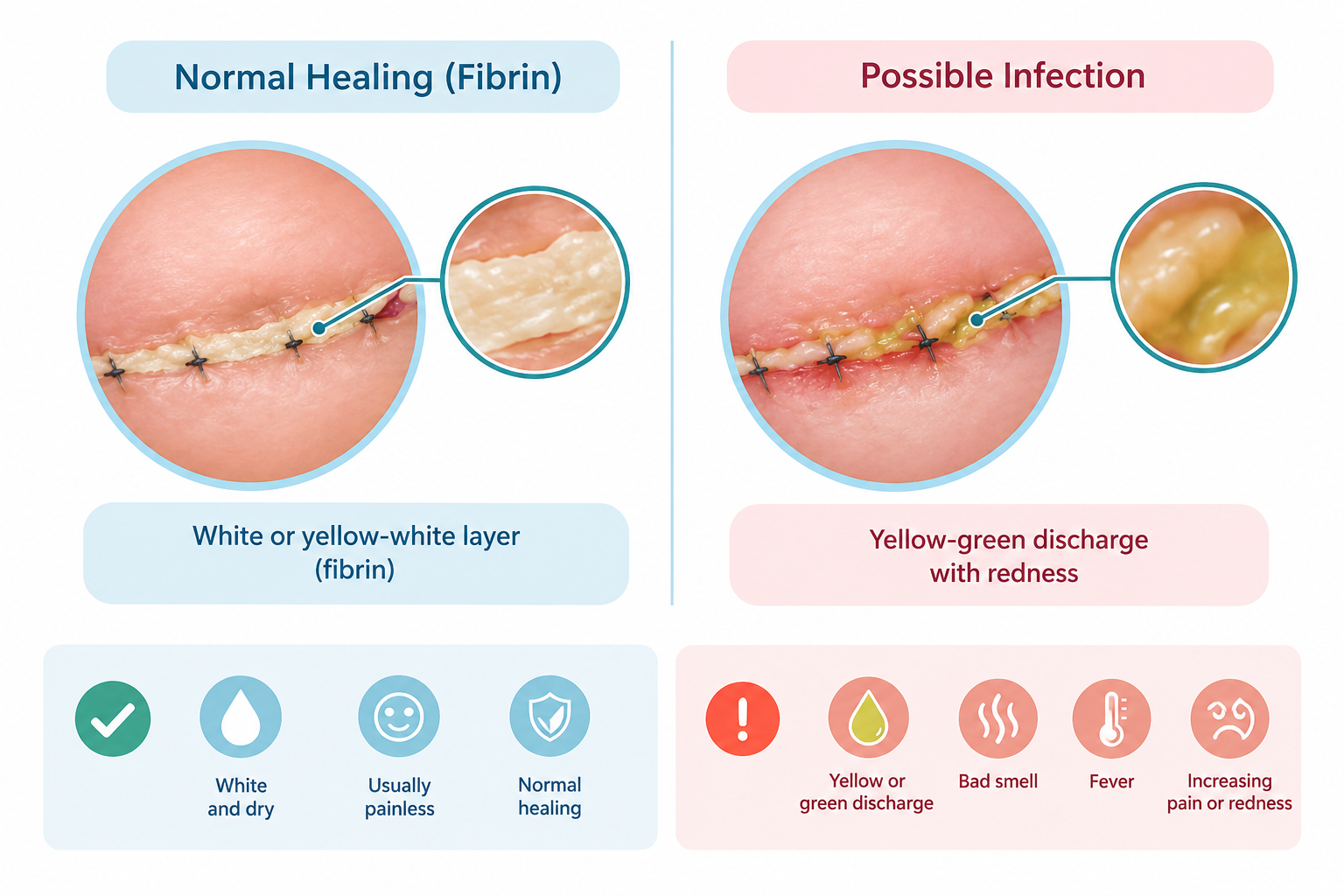
Fibrin is a protein involved in the body's natural healing process. It can form a white or yellowish coating over a healing surgical wound. Many people mistake this layer for pus because of its colour.
Normal healing tissue is often relatively dry or firmly attached to the wound surface. It may appear along the incision line during the first days or weeks after surgery.
Do not scrape, peel, or scrub the white layer away. Removing it can damage delicate tissue, cause bleeding, and delay healing. Follow the wound-care instructions provided by your surgeon.
2. White Bumps Caused by Dissolving Stitches
Small white bumps after circumcision may appear where stitches enter the skin. Dissolving sutures can cause mild local inflammation as the body gradually breaks them down.
These bumps are often close to individual stitch points and may feel slightly firm. Occasionally, a persistent lump develops because of a local suture reaction, sometimes called a stitch granuloma.
Avoid pulling visible threads or squeezing the bumps. Contact your surgeon if a lump becomes increasingly painful, red, swollen, or starts producing discharge. A persistent lump should also be examined.
3. White Spots on the Glans After Circumcision
Sometimes, white spots on the glans become noticeable after circumcision because the head of the penis is more exposed than before. The spots may have existed previously but were partly covered by the foreskin.
Pearly penile papules are small, usually uniform bumps that commonly form one or more rows around the rim of the glans. They are a normal anatomical variation, not a sexually transmitted infection.
Fordyce spots are another harmless possibility. These are visible oil glands that can appear as tiny pale or yellowish bumps.
Neither condition is necessarily caused by circumcision. However, new, changing, or symptomatic spots should not automatically be assumed to be normal.
4. Infection Around the Circumcision Wound
An infection can sometimes cause white or yellow discharge, but colour alone cannot establish whether a wound is infected.
Look for additional warning signs, including:
-
Redness that spreads around the incision.
-
Increasing pain, tenderness or swelling.
-
Thick discharge or an unpleasant smell.
-
Fever, chills or feeling generally unwell.
-
Wound edges separating or healing poorly.
If these symptoms occur, arrange a prompt medical assessment. Fever, rapidly worsening swelling, severe pain, difficulty passing urine or darkening tissue require urgent medical attention.
5. Fungal Irritation or Other Skin Conditions
White patches can occasionally result from fungal irritation or another skin condition. These problems may cause itching, redness, soreness, or irritation around the glans.
However, not every white patch is fungal, and a healing surgical wound should not be treated based on appearance alone. Using an unsuitable cream may irritate the skin or delay appropriate treatment.
A clinician can examine the affected area and decide whether testing or medication is necessary.
How to Tell Normal Healing From Infection
The following comparison can help you understand common possibilities. It is a guide, not a substitute for a medical examination.
| Condition | When It May Appear | Appearance and Feel | Pain or Other Symptoms | What to Do |
|---|---|---|---|---|
| Fibrin | Early healing, often in the first days or weeks | White or yellow-white layer over the wound | Usually mild discomfort or no additional symptoms | Leave it undisturbed and follow wound-care advice |
| Stitch reaction | While stitches remain or as they dissolve | Small bump near a stitch point | May be mildly tender | Seek review if persistent or worsening |
| Pearly penile papules | Often present before surgery but newly noticeable afterward | Small, uniform bumps around the rim of the glans | Usually painless | Generally needs no treatment if confirmed |
| Fordyce spots | May be noticed at any time | Tiny pale or yellowish bumps | Usually painless | Seek assessment if the appearance changes |
| Infection | Can develop during recovery | Discharge, spreading redness, or increasing swelling | Pain, bad smell, or fever may occur | Obtain prompt medical assessment |
| Fungal irritation | Variable | Patches or irritated skin | Itching, redness, or soreness may occur | Get an assessment before using medication |
Circumcision After Care Ankleshwar: What Should You Do?
Proper circumcision aftercare for Ankleshwar patients should focus on protecting the healing wound, keeping the area clean according to the surgeon's instructions, and recognising early signs of complications.
Follow these practical precautions during recovery:
-
Clean gently: Follow the specific washing instructions given by your surgeon. Do not scrub the incision or try to remove white material.
-
Keep the area protected: Wear comfortable clothing that does not create unnecessary friction.
-
Avoid unprescribed creams: Do not apply antibiotics, antifungal medicines, antiseptics, or other products unless recommended by a qualified clinician.
-
Do not manipulate stitches: Avoid pulling threads, squeezing bumps, or picking at scabs.
-
Attend follow-up appointments: Your surgeon can check whether the incision is closing properly and whether any persistent bumps need treatment.
Healing time varies according to the surgical technique, individual health, and the presence of complications. Therefore, do not judge recovery by colour alone.
For more information, read our guide on what skin looks like after circumcision.
When Do White Spots After Circumcision Need Treatment?
White spots do not always require medication. Normal fibrin and harmless anatomical bumps generally do not need to be removed. A mild stitch reaction may also settle as the suture dissolves.
However, medical assessment is important when spots appear alongside worsening pain, spreading redness, persistent swelling, a foul smell, or thick discharge. A clinician may examine the wound and recommend treatment according to the cause.
If infection is suspected, treatment may involve appropriate medication and wound care. Fungal irritation requires a different approach, while a persistent stitch granuloma may need specific management.
Do not start antibiotics or antifungal creams simply because a spot looks white. Correct diagnosis helps avoid unnecessary treatment and reduces the risk of further irritation.
If you are concerned about possible complications, read our guide to signs of infection after revision circumcision. You can also learn more about foreskin irritation and its treatment.
Final Thoughts
White spots after circumcision are frequently related to normal wound healing, dissolving stitches, or harmless anatomical features. Nevertheless, changes in pain, swelling, redness, discharge or general health are more useful warning signs than colour alone.
Keep the area clean according to your surgeon's instructions, avoid disturbing the healing tissue, and do not use unprescribed creams. If you are uncertain about a persistent white patch or bump, a professional examination can identify the cause and help you recover safely.
For a wound check or personalised guidance, contact Elegance Circumcision and follow your treating surgeon's advice.
Medical review: Dr. Ashutosh Shah, subject to clinical review and approval before publication.