
Circumcision After the Age of 60: Assessment, Anaesthesia and Recovery
Circumcision is commonly performed in men over 60 for phimosis, recurrent infection, or hygiene difficulty; it remains a day-care procedure in most cases, but assessment covers cardiac fitness, diabetes control, blood thinners, and mobility before a date is fixed.
Age alone does not determine whether circumcision is appropriate. A healthy man in his seventies may have fewer procedural concerns than a younger person with poorly controlled diabetes, significant heart disease or medicines that increase bleeding risk. The important question is whether the patient's overall health, reason for surgery, and recovery arrangements make the procedure suitable.
At Elegance Clinic, Surat, Dr. Ashutosh Shah, a plastic surgeon with 22+ years of experience, assesses the foreskin problem alongside the patient's general health before recommending circumcision and deciding how the procedure should be planned.
Why Is Circumcision More Often Needed After the Age of 60?
Some men reach their sixties or seventies without ever having a significant foreskin problem. Others develop new tightness, repeated inflammation, or difficulty maintaining hygiene.
One common reason is phimosis in older men, where the foreskin becomes difficult or impossible to retract.
Possible reasons for seeking assessment include:
- Progressive foreskin tightness
- Repeated balanitis or inflammation
- Pain or cracking of the foreskin
- Scar formation
- Difficulty retracting the foreskin for cleaning
- Recurrent infections
- Difficulty passing urine because of severe tightness
- Problems related to diabetes
- Persistent skin changes requiring medical assessment
Not every tight foreskin automatically requires circumcision. Mild or selected cases may have non-surgical options, depending on the cause and degree of scarring.
Read more about Treatment for a tight foreskin.
A new or persistent foreskin problem in an older man should also be examined rather than assumed to be simply part of ageing. Persistent ulceration, unusual thickening, colour changes, a non-healing area or other concerning findings may require further investigation.
Which Health Checks Are Done Before the Procedure?
Preoperative assessment becomes particularly important when a patient has other medical conditions.
The purpose is not simply to decide whether the patient is "too old" for surgery. It is to identify health factors that could affect bleeding, infection, anaesthesia, wound healing, or safe discharge.
Pre-Procedure Assessment for Men Over 60
| Health Factor | Why It Matters | Check Performed | What May Change in the Plan |
| Heart health | May affect procedural and anaesthesia planning | Medical history and additional cardiac assessment when indicated | Anaesthesia, timing or treatment setting may change |
| Diabetes | Poor control may affect infection risk and healing | Review of glucose control and relevant investigations | Procedure may be postponed if optimisation is needed |
| Blood thinners | Can increase bleeding risk | Medication and indication review | Plan coordinated with prescribing clinician |
| Blood pressure | Important for procedural safety | Blood-pressure assessment | Optimisation may be needed |
| Mobility | Affects discharge and home recovery | Walking and support needs assessed | Additional home assistance may be advised |
| Other medicines | Some medicines may affect surgery or anaesthesia | Full medication review | Individual medication instructions provided |
The exact investigations are individualised. Patients should not assume that everyone over 60 needs the same set of tests.
The clinic's Tests before surgery page provides additional information about pre-procedure evaluation.
What If I Have Diabetes?
Diabetes deserves particular attention before and after circumcision.
Poorly controlled blood glucose can be associated with recurrent foreskin inflammation and infection. It can also interfere with normal wound healing.
The surgeon may therefore review recent glucose control and other relevant health information before fixing the procedure date.
This does not mean that every man with diabetes will experience delayed healing or complications. It means that diabetes control should form part of the treatment plan rather than being ignored.
After surgery, patients with diabetes should follow wound-care instructions carefully and report concerning changes promptly.
What If I Am Taking a Blood Thinner?
Many men over 60 take antiplatelet or anticoagulant medicines because of conditions such as heart disease, previous stroke, abnormal heart rhythm, or previous cardiac procedures.
These medicines can affect bleeding risk, but you should never stop a prescribed blood thinner on your own before circumcision.
Stopping it without appropriate medical guidance can itself create serious health risks.
The surgeon needs to know:
- The exact medicine
- The dose
- Why it was prescribed
- How long it has been taken
- Whether there is a history of a heart procedure or stroke
- Which clinician currently manages the medicine
Any decision to continue, temporarily modify, or interrupt treatment should be coordinated between the relevant clinicians according to the patient's individual risk.
Can Circumcision Be Performed With Heart Disease?
Having heart disease does not automatically prevent circumcision.
For circumcision with heart disease, the important factors include the nature and stability of the cardiac condition, current medicines, exercise tolerance, recent cardiac events, and the planned anaesthesia.
Some patients may need additional medical or cardiac assessment before surgery.
The safest treatment setting and anaesthesia plan should therefore be chosen after reviewing the patient's health rather than simply according to age.
How Is Anaesthesia Chosen for an Older Patient?
Circumcision can often be performed using local anaesthesia, although the appropriate technique depends on the individual patient and planned procedure.
Local anaesthesia numbs the operative area while the patient remains awake.
For some older patients, avoiding unnecessary deeper anaesthesia may be useful. However, local anaesthesia is not automatically the correct choice for everyone over 60.
The anaesthesia decision may take into account:
- Medical history
- Heart and lung health
- Anxiety
- Procedure complexity
- Previous anaesthetic experiences
- Ability to remain comfortable during the procedure
- Medicines
- Surgeon and anaesthesia-team recommendations
A 70-year-old can therefore potentially undergo circumcision under local anaesthesia if the procedure and medical assessment make that appropriate.
Patients can also review the Safest circumcision method for adults to understand why method selection should be individualised.
Is an Overnight Hospital Stay Usually Needed?
Many suitable circumcisions can be managed as day-care procedures.
With day-care treatment, the patient arrives for the planned procedure, remains for appropriate postoperative observation and returns home after meeting the discharge criteria.
Older age alone does not necessarily require overnight admission.
However, an overnight stay or a different treatment setting may be considered when there are significant medical conditions, concerns about recovery, inadequate support at home, or another clinical reason for observation.
Read Day-care circumcision explained for more information.
Does Healing Take Longer After the Age of 60?
There is no reliable rule that every man over 60 will take a fixed number of additional days or weeks to heal.
Wound healing in older patients depends on more than chronological age.
Factors that may influence recovery include:
- Diabetes control
- Blood circulation
- Smoking
- Nutrition
- Infection
- Medicines
- Extent of surgery
- Skin condition
- Wound care
- General physical health
A healthy older patient may heal without significant difficulty, while someone with poorly controlled medical problems may require closer monitoring.
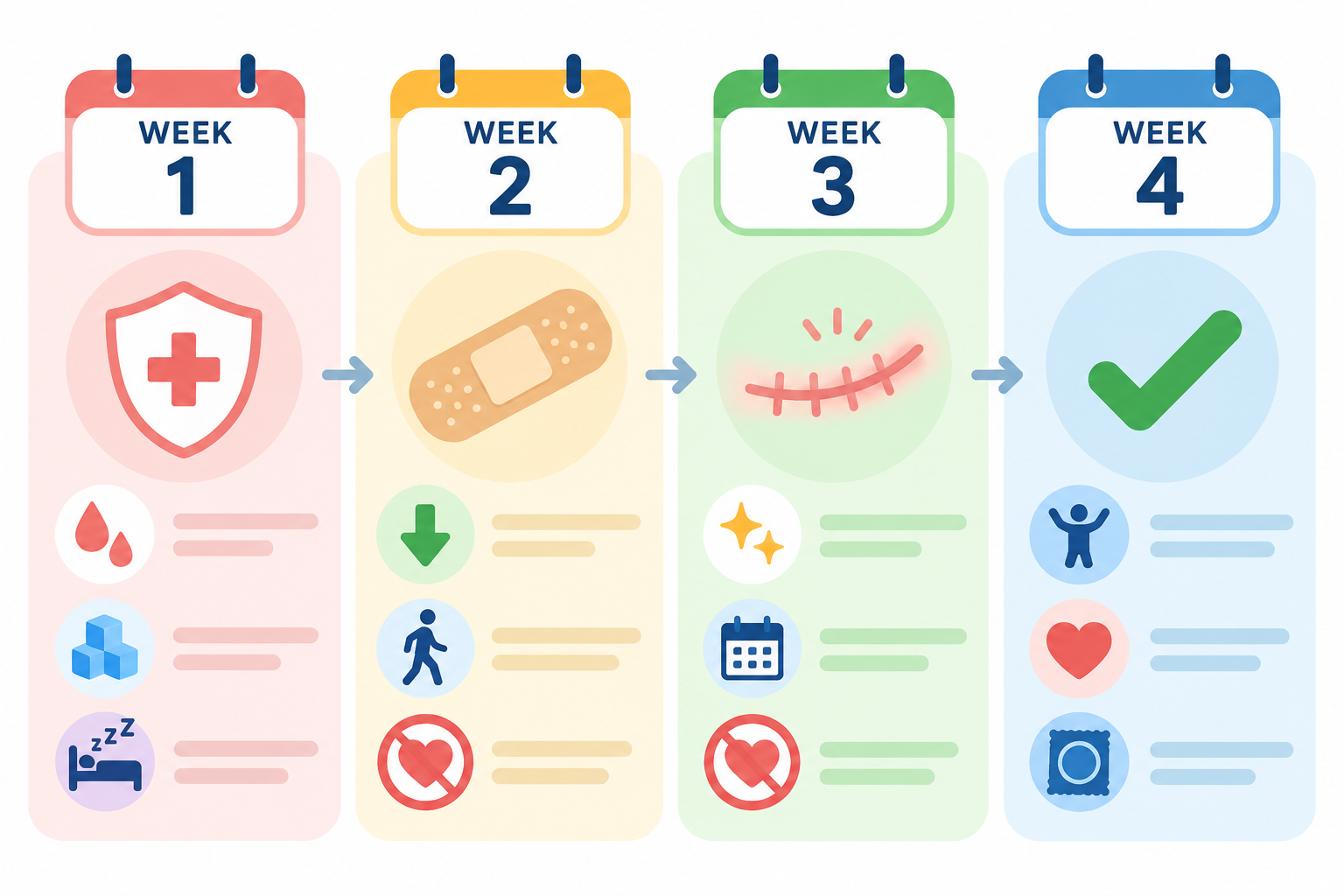
Swelling, bruising and temporary discomfort can occur during early recovery. The surgeon will advise when dressing care, bathing, work, exercise, and other normal activities can resume.
The wound should be judged according to its actual progress rather than comparing recovery with someone else's timeline.
Which Complications Need Earlier Review in Older Men?
Patients should receive clear postoperative instructions before going home.
Seek medical advice promptly if there is:
- Persistent or significant bleeding
- Rapidly increasing swelling
- Severe or worsening pain
- Difficulty passing urine
- Fever or feeling significantly unwell
- Increasing redness or warmth
- Concerning discharge
- Wound separation
- Unexpected skin colour changes
- Any symptom specifically identified by the surgical team as requiring review
Patients with diabetes, circulation problems or other conditions that can affect healing may be advised to have closer follow-up.
An emergency problem should be assessed urgently rather than waiting for a routine follow-up appointment.
What Home Support Should Be Arranged Before the Day?
Even when circumcision is planned as day-care treatment, practical preparation can make the first day or two easier.
An older patient should consider arranging:
Transport home: Do not assume you will be able to drive yourself after the procedure. Follow the instructions provided by the surgical and anaesthesia team.
A responsible companion: Having a family member or trusted person available can help with transport, medicines and instructions, particularly on the first day.
Medicines: Understand which regular medicines should be taken and which require special instructions. Do not independently stop blood pressure, diabetes, heart, or blood-thinning medicines.
Comfortable clothing: Loose-fitting clothing can be more comfortable for the journey home.
Written instructions: Keep discharge and emergency contact information somewhere easy to access.
Follow-up arrangements: Know when the first review is expected and whether a dressing needs professional attention.
For patients with limited mobility, it is worth arranging additional assistance at home before surgery rather than waiting until after discharge.
Can a Persistent Tight Foreskin at This Age Indicate Something Else?
Yes, which is why a newly developed tight foreskin in an older adult deserves clinical examination.
Repeated inflammation and scarring can cause phimosis, but persistent or unusual skin changes may occasionally require investigation for another underlying condition.
Tell the doctor if there is:
- A persistent sore or ulcer
- Unexplained bleeding
- A new lump or thickened area
- Significant colour or texture change
- Persistent discharge
- Progressive scarring
- A lesion that does not heal
These findings do not automatically indicate a serious disease, but they should not simply be treated at home without assessment.
Planning Circumcision Safely After 60
Circumcision after the age of 60 can often be performed as a planned day-care procedure, but chronological age should not be the only factor guiding treatment. The reason for circumcision, heart health, diabetes control, blood-thinning medicines, mobility, anaesthesia requirements, and available home support all contribute to the plan.
At Elegance Clinic, Surat, Dr. Ashutosh Shah can assess the foreskin condition together with these medical factors before recommending the procedure. Careful preoperative assessment and an individual recovery plan are particularly important for older patients so that circumcision is undertaken in an appropriate setting with suitable follow-up.