Circumcision When You Have Diabetes: Why It Is Often Advised and What Changes
Circumcision is often advised for men with diabetes who have repeated foreskin infections or a tight foreskin, but it is planned only after blood sugar and HbA1c are reviewed, because poor control slows healing and raises infection risk.
Diabetes can affect both the reason circumcision is considered and the way the procedure is planned. Persistently high blood sugar can make infections more likely, affect the condition of the foreskin, and interfere with normal wound healing.
For this reason, circumcision for diabetic patients requires attention not only to the surgical procedure but also to sugar control, infection screening, medication timing, and postoperative wound care.
At Elegance Clinic, Dr. Ashutosh Shah, a plastic surgeon with 22+ years of experience, evaluates the foreskin problem as well as factors that may influence safe healing before recommending circumcision.
Why do foreskin infections recur when blood sugar is poorly controlled?
Recurrent inflammation or infection of the foreskin and glans is often called balanitis or balanoposthitis. Diabetes can increase the likelihood of these problems, particularly when blood glucose remains poorly controlled.
When blood sugar levels are high, excess glucose can also be present in urine. Moisture, glucose, and the warm environment beneath the foreskin can create favourable conditions for microorganisms such as yeast and bacteria.
This is one reason balanitis in diabetes can become recurrent.
Symptoms may include:
- Redness around the foreskin
- Itching or irritation
- Burning
- Swelling
- Pain while retracting the foreskin
- Cracking of the skin
- Unusual discharge
- Difficulty maintaining normal hygiene
Repeated inflammation may gradually cause scarring. The foreskin can become less elastic and increasingly difficult to retract, potentially resulting in phimosis.
Good diabetes control therefore remains an important part of treatment. Circumcision can address the foreskin-related problem, but it does not replace diabetes management.
Patients experiencing repeated irritation can also read about foreskin irritation treatment.
Why might circumcision be advised for a diabetic patient?
Not every man with diabetes needs circumcision.
The procedure may be considered when a patient has persistent or recurrent problems involving the foreskin, particularly when conservative treatment has not provided a lasting solution.
Possible reasons include:
- Recurrent balanitis
- Repeated fungal infections
- Phimosis or a tight foreskin
- Painful foreskin retraction
- Scarring after repeated inflammation
- Difficulty maintaining hygiene
- Repeated cracking or irritation of the foreskin
When infections repeatedly return despite appropriate treatment and improved hygiene, removing the foreskin may reduce the local conditions contributing to recurrent inflammation.
However, active infection may first need to be treated before an elective procedure is performed.
For more information about phimosis management, see treatment for a tight foreskin.
What sugar and HbA1c assessment is done before the procedure?
Sugar control before minor surgery is particularly important for patients with diabetes.
Your surgeon may review recent blood glucose readings and request appropriate investigations before deciding when the procedure should be performed.
One important test is HbA1c.
HbA1c provides an indication of average blood glucose control over approximately the previous two to three months. This gives the treating team more information than a single blood sugar measurement alone.
Assessment may include:
- Fasting blood glucose
- Post-meal or random blood glucose when appropriate
- HbA1c
- Current diabetes medicines
- Insulin schedule, if applicable
- History of hypoglycaemia
- Previous wound-healing problems
- Current infections
- Other medical conditions
There is not one universal HbA1c value that automatically determines whether every patient can or cannot undergo circumcision. The decision depends on the patient's overall health, urgency of treatment, type of anaesthesia and clinical assessment.
If sugar is significantly uncontrolled, an elective procedure may sometimes be delayed while diabetes management is improved.
The purpose is to reduce avoidable risks rather than simply reach a particular laboratory number.
Patients can review additional information about tests before surgery.
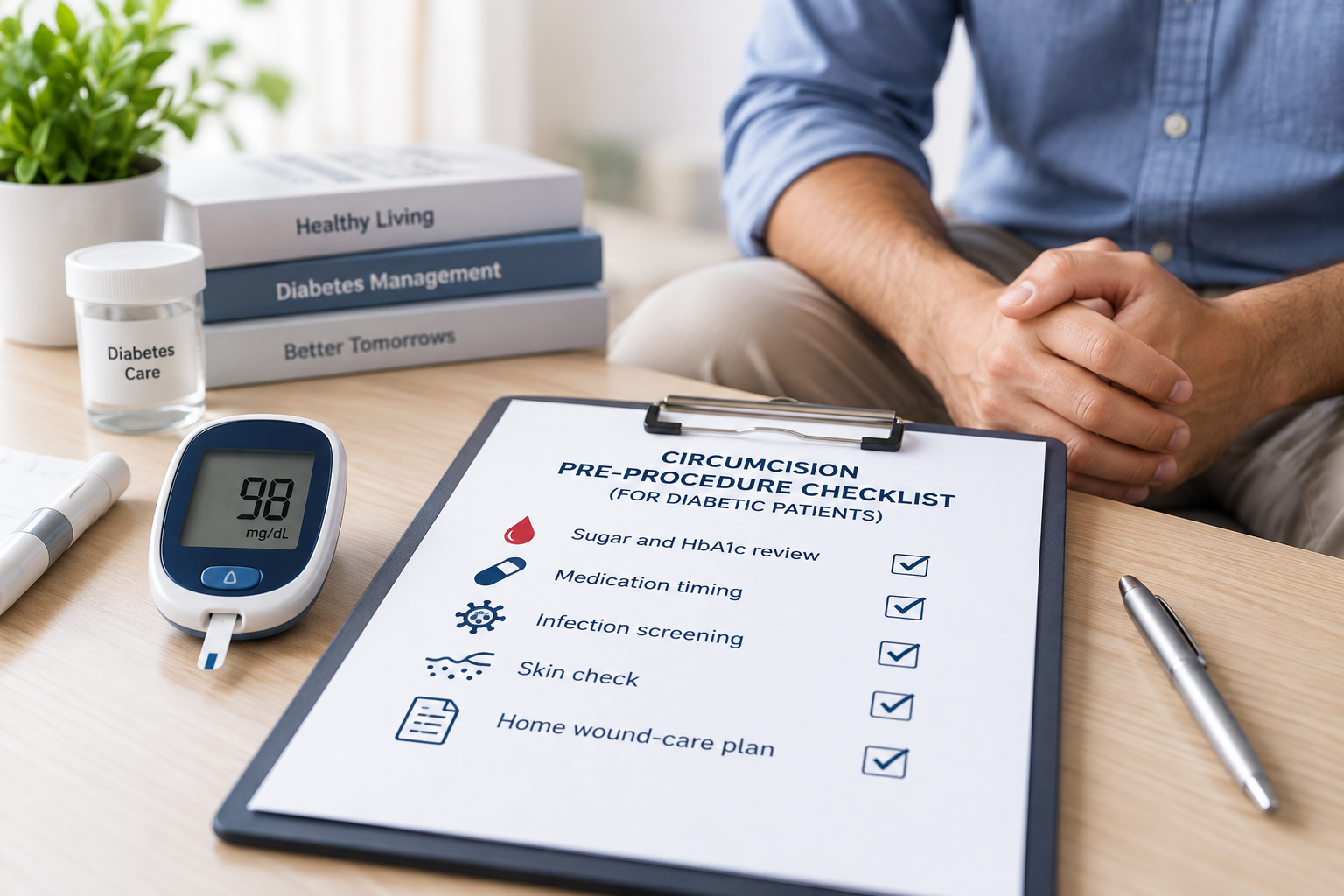
Pre-Procedure Checklist for Diabetic Patients
Before circumcision for diabetic patients, several factors may need to be reviewed.
1. Sugar and HbA1c review
Recent blood glucose and HbA1c results help the medical team understand current diabetes control and potential healing risk.
2. Medication timing
The surgeon and the clinician managing diabetes should know which tablets, insulin, or other diabetes medicines the patient uses.
3. Infection screening
Active balanitis, fungal infection, urinary infection or another significant infection may need treatment before an elective procedure.
4. Skin check
The foreskin and surrounding skin should be examined for inflammation, cracks, ulcers, discharge, scarring or other abnormalities.
5. Home wound-care plan
The patient should understand dressing changes, hygiene, medication, warning signs and follow-up requirements before leaving after the procedure.
How does diabetes change the choice of technique and dressing plan?
Patients sometimes assume that one circumcision technique must automatically be better for everyone with diabetes.
In practice, the appropriate technique depends on several factors, including:
- Foreskin condition
- Degree of scarring
- Presence of active inflammation
- Previous procedures
- General health
- Surgeon assessment
- Individual anatomy
Terms such as conventional, laser, stapler, and device-assisted circumcision describe different approaches. The most suitable option should be determined after examination rather than chosen solely because a patient has diabetes.
You can compare approaches in the circumcision method guide.
Diabetes may also influence postoperative monitoring.
Because poor glucose control can affect wound healing and infection risk, the surgeon may recommend more careful dressing care or earlier follow-up than would otherwise be required.
The dressing should remain clean and should be changed according to the instructions provided after surgery.
Patients should not routinely apply powders, antiseptics, herbal products or other home remedies to the surgical wound unless specifically advised.
Which extra wound-care instructions apply at home?
Careful wound monitoring is particularly important during healing after circumcision in diabetes.
Patients should follow the postoperative instructions provided by their surgeon rather than relying solely on general online recovery advice.
Important measures can include:
Keep the area clean
Follow instructions about when showering can begin and how the surgical area should be cleaned.
Avoid aggressive rubbing or scrubbing.
Keep the dressing dry when required.
If a dressing is still being used, change it according to the schedule provided by the surgical team.
Take prescribed medicines correctly.
Pain medicines, antibiotics or other medicines should be taken exactly as directed when prescribed.
Continue monitoring blood sugar.
Surgery, changes in food intake, stress, infection and alterations in physical activity can affect glucose levels.
Continue checking glucose according to your diabetes management plan.
Avoid unnecessary friction
Loose and comfortable clothing may reduce pressure against the operated area during early recovery.
Do not disturb the stitches
If dissolvable sutures have been used, allow them to separate naturally. Do not pull or cut them yourself.
Attend follow-up appointments
A diabetic patient may benefit from timely wound review, particularly if healing appears slower than expected.
Does diabetes make circumcision healing slower?
It can, particularly when blood sugar is poorly controlled.
High blood glucose can interfere with several processes involved in wound repair and can make infection more difficult to control.
However, having diabetes does not mean that every circumcision wound will heal poorly.
A patient with well-managed diabetes and appropriate postoperative care may recover without significant problems.
Factors affecting healing include:
- Quality of glucose control
- Smoking
- Age
- Nutrition
- Blood circulation
- Infection
- Other medical conditions
- Wound care
- Surgical factors
The important point is to treat diabetes as part of the surgical plan rather than as an unrelated medical condition.
Which complications need earlier review in a diabetic patient?
Minor swelling, tenderness, and some changes in wound appearance can occur during normal circumcision recovery.
However, patients with diabetes should be particularly careful about symptoms that are worsening rather than improving.
Contact your treating surgeon if you notice:
- Increasing redness
- Increasing swelling
- Pain that becomes worse after initially improving
- Pus or foul-smelling discharge
- Persistent bleeding
- Fever
- Wound edges separating
- Dark or concerning skin colour changes
- Difficulty passing urine
- Persistent wound moisture or breakdown
A wound that appears unusual should not automatically be treated at home with antibiotics, antiseptics or creams.
An examination can help determine whether the problem represents normal healing, irritation, infection or another complication.
Earlier assessment is especially important if blood glucose is also running substantially higher than usual.
How is the diabetes medication schedule adjusted around a day-care procedure?
Circumcision can often be performed as a day-care procedure, meaning the patient can return home on the same day when medically appropriate.
However, fasting requirements may affect the usual diabetes medication schedule.
This is particularly important for patients taking insulin or medicines that can cause low blood sugar.
Do not independently stop insulin or diabetes tablets simply because surgery is planned.
Before the procedure, tell the surgical team:
- The exact names of your diabetes medicines
- The doses you take
- When you normally take them
- Whether you use insulin
- Your normal meal schedule
- Whether you have experienced hypoglycaemia
- Your recent glucose readings
The treating team can then provide individual instructions about fasting, medication timing and when normal meals and medicines can restart.
Medication advice cannot safely be standardised for every patient because different diabetes medicines behave differently during fasting.
Circumcision Does Not Replace Diabetes Control
Circumcision can help address recurrent foreskin problems, but it does not treat diabetes itself.
If repeated infections have occurred because blood glucose remains persistently elevated, controlling diabetes continues to be important even after the foreskin has healed.
Good long-term diabetes management can also reduce the risk of other complications involving the skin, nerves, kidneys, eyes, heart and blood vessels.
Patients should therefore continue routine follow-up with the healthcare professional managing their diabetes.
Planning Circumcision Safely When You Have Diabetes
Circumcision for diabetic patients requires a little more planning, but diabetes itself does not automatically prevent the procedure.
The key steps are identifying why the foreskin problem keeps recurring, checking for active infection, reviewing glucose and HbA1c, planning diabetes medication around fasting, and establishing a clear postoperative wound-care routine.
If you have repeated foreskin infection with high blood sugar, a tight foreskin, or recurrent balanitis, a clinical assessment can help determine whether circumcision is appropriate and when it can be performed safely.
Good sugar control before and after the procedure remains an important part of achieving uncomplicated wound healing.