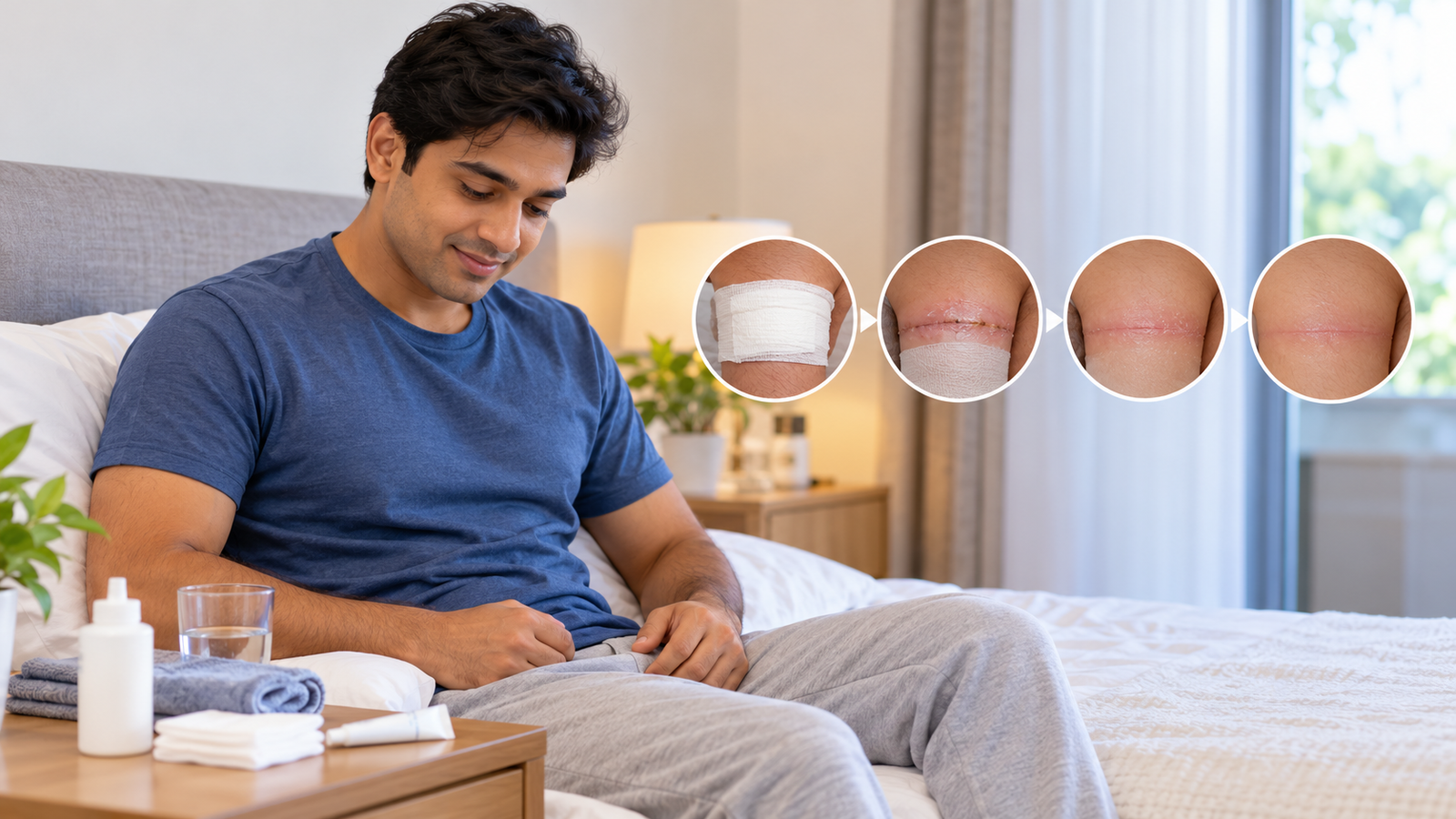

Stapler vs Conventional Circumcision: Which Is Better?
Stapler and conventional circumcision both remove the foreskin, but they use different surgical techniques. Stapler circumcision uses a specialised device to cut and close the wound, while conventional circumcision uses surgical instruments and usually sutures. Stapler methods may offer shorter operating times and less bleeding in selected patients, but neither technique is automatically better for everyone.
Men considering circumcision often compare ZSR stapler surgery with traditional circumcision before deciding on treatment.
Some patients want a shorter procedure, while others are concerned about pain, bleeding, stitches, healing time or cosmetic appearance.
However, choosing the right circumcision method requires more than comparing advertisements.
The surgeon must examine the foreskin, identify any scarring or inflammation, and consider the patient's medical history.
Understanding stapler vs conventional circumcision helps patients discuss the available options and make an informed decision.
What Is Conventional Circumcision?
Conventional circumcision is a surgical procedure in which the surgeon removes the foreskin using standard surgical instruments.
The surgeon controls bleeding and generally closes the wound with sutures.
The procedure may take place under local, regiona,l or general anaesthesia, depending on the patient's age, medical condition, and surgical requirements.
How Is Conventional Circumcision Performed?
The procedure usually involves four steps.
-
Anaesthesia: The medical team administers appropriate anaesthesia to control pain.
-
Foreskin removal: The surgeon removes the required foreskin tissue.
-
Bleeding control: The surgeon identifies and controls bleeding vessels.
-
Wound closure: The surgeon closes the wound, commonly using absorbable sutures.
Conventional circumcision allows the surgeon to adjust the amount of tissue removed according to the patient's anatomy.
This flexibility may be particularly useful when patients have significant foreskin scarring or other anatomical concerns.
Advantages of Conventional Circumcision
Conventional surgery offers several potential advantages.
-
The surgeon can adapt the procedure to different foreskin conditions.
-
It does not require a specialised stapling device.
-
It may suit patients with complex or scarred foreskin tissue.
-
Absorbable sutures usually dissolve without manual removal.
-
The technique has a long history of clinical use.
However, conventional circumcision still involves bleeding risk, swelling, wound car,e and a recovery period.
What Is Stapler or ZSR Circumcision?
Stapler circumcision is a device-assisted surgical method that removes the foreskin and closes the wound using a specialised circular stapling instrument.
ZSR is a commonly marketed type of circumcision stapler.
The device performs cutting and stapling during the procedure.
How Does Stapler Circumcision Work?
The surgeon first examines the foreskin and selects an appropriately sized device.
After administering anaesthesia, the surgeon positions the device according to the patient's anatomy.
The device then removes the foreskin and places staples around the wound.
The medical team checks bleeding and provides postoperative instructions.
Potential Advantages of Stapler Circumcision
In suitable patients, stapler-assisted surgery may offer:
-
Shorter operating time
-
Reduced intraoperative bleeding
-
Standardised device-assisted cutting and closure
-
Less manual suturing
-
A relatively uniform circular wound closure
However, the outcome depends on correct device selection, surgical technique and patient suitability.
Stapler circumcision does not guarantee painless surgery, scarless healing, or freedom from complications.
Patients can read more about whether high-cut stapler circumcision is safe for adults.
Stapler vs Conventional Circumcision: Key Differences
The main differences involve the instruments used, wound closure, operating tim,e and follow-up requirements.
| Feature | Stapler / ZSR Circumcision | Conventional Circumcision |
|---|---|---|
| Surgical method | Device-assisted foreskin removal | Manual removal using surgical instruments |
| Anaesthesia | Required | Required |
| Operating time | Often shorter in suitable cases | May take longer |
| Wound closure | Staples | Usually absorbable sutures |
| Bleeding | May be lower during surgery | Controlled using conventional surgical techniques |
| Pain | Postoperative discomfort possible | Postoperative discomfort possible |
| Swelling | Possible | Possible |
| Scar formation | Yes | Yes |
| Healing period | Several weeks | Several weeks |
| Return to work | Depends on symptoms and occupation | Depends on symptoms and occupation |
| Follow-up | Wound and staple assessment | Wound and suture assessment |
| Additional removal | Retained staples may require removal | Absorbable sutures generally dissolve |
| Complex anatomy | Device may not suit every case | Allows greater surgical flexibility |
| Cost | Often higher because of device charges | Often lower, depending on the facility |
The best technique depends on the patient's condition rather than the device alone.
A shorter procedure does not necessarily mean faster complete healing.
Which Circumcision Technique Causes Less Pain?
Both techniques require appropriate anaesthesia.
Patients should not experience uncontrolled surgical pain when the anaesthesia works effectively.
However, discomfort may develop after the anaesthesia wears off.
Pain After Stapler Circumcision
Some patients report mild or moderate discomfort around the staple line.
Swelling and tenderness may occur during the first several days.
Staples that remain attached during healing can occasionally irritate.
Pain After Conventional Circumcision
Patients may experience tenderness around the sutured wound.
Swelling, friction from clothi,ng and normal erections during recovery may cause temporary discomfort.
Which Method Is Less Painful?
Some clinical studies report lower early postoperative pain scores with stapler-assisted circumcision.
However, results vary between studies and patients.
Neither method guarantees a pain-free recovery.
Appropriate pain medication, wound care, and follow-up remain important with both techniques.
Which Circumcision Method Has Less Bleeding?
Stapler-assisted circumcision may reduce intraoperative bleeding in selected cases.
The device cuts and closes tissue during the procedure, which may reduce some manual surgical steps.
However, bleeding can still occur.
Conventional circumcision allows the surgeon to identify and control individual bleeding vessels.
Does Less Bleeding Mean No Complications?
No.
Both techniques carry risks of bleeding, infection, swelling, and delayed healing.
Patients taking anticoagulant medicines or those with bleeding disorders require careful medical assessment.
They should never stop prescribed blood-thinning medicines without instructions from the treating clinician.
The surgeon's experience and appropriate bleeding control matter regardless of the chosen technique.
Which Circumcision Method Heals Faster?
Patients often assume that stapler circumcision always heals faster because the procedure may take less time.
However, operating time and wound-healing time are different.
Both techniques create a surgical wound that needs time to heal.
Recovery During the First Week
Patients may experience swelling, tendernes,s and mild spotting.
Doctors usually recommend loose clothing, appropriate hygie,ne and prescribed pain medication.
Recovery During the Second Week
Swelling and discomfort often begin to improve.
Patients should continue following the surgeon's instructions.
Stapler patients may notice staples loosening as the wound heals.
Recovery After Four to Six Weeks
Substantial wound healing commonly occurs within approximately four to six weeks.
Some patients recover sooner, while others need more time.
Doctors usually recommend avoiding sexual intercourse and masturbation until adequate healing, often around four to six weeks.
Can You Return to Work Earlier?
Patients with desk jobs may return to work within several days if they feel comfortable and their surgeon approves.
However, physically demanding work may require a longer break.
The correct timeline depends on pain, swelling, wound condition, and job requirements.
Are Stitches or Staples Better?
Neither wound-closure method is automatically better for every patient.
Absorbable Stitches
Conventional circumcision commonly uses absorbable sutures.
These stitches gradually dissolve as the wound heals.
Patients should not pull or remove them themselves.
Surgical Staples
Stapler circumcision uses small staples to close the wound.
Some staples detach naturally during healing.
However, retained staples may require removal by a qualified clinician.
Patients should not attempt to remove staples at home.
What if Staples Do Not Fall Off?
The timing of staple detachment varies according to the device and individual healing.
Patients should contact their surgeon if staples remain attached longer than expected, become embedded, or cause persistent discomfort.
A surgeon may recommend observation or removal depending on the wound condition.
Retained staples do not always indicate a serious complication, but they require appropriate assessment.
Which Method Is Better for Severe Phimosis?
Phimosis occurs when the foreskin cannot retract comfortably over the glans.
Some patients have mild tightness without significant scarring.
Others develop severe narrowing, inflammation, or a thick scar ring.
Stapler Circumcision for Phimosis
Stapler circumcision may suit selected patients with phimosis.
However, severe scarring, inflammati, on or anatomical differences may make device placement difficult.
The surgeon must confirm that the device can be used safely.
Conventional Circumcision for Phimosis
Conventional surgery allows the surgeon to adjust the incision and remove scarred tissue according to the patient's anatomy.
This flexibility may make it preferable in selected complex cases.
Does Every Patient With Phimosis Need Circumcision?
No.
Some patients improve with prescribed topical corticosteroids and gentle stretching under medical guidance.
Patients should undergo an examination before deciding on surgery.
Does Circumcision Technique Affect Sexual Sensation?
Some men worry that stapler or conventional circumcision may change penile sensation.
Circumcision removes the foreskin, which changes the anatomy of the penis.
However, research has not established that one technique consistently produces better sexual function or satisfaction for every patient.
Individual experiences vary.
Patients should not expect circumcision to cure erectile dysfunction or premature ejaculation.
The procedure may relieve pain caused by severe foreskin tightness, but it does not treat every cause of sexual difficulty.
Surgeons should explain realistic expectations before surgery.
Which Circumcision Method Costs More?
Stapler circumcision often costs more because it requires a specialised disposable device.
Conventional circumcision may have lower equipment costs.
However, the total surgical price depends on several factors.
Factors Affecting Circumcision Cost
-
Surgical technique
-
Anaesthesia
-
Hospital or day-care facility charges
-
Surgeon's professional fees
-
Preoperative investigations
-
Medicines and dressings
-
Follow-up appointments
-
Additional procedures, when required
Patients should request a written estimate before surgery.
Does Higher Cost Mean Better Results?
Not necessarily.
A more expensive technique does not automatically provide better healing, fewer complications, or a superior cosmetic result.
Patients should compare medical suitability, surgeon experienc,e and postoperative support rather than price alone.
Are Laser and Ring Circumcision Better Alternatives?
Laser-assisted and ring-based procedures are additional circumcision methods.
However, they are not automatically better than stapler or conventional surgery.
Laser Circumcision
Laser-assisted circumcision uses laser energy to cut foreskin tissue.
Depending on the device and technique, laser energy may help control bleeding.
However, the procedure still requires anaesthesia and wound healing.
Patients can read more about laser circumcision.
Ring Circumcision
Ring-based techniques use a specialised device to assist with foreskin removal.
The device may compress tissue and allow controlled separation.
These techniques also require appropriate anaesthesia and follow-up.
Is There a No-Cut Circumcision Method?
No.
Every circumcision method involves surgical removal of the foreskin.
Patients should be cautious about claims of completely painless, bloodless, ss or scarless circumcision.
Read more about circumcision without surgery and no-cut myths.
How Does a Surgeon Choose the Right Circumcision Method?
The surgeon should examine the foreskin and review the patient's medical history before recommending a technique.
Important factors include:
-
Severity of phimosis
-
Presence of foreskin scarring
-
Recurrent infections or inflammation
-
Previous foreskin surgery
-
Penile anatomy
-
Diabetes or other medical conditions
-
Anaesthesia suitability
-
Patient preferences and budget
At Elegance Clinic, Dr. Ashutosh Shah, a Plastic, Reconstructive & Cosmetic Surgeon with over 22 years of surgical experience, evaluates foreskin-related concerns and discusses appropriate surgical options. The choice between conventional circumcision, stapler-assisted surgery, and other techniques should depend on the patient's anatomy, medical needs, and expected recovery.
Patients should also understand the medical reasons for circumcision before choosing a procedure.
To discuss suitable treatment options, patients can book a consultation.
Conclusion: Stapler vs Conventional Circumcision – Which Should You Choose?
The decision between stapler vs conventional circumcision depends on the patient's medical condition, foreskin anatomy, and treatment priorities.
Stapler circumcision may offer shorter operating time and reduced intraoperative bleeding in selected patients.
Conventional circumcision provides surgical flexibility and may suit patients with severe scarring or complex foreskin conditions.
Both methods require anaesthesia, proper wound care, and postoperative follow-up.
Neither technique guarantees painless surgery, faster healing or a superior cosmetic result.
The best circumcision method is the one that safely addresses the patient's condition after a qualified surgeon performs an appropriate assessment.