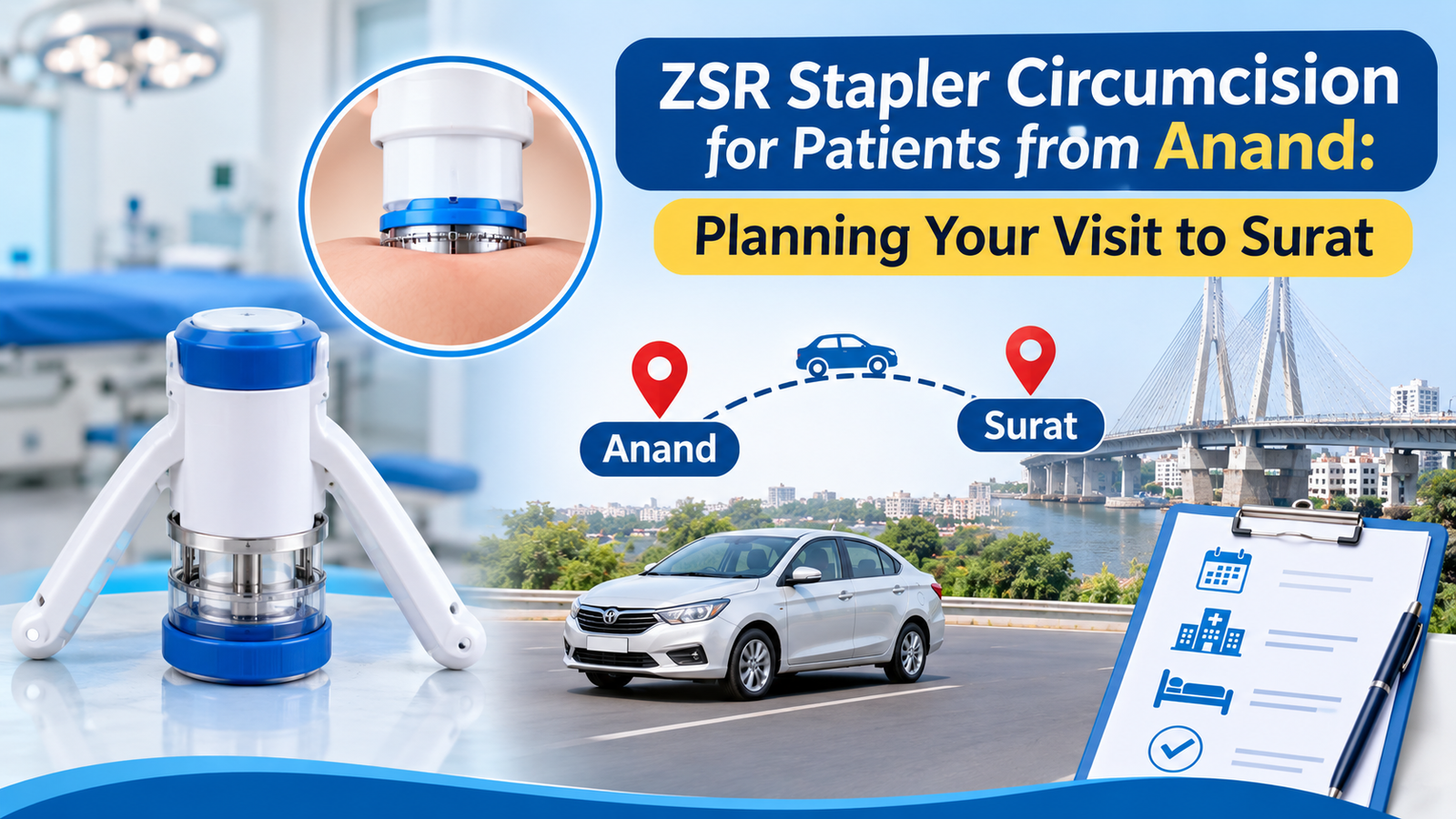
ZSR Stapler Circumcision for Patients from Anand: Planning Your Visit to Surat
ZSR stapler circumcision is a surgical technique that uses a circular cutting and stapling device to remove the foreskin. Patients from Anand usually begin with a consultation, complete any necessary medical assessments and plan surgery and follow-up visits. The procedure's suitability depends on individual anatomy, medical history, and the surgeon's assessment.
Key Takeaways
-
ZSR stapler circumcision removes the foreskin using a specialised circular cutting and stapling device.
-
The technique may be considered for selected patients with phimosis, recurrent foreskin problems or personal reasons for circumcision.
-
A physical examination is necessary to determine whether the device is suitable.
-
Recovery may involve swelling, tenderness, temporary activity restrictions and postoperative staple care.
-
Some staples may not detach as expected and may require removal by a medical professional.
-
Treatment costs depend on the procedure, anaesthesia, facility charges and follow-up care.
-
Patients travelling for treatment should plan their return journey and follow-up appointments in advance.
What Is ZSR Stapler Circumcision and Who Is It For?
ZSR stapler circumcision is a method of circumcision that uses a circular device to cut the foreskin and approximate the wound edges with staples.
Unlike conventional circumcision, where the surgeon may cut and close the wound using separate instruments and sutures, the stapling device performs these functions through a coordinated mechanism.
However, the technique still involves surgery, anaesthesia and postoperative wound care.
When May ZSR Stapler Circumcision Be Considered?
The procedure may be considered for selected patients with:
-
Pathological phimosis: Tight or scarred foreskin causing discomfort or difficulty with normal movement.
-
Recurrent balanitis: Repeated inflammation affecting the foreskin or head of the penis.
-
Foreskin scarring: Changes that make normal foreskin movement difficult.
-
Repeated infections: Problems that persist despite appropriate medical treatment.
-
Personal or cultural reasons: Circumcision requested after understanding its benefits, risks and alternatives.
Not every foreskin problem requires surgery.
Some patients may benefit from medicines or other treatments, depending on the diagnosis.
Who May Not Be Suitable?
The surgeon may recommend further assessment for patients with:
-
Active infection requiring treatment.
-
Poorly controlled diabetes.
-
Bleeding disorders.
-
Significant anatomical abnormalities.
-
Previous penile surgery.
-
Medical conditions affecting anaesthesia or wound healing.
The availability of an appropriately sized device is another important consideration.
Is ZSR Circumcision Painless or Stitchless?
Appropriate anaesthesia is used to control pain during surgery.
However, postoperative discomfort, swelling or bleeding may still occur.
Although the device uses staples for wound approximation, it should not be described as a completely wound-free or complication-free procedure.
For more information, read zsr stapler circumcision.
How Is ZSR Stapler Circumcision Done? Step by Step
The procedure follows a planned surgical process. The exact steps depend on the patient's anatomy and the device selected.
Step 1: Initial Consultation
The surgeon discusses the reason for circumcision, previous treatments, medical conditions and expectations.
Patients should mention diabetes, allergies, bleeding problems and medicines, especially blood thinners.
Step 2: Physical Examination
The surgeon examines the foreskin and surrounding anatomy.
This helps identify scarring, infection or anatomical features that could affect device suitability.
Step 3: Preoperative Assessment
Blood tests or other investigations may be recommended according to individual medical needs.
Not every patient requires the same tests.
Patients should follow the surgeon's instructions about eating, drinking and prescribed medicines.
Step 4: Anaesthesia
The medical team administers the planned anaesthesia.
The method depends on the patient's condition, surgical requirements and anaesthesia assessment.
Step 5: Device Selection
The surgeon selects an appropriately sized circular stapling device.
Correct sizing and positioning are important for tissue removal and wound approximation.
Step 6: Foreskin Removal
The device is positioned and activated according to the manufacturer's instructions.
It cuts the planned foreskin tissue and applies staples to approximate the wound edges.
The surgeon then checks the surgical site and controls any bleeding.
Step 7: Dressing and Observation
A dressing may be applied.
The patient is observed after surgery and receives instructions about medicines, wound care and possible complications.
Step 8: Follow-Up
Follow-up visits allow the surgeon to assess wound healing and the condition of the staples.
Some staples may separate during healing, while others may need professional assessment or removal.
Patients should never attempt to remove staples themselves.
Recovery: What Do the First Weeks Look Like?
Recovery after ZSR stapler circumcision varies with individual healing, medical conditions and postoperative care.
Swelling, tenderness, bruising and mild discomfort may occur during the early recovery period.
First 24–48 Hours
Patients may notice swelling, sensitivity or minor spotting.
Take prescribed medicines as directed and avoid unnecessary physical strain.
Keep dressings clean according to the surgeon's instructions.
Days 3–7
Discomfort may gradually improve, although swelling can continue.
Avoid activities that create pressure or friction around the surgical area.
Do not apply unapproved creams or disturb the staples.
Second Week
Healing continues, but the wound may not be fully healed.
Some staples may begin to loosen or detach.
If staples remain attached or cause discomfort, contact the clinic rather than pulling them out.
Weeks 3–4
Swelling may continue to settle.
Patients should not assume that the wound is fully healed based only on its external appearance.
Return to exercise and sexual activity should follow the surgeon's advice.
Beyond Four Weeks
Further healing and scar maturation may continue.
The final appearance may change as residual swelling decreases.
General Recovery Timeline
| Stage | What to Expect | Recommended Care |
|---|---|---|
| First 1–2 days | Tenderness, swelling and possible spotting | Rest and follow medicine instructions |
| Days 3–7 | Early wound healing | Maintain recommended hygiene |
| Week 2 | Continued healing and staple assessment | Attend follow-up appointments |
| Weeks 3–4 | Gradual reduction in swelling | Avoid strenuous activities without clearance |
| Beyond 4 weeks | Further settling of swelling and scars | Follow the surgeon's instructions |
When Should You Contact the Clinic?
Seek medical advice for:
-
Increasing redness or swelling.
-
Fever with concerning wound symptoms.
-
Pus or foul-smelling discharge.
-
Severe or worsening pain.
-
Persistent bleeding.
-
Problems involving the staples.
-
Difficulty passing urine.
Heavy uncontrolled bleeding or inability to urinate requires urgent medical attention.
Can Sensitivity Change After Circumcision?
Some patients notice temporary sensitivity changes during healing.
Long-term changes vary between individuals, and results cannot be guaranteed.
Read more about circumcision and sensitivity.
Which Factors Change the Cost?
The cost of ZSR stapler circumcision depends on the patient's condition, surgical plan and services included in the quotation.
1. Consultation and Assessment
The first consultation helps determine whether circumcision is necessary and whether the stapling method is suitable.
2. Stapling Device
The device and its associated surgical materials may contribute to the total cost.
3. Anaesthesia
The selected anaesthesia method and monitoring requirements may affect charges.
4. Surgical Facility
Operating room, nursing and postoperative observation costs may be included or charged separately.
5. Medical Complexity
Significant scarring, previous procedures or additional medical concerns may require more extensive planning.
6. Medicines and Follow-Ups
Postoperative medicines, dressings and follow-up appointments should be considered when comparing estimates.
Cost Breakdown Checklist
| Cost Component | What to Confirm |
|---|---|
| Consultation | Is the initial appointment included? |
| Surgical fee | What does the surgeon's fee cover? |
| Stapling device | Is the device included in the quotation? |
| Anaesthesia | Which method is planned? |
| Facility charges | Are observation and nursing included? |
| Medicines | Are postoperative medicines included? |
| Dressings | Are dressing changes covered? |
| Follow-ups | How many appointments are included? |
Patients should request a written quotation before booking.
If there is a previous unsatisfactory surgical outcome, the treatment plan may be different. Learn more about failed circumcision treatment.
ZSR Stapler Circumcision in Anand: Planning Your Clinic Visit
Patients researching ZSR stapler circumcision in anand may need to travel for consultation, treatment and postoperative reviews.
Planning these steps before surgery can reduce unnecessary travel and help patients follow the recovery instructions.
Step 1: Arrange a Consultation
Contact the clinic to ask about appointment availability.
If an initial online consultation is offered, it may help patients discuss symptoms and medical history.
However, device suitability usually requires a physical examination.
Step 2: Prepare Your Medical Information
Bring:
-
Previous prescriptions and medical reports.
-
Current medicine and supplement lists.
-
Details of allergies or previous surgeries.
-
Information about diabetes or bleeding disorders.
-
Questions about anaesthesia and recovery.
Step 3: Confirm the Procedure Date
After the surgeon's assessment, discuss the recommended technique and expected recovery requirements.
Allow time for any necessary investigations.
Step 4: Plan the Journey
Ask whether an accompanying adult is required after anaesthesia.
Patients receiving sedation or general anaesthesia should not drive until medically cleared.
Travel arrangements should account for postoperative discomfort and the possibility of additional observation.
Step 5: Arrange Follow-Up Visits
Confirm when the wound and staples will be checked.
Ask whether follow-up requires an in-person appointment and what to do if a staple remains attached.
Step 6: Keep Emergency Contact Details
Before leaving, obtain instructions for reporting bleeding, severe pain, urinary problems or other complications.
Questions to Ask Before You Decide
Patients should understand the proposed procedure before giving informed consent.
Useful questions include:
-
Is circumcision medically necessary in my case?
-
Are nonsurgical options available?
-
Is my anatomy suitable for the ZSR device?
-
Which anaesthesia method will be used?
-
What are the possible complications?
-
What happens if the staples do not detach?
-
How long should I avoid strenuous activity?
-
When can I resume sexual activity?
-
What is included in the total cost?
-
How many follow-up visits will be needed?
What Are the Possible Risks?
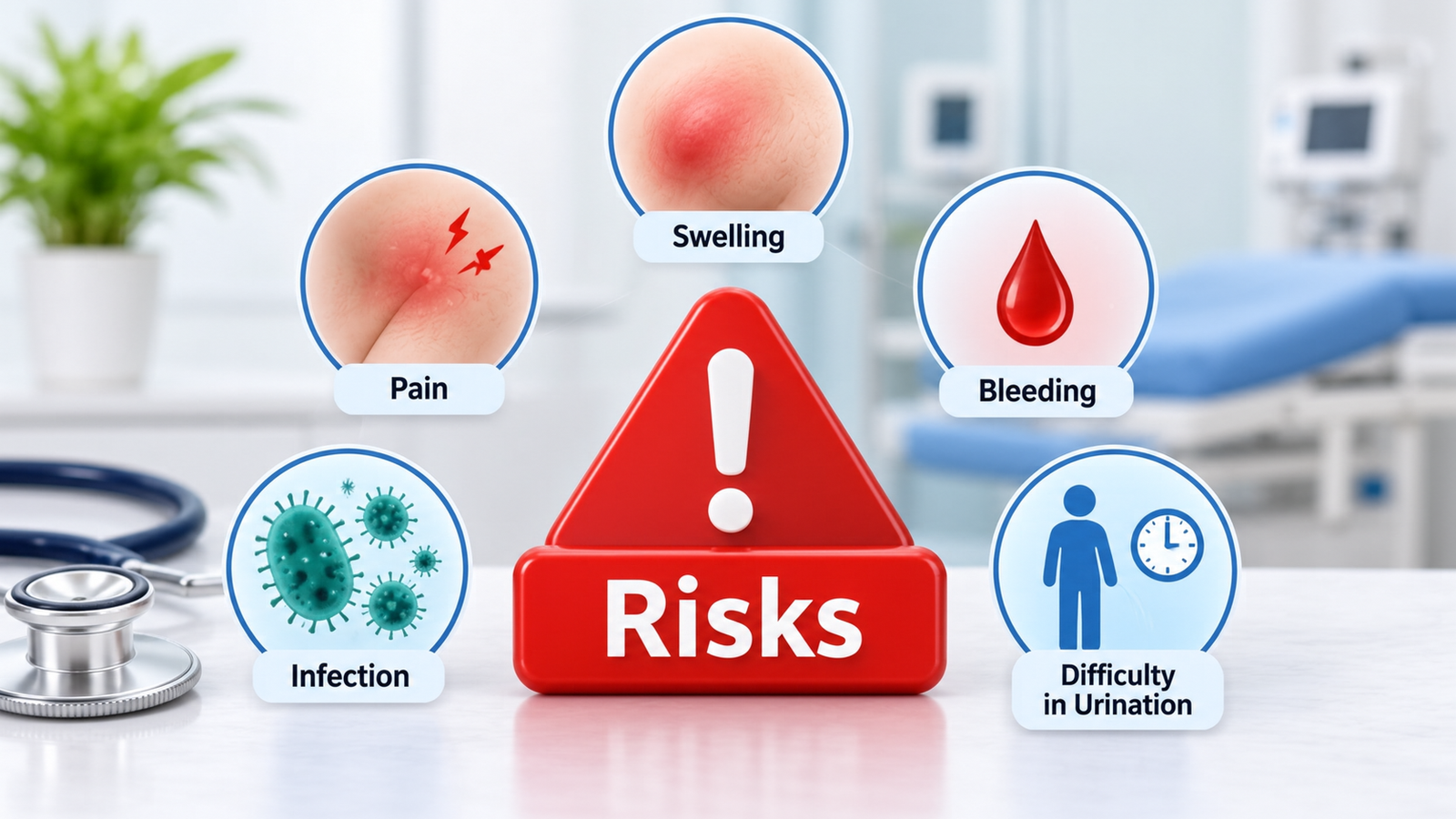
Potential complications include bleeding, infection, swelling, wound-healing problems, scarring and changes in sensation.
Device-specific problems may include retained staples or local irritation.
Rarely, an unsatisfactory result or complication may require additional treatment.
The surgeon should explain the risks relevant to the patient's condition and proposed technique.
Consultation With Dr. Ashutosh Shah
Dr. Ashutosh Shah (M.S., M.Ch., D.N.B.) is a Plastic, Reconstructive and Cosmetic Surgeon associated with Elegance Clinic.
A consultation can help patients understand whether ZSR stapler circumcision is appropriate for their medical needs.
The surgeon can assess the foreskin, explain treatment alternatives and discuss recovery expectations.
Patients should confirm the available surgical techniques, anaesthesia options, costs and follow-up arrangements before deciding.
For appointment information, contact us.
Conclusion
ZSR stapler circumcision is a surgical option for selected patients who require or choose foreskin removal.
A suitable treatment plan begins with medical assessment, discussion of alternatives and an explanation of the procedure's risks.
Patients travelling for treatment should plan their consultation, transport, recovery time and follow-up appointments in advance.
Dr. Ashutosh Shah at Elegance Clinic can assess suitability and discuss the available treatment options.